



6 min readJul 30, 2026 01:38 PM IST
First published on: Jul 30, 2026 at 01:38 PM IST
By Dolan Samanta
I have been teaching young adults for the last three years, and there have been moments when I have looked at my students and wondered where we are headed.

The generation I teach is the much-discussed Gen Z, which is growing up alongside AI, social media, and an extraordinary amount of information at its fingertips. Sometimes, I have worried that independent thinking itself is losing its touch, and that an increasingly individualistic world might make it harder for young people to feel connected to one another, or to something larger than themselves.
There have been other reasons for that uncertainty, too. The textbooks my students read have gone through considerable politicisation and selective deletion. As a history educator, this has troubled me deeply. History is already an act of selection: What we preserve, what we remember, what we leave out, and how we tell a story, all shape the way young people understand the world they inherit. I have often found myself wondering what kind of adults these students would grow into when the stories available to them are becoming narrower; when some histories are foregrounded, others pushed to the margins, and some that have shaped us made less visible or quietly erased. What troubles me most is not simply that these histories are being edited, but that they are increasingly being shaped into a narrower, politically curated version of the past.
Perhaps some of this anxiety comes from my own history. I studied at JNU, where I was actively involved in organising and participating in protests. I wondered whether my students would relate to that world. Would they care enough to step outside the classroom? Would they see the connection between the histories we study and the society they are living in?
Then my students surprised me.
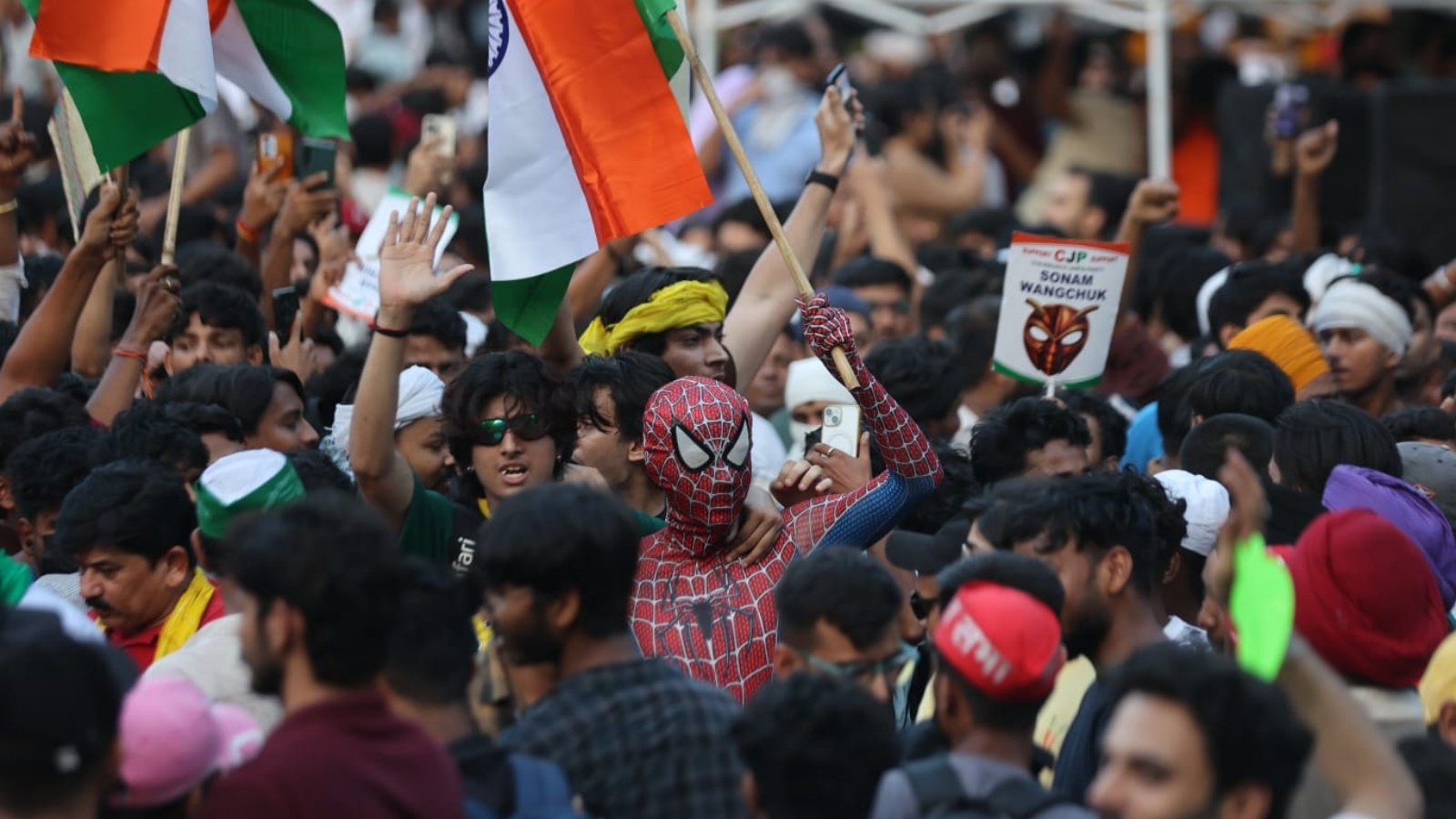
They began talking about the protests. They wanted to go. And on Monday, when I walked into class, and they met me with happiness at the news of Dharmendra Pradhan’s resignation, something shifted in me. It was not simply that my students agreed with something I believed in. That would be too easy an interpretation. What moved me was seeing them care.
They did not participate in the ways I might have imagined young people participating when I was their age. They sustained themselves through laughter. They made reels. They had fun. They documented what they were experiencing and, through those fragments, gave us a glimpse into the deeply human stories emerging from the protests. They showed solidarity. They showed up for one another. They were there.
When I began to think this was a generation becoming increasingly individualistic, they proved me wrong. Completely. They reminded me that being connected through technology does not mean being disconnected from people.
In a history classroom, we ask students to think about people who lived through moments of upheaval. We study Hitler and the rise of Nazism, the French Revolution, and the German revolutions. We talk about people who questioned existing structures, challenged authority, demanded rights, and imagined societies different from the ones they had inherited. Yet there is a strange danger in teaching history: The past can become so distant that students treat it as though it belongs exclusively to other people. A revolution becomes a chapter. A protest becomes a photograph. A democratic struggle becomes something that happened before we were born.
But the purpose of teaching these histories, at least as I understand it, is not to know what happened. It is to recognise the values and choices in those histories when they appear in our lives. That is why what I saw in my students mattered. When students come out in large numbers to protest, care about what is happening, talk about democracy and the Constitution, and show up for one another, the histories we teach stop being abstract. They acquire a present tense.
I have urged my students to think about history rather than learn it, to look beyond dates and names and ask what these histories might tell us about the present. It is one thing to pose that question in a classroom. It is another to watch young people answer it through their own actions.
Perhaps that is one of the humbling things about teaching: Sometimes, the lesson comes back to you.
They showed me the India I have spent years believing in and fighting for: An India in which disagreement is possible, people can come together, democratic values are not merely words in a textbook, and young people understand that citizenship carries responsibilities as well as rights.
For a while, I had been afraid that perhaps I was asking too much of them. Then my students went out into the world and showed me that perhaps I had not been asking enough.
As an educator, I am proud of them. But it is more than pride; there is gratitude in it, too. They restored something in me that I had begun to lose: Faith in the young people sitting in our classrooms. Perhaps that is also what teaching history is supposed to do: Not only teach students to remember what people before them fought for, but to recognise when those values need to be carried forward themselves.
The writer is a history educator based in Delhi
