



6 min readJul 30, 2026 05:10 PM IST
First published on: Jul 30, 2026 at 05:10 PM IST
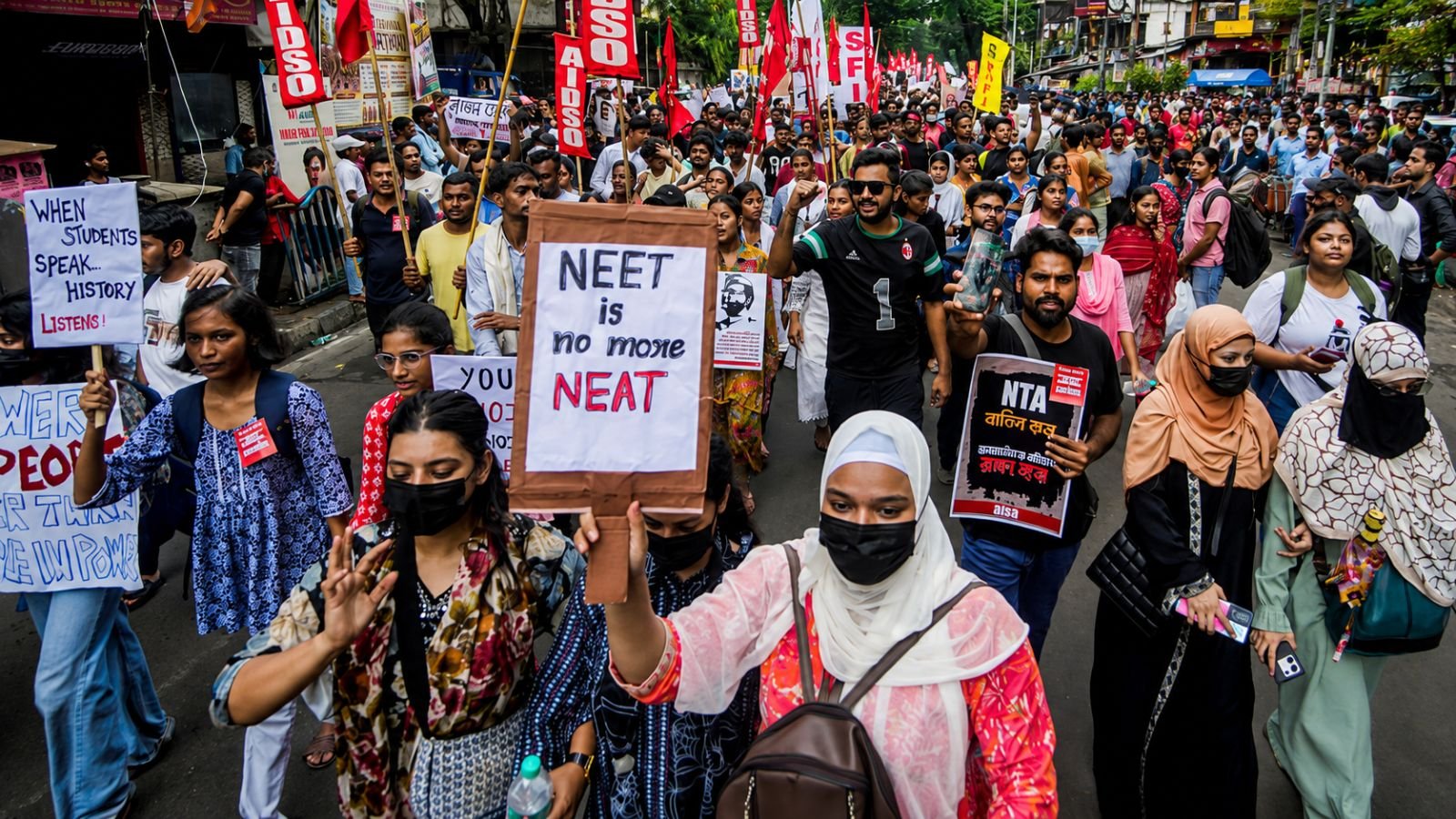
One does not need social scientists to explain the meaning and significance of what happened on July 20. It was a protest alright, but it was also an outburst. It is apparent that the government yielded to that pressure with poor grace. This was exemplified by the “welcome” accorded to the minister who had resigned. That act of showing contempt for the protests fits into a pattern — while the government buckled under pressure, the pro-BJP ecosystem has been busy spreading all kinds of explanations for the outburst, conspiracy and “foreign hand” included.
Whether the Cockroach Janta Party is a tool for someone, whether some parties sought to hijack the agitation, or whether the Prime Minister’s midnight message on Instagram hit record views are irrelevant tidbits worthy of corner columns in newspapers. The real — and admittedly intriguing — aspect of the CJP protests has been the unexpected and unanticipated spontaneity, right from the first post by Abhijeet Dipke about cockroaches. Instead of examining this aspect, the government seems content with either damage control or talking of the specious issue of “intelligence failure”. When you mute all voices, except those reflecting narcissistic praise, intelligence failures are bound to happen.

Besides, on the watch of the current regime, there is a clear lack of reliable empirical data on what people think. This is for two reasons: Methodologically, when public opinion is permeated by extreme toxicity and pressure of social desirability bias, data from public opinion studies can be somewhat distorted. And secondly, this regime has been anti-data and has ensured that no independent actors will be able to collect public opinion. Post-2014, there is a singular lack of data leading to the “all is well” cacophony of the partisans.
No wonder everyone was taken unawares by the extent and intensity expressed during the CJP protests. While pro-government media is still circulating news about the alleged misbehaviour of participants and the weight of the waste left behind, they are oblivious to the real weight in political terms that these protests have left behind for politicians to tackle. Unfortunately, the regime seems to be unwilling to even read these signals properly.
Three issues are flagged by the protests that engulfed politics over the past four or five weeks. For starters, they were pegged around the NEET and exam-leaks, but by no means were they just about that. The government, sheepishly and wrongly, responded to only the technology of conducting the exam. Even before the protests erupted, this intellectual bankruptcy was evident in deploying the Air Force for delivering exam papers. That same mentality has surfaced again in the appointment of the committee to ensure leak-proof exams.
Yes, we have made a mess of exams, but that is not merely because greed and deceit lead to paper leaks. The real elephant in the room is the education system itself. A meaningless system that merely works as boring time-pass or as creches for young adults is the root cause — this malady leads to a senseless premium on exam results, meaningless exams and the coaching industry. Neither the government nor the Opposition can look youth in the eye and explain the meaning of wasting years in the name of education. The latest protests are symptomatic of that larger malaise.
Secondly, the protests and the striking energy they displayed represent the utter meaninglessness of life that confronts the youth. This is not merely about employability but about a future that holds only uncertainty. It would be foolhardy to respond to this issue only by throwing numbers — that so many jobs will be created when a corporate house is granted some largesse by the government. Overall life conditions and the deeper inequalities that characterise Indian society are factors that shape the clouds of uncertainty. If at one stage, capitalism was accused of producing the lumpen element, the economy today produces what sociologists have described as the “precariat”.
Life is precarious, irrespective of whether you belong to low-income groups or the so-called middle class. This government has discovered a politically advantageous palliative to that — to use the evocative phrase employed by the Prime Minister himself, the revdis. But the loss of dignity involved in revdi politics and the continued uncertainty of life would surely push large sections into dissatisfaction notwithstanding the heavy rainfall of revdis. The CJP protests may not have touched upon these larger aspects of social unrest. But it would be at our own collective peril to ignore these underlying frustrations that are not easily defined. The protests are over for the time being, but these conditions remain and, if not attended to, they are bound to produce more cockroaches than the system can afford to suppress.
Finally, the police action. It represents the political response and tells us what ails our politics. It is not sufficient to smugly say that all protests face some police excesses. Large numbers of handles on social media have been gleefully telling us that the police have video recordings and participating persons will be hounded. This threat — most likely backed by clandestine police follow-up — tells us what is wrong with politics. By invoking election victories, the victors claim carte blanche; by counting votes, politicians denude citizens of agency; by throwing legislative majorities in our face, governments duck both constitutional morality and routine democratic accountability.
In sum, the prelude, the actual protests and now their aftermath tell a common story — protests have stirred many minds but not our political leadership. Because the regime is bent on not learning anything from the protests except the technology to suppress the next round of protests.
The writer, based in Pune, taught Political Science
