



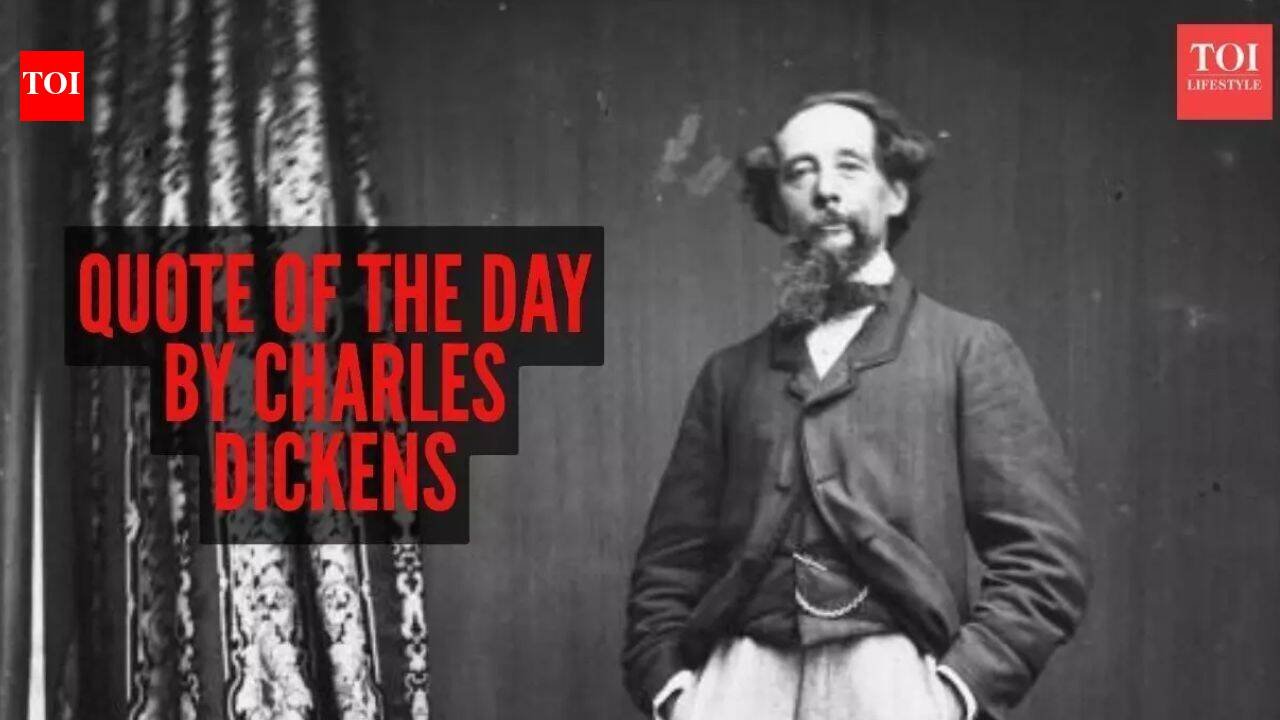
Charles Dickens was one of the few writers who could so powerfully capture the joys, struggles and contradictions of human life. Many have ranked Dickens as one of the greatest novelists in the English language . He revolutionised literature by putting ordinary people in the spotlight . Nearly two hundred years after the publication of his books, his unforgettable characters, his vivid storytelling, and his sharp criticism of social injustice still resonate with readers.Early life: Hardship gave him a world viewCharles John Huffam Dickens (7 February 1812 – 9 June 1870) was born in Portsmouth, England. Although his family lived a comfortable middle-class life, his childhood was marred by financial difficulties. Charles Dickens’ father, John Dickens, was imprisoned for debt when he was only twelve years old, a traumatic event that had a profound effect on his view of society.His father was in prison and young Charles had to quit school and work in a boot-black factory, pasting labels on bottles for long hours in poor conditions. He later described this period as a time of humiliation and loneliness – feeling like the world abandoned him. They inspired many of his later novels, especially David Copperfield which closely parallels parts of his own childhood. Dickens never forgot what it was like to be poor, powerless and overlooked, and those memories drove his determination to write about injustice.The ascent of a literary giantDickens left the factory, went back to school for a short time, then became a law clerk and later a parliamentary reporter. Journalism sharpened his powers of observation and brought him into contact with people of all walks of life. In 1836 he made his literary breakthrough with The Pickwick Papers. The novel was published in monthly installments and became an immediate sensation, making Dickens one of Britain’s most celebrated authors almost overnight.He proceeded to write a remarkable run of classics, including Oliver Twist, Nicholas Nickleby, A Christmas Carol, David Copperfield, Bleak House, Hard Times, Great Expectations, Little Dorrit, A Tale of Two Cities and Our Mutual Friend. Much of his great popularity was because he published in serial form. Readers would look forward to each new installment, just as folks today anticipate the next episode of a popular TV series.Giving voice to the voicelessDickens, unlike many of his contemporaries, was more interested in ordinary people than in aristocrats or royalty. His novels were about orphans, factory workers, prisoners, widows, struggling families and street children. Characters such as Oliver Twist, Tiny Tim, Ebenezer Scrooge, Pip, Miss Havisham and Fagin are some of the most famous figures in world literature because they are archetypes of universal emotions – hope, greed, redemption, loneliness, innocence and resilience.Dickens believed that literature could entertain and inspire social reform. He wrote about child labour, unsafe working conditions, debtor’s prisons, poverty, corruption and inequality when these issues were not getting much attention from the public. Dickens was not just a storyteller. He was a social commentator.His novels raised questions in the minds of readers about the treatment of the poor, the failure of the education system and the grim reality of industrial Britain. Oliver Twist revealed the cruelty of orphaned children and Hard Times railed against an educational system that stressed facts over imagination. Bleak House revealed the inefficiency of the legal system and A Christmas Carol promoted the idea that generosity and compassion should extend beyond Christmas.Many historians credit Dickens with shaping public opinion on poverty and child welfare in Victorian England. He did not change laws on his own but his books played a significant role in sparking conversations about reform and human dignity.A master of storytelling that you don’t forgetDickens was a master at combining humour, tragedy, suspense, romance, mystery and satire into one story. His descriptions brought Victorian London to life, from crowded markets and foggy streets to the grand mansions and overcrowded slums. He was also good at creating memorable characters whose personalities were so distinctive that many entered everyday language. To call someone “a Scrooge,” for example, is still to call him a miser. It is because of his ageless themes that Dickens is still widely read all over the world.Charles Dickens’ legacy is so much more than books. His books have been translated into hundreds of languages and adapted into countless films, television series, plays, musicals, radio plays and animated productions. Every Christmas, new generations are introduced to the transformation of Ebenezer Scrooge in iterations of A Christmas Carol. Dickens has had an influence on storytelling that has been acknowledged by writers such as Leo Tolstoy, George Orwell, Fyodor Dostoevsky and many modern novelists. His works are studied in schools and universities all over the world because they combine literary brilliance with deep insights into human nature.Discussion of poverty, inequality, children’s rights and compassion today still reverberates issues raised by Dickens over 150 years ago.Quote of the DayOne of his most iconic quotes is “Have a heart that never hardens, and a temper that never tires, and a touch that never hurts.” This quote is simple yet a lifetime of wisdom. “Have a heart that never hardens” A hardened heart has no sympathy. Dickens tells us to remain compassionate when life disappoints us. It’s easy to become cynical after betrayal, hardship or failure, but it takes real strength to remain kind.This advice, from Dickens, whose own childhood was difficult, is particularly significant. He had himself known poverty and injustice but he chose to write stories that inspired compassion, not bitterness. ‘A temper that never tires’ It is often harder to be patient than to be intelligent or talented. A temper that “never tires” implies emotional resilience—the capacity to stay calm, forgiving, and understanding, even when continually challenged. In our daily lives, with children, co-workers, ageing parents or strangers, patience enhances relationships and reduces conflict. Dickens reminds us that lasting kindness is often more important than fleeting triumphs.This last phrase is physical touch and more. It is our communications with others, our words, our deeds, our gestures, our attitudes. A word of kindness can restore confidence but a sharp word can leave emotional scars that last. Dickens asks us to make sure that the way we show up makes others feel respected, valued, and safe. Put in more contemporary terms, the quote is a call for emotional intelligence: to speak with empathy, to lead with compassion and to understand the deep impact we have on those around us.Why the quote is still relevant todayIn an era of social media wars, workplace stress and fast-paced living, Dickens’ message seems more relevant than ever. Often kindness is mistaken for weakness, but psychological studies repeatedly confirm that empathy builds relationships, enhances mental health and promotes trust. Patience can help resolve conflicts Compassion can help build stronger families, workplaces and communities. The quote reminds us that success is not only measured in terms of wealth, achievements or recognition. It is also reflected in how we treat others gently and how much humanity we preserve in the face of life’s challenges.More than 150 years after his death, Dickens’ words remind us that our legacy is not in what we accumulate, but in the humanity we show to others.
