



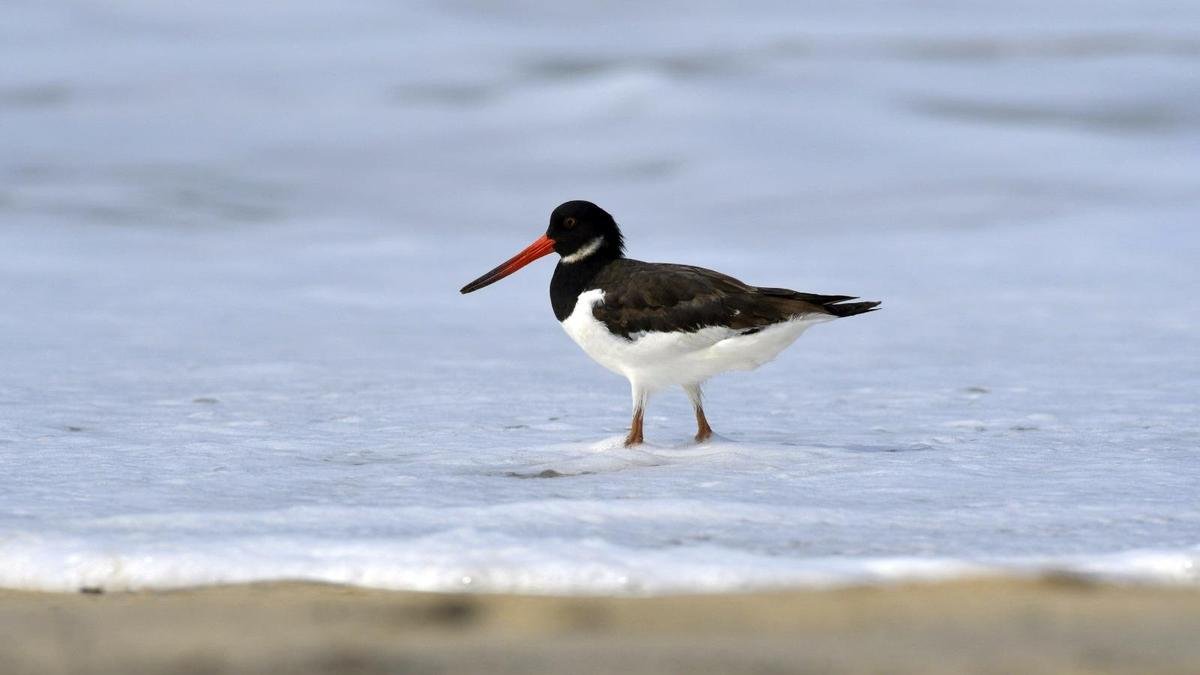
From the Arctic, northern Eurasia and wetlands of Central Asia, flocks of migratory birds undertake journeys spanning thousands of kilometres to reach Kerala’s coasts, wetlands and forests every year. Among them are Greater Sand Plover (Anarhynchus leschenaultii) and Tibetan Sand Plover (Anarhynchus atrifrons), which descend on sandy stretches of Vellanathuruthu in Kollam, and Northern Pintail (Anas acuta) and Garganey (Spatula querquedula), which winter in the wetlands of Pavumba and other waterbodies in the district. All four species are also found in other parts of the State.
For decades, these seasonal visitors have arrived in large flocks between August and March. But birdwatchers who have tracked them year after year say the spectacle is gradually fading.
Ampady Sugathan, a birder from Mynagappally in Kollam, has spent years documenting winter migrants across the district. During the 2025-26 migratory season, he made several early morning visits to Vellanathuruthu beach, Pavumba and other wetlands to monitor the birds. What he observed, he says, was concerning.
“The shorebirds start arriving in small numbers in August and use Vellanathuruthu as a stopover during migration. But with every passing year, the number of winged visitors, including Greater Sand Plover and Tibetan Sand Plover, appears to be declining. The same trend is visible among wetland migrants as well. Some species that were regularly recorded earlier were not sighted at all in our surveys during the last season,” says Mr. Sugathan, general secretary of the Kollam Birding Battalion and State coordinator of Kerala Beachcombing, a citizen science programme that monitors shorebirds along Kerala’s coastline.
His observations raise a larger question: Is Kerala witnessing a decline in migratory birds, some of which travel more than 5,000 km across countries from their breeding grounds to winter in the State?
While conclusive evidence remains elusive, findings from bird censuses, long-term surveys, scientific studies and expert assessments point to a worrying trend. Several migratory species appear to be arriving in lower numbers, while others are showing marked year-to-year fluctuations.

A Slender-billed Gull (Chroicocephalus genei) on the Vellanathuruthu beach in Kollam during the last migratory season.
| Photo Credit:
SPECIAL ARRANGEMENT
The State of India’s Birds (SoIB) 2023 report, prepared by a partnership of 14 organisations, found that long-distance migratory birds have suffered the steepest declines nationally, with populations falling by more than 50%. Arctic-breeding shorebirds have been particularly affected, declining by nearly 80% as a group.
Kerala-specific trends available on the SoIB portal also indicate declines in some migratory species. For instance, between 2016 and 2024, Green Sandpiper (Tringa ochropus) recorded an estimated annual average decline of 4.08%. Whiskered Tern (Chlidonias hybrida) declined by 4.9%, while Common Sandpiper (Actitis hypoleucos) and Common Greenshank (Tringa nebularia) declined by 3.73% and 2.97%, respectively. Trends for 2025 are being analysed and are yet to be released.
State-level trend estimates remain inconclusive for Garganey and Northern Pintail, although Kerala is an important wintering destination for both. National long-term trends, however, paint a bleak picture. Garganey populations have declined by an estimated 61.72%, while Northern Pintails have registered a 72.33% decline, according to the SoIB database. Experts attribute much of the decline elsewhere in India to mass hunting, although no such reports have emerged from Kerala.
P.O. Nameer, dean of the College of Climate Change and Environmental Science at Kerala Agricultural University, says migratory birds are key indicators of ecosystem health because they connect ecosystems across continents. “Their conservation depends not only on protecting breeding and wintering grounds but also on safeguarding the entire network of habitats along their migration routes,” he says.
Migratory birds face numerous hazards during their long journeys, including extreme weather, habitat loss, predation, starvation and hunting or illegal killing.

A Kentish Plover (Anarhynchus alexandrinus) on the Vellanathuruthu beach in Kollam during the last migratory season.
| Photo Credit:
SPECIAL ARRANGEMENT
Citing a recent study published in Nature showing that 51% of migratory bird species are declining globally, J. Praveen, scientist at the Nature Conservation Foundation, says the trend is reflected in the arrival of migratory birds in India and Kerala as well.
“In Kerala, birds coming from the Arctic are showing the steepest decline. Most of them are shorebirds, including globally threatened species as classified by the IUCN. Climate change may be one of the reasons. The Arctic is warming rapidly, affecting breeding grounds, while our beaches are being degraded by coastal erosion, tourism, infrastructure development, and other human pressures, leaving shorebirds with little habitat,” he says.
According to Mr. Praveen, wetland birds from Central Asia are also declining, though not as sharply. “Birders used to count Whiskered Terns roosting in thousands at a time in the Kole wetlands during the 1990s. Their numbers have since declined drastically. Himalayan-breeding migrants that visit Kerala’s forests are still arriving, but in slightly lower numbers,” he adds.
Migratory forest birds face a different set of challenges, notes Mr. Nameer. “Most breed in Central Asia, Siberia, the Himalaya, or temperate Eurasia and winter in the forests and wooded landscapes of the Western Ghats. Their survival depends on intact forests, abundant insect prey and safe migratory corridors,” he says.
A view of migratory birds on the Vellanathuruthu beach in Kollam during the last migratory season.
| Video Credit:
Special Arrangement
Wetland birds account for the largest share of wintering migrants in Kerala, followed by shorebirds.
Against this backdrop, a study led by Mr. Nameer and supported by the State Wetland Authority, Kerala (SWAK) underscores the importance of Kerala’s Ramsar wetlands as wintering and stopover sites for migratory birds. During monthly monitoring between May 2023 and April 2024, researchers recorded 232 bird species, including 82 migratory species and two passage migrants.
The survey recorded several globally threatened migratory birds, including Curlew Sandpiper (Calidris ferruginea), Black-tailed Godwit (Limosa limosa), Bar-tailed Godwit (Limosa lapponica), Asian Dowitcher (Limnodromus semipalmatus), and Eurasian Curlew (Numenius arquata), reinforcing the international significance of Kerala’s wetlands.
“However, pollution, wetland reclamation, invasive species, sedimentation, excessive use of pesticides and fertilisers, and tourism-related disturbance continue to threaten these habitats and the migratory birds that depend on them,” Mr. Nameer adds.
The conservation of long-distance migrants depends on protecting a chain of habitats along migration routes. Intertidal mudflats, mangroves, wetlands, paddy fields and reedbeds, along with shola, evergreen and deciduous forests, serve as vital feeding and resting sites, enabling birds to replenish the energy needed for their long journeys. The loss or degradation of these habitats can interrupt migration and place many species at risk, experts warn.
As Mr. Sugathan puts it, “Migratory birds know no borders. They connect countries, cultures and people, returning each year as harbingers of hope. If we lose a migratory species, we lose an irreplaceable connection with another part of the world forever.”
