



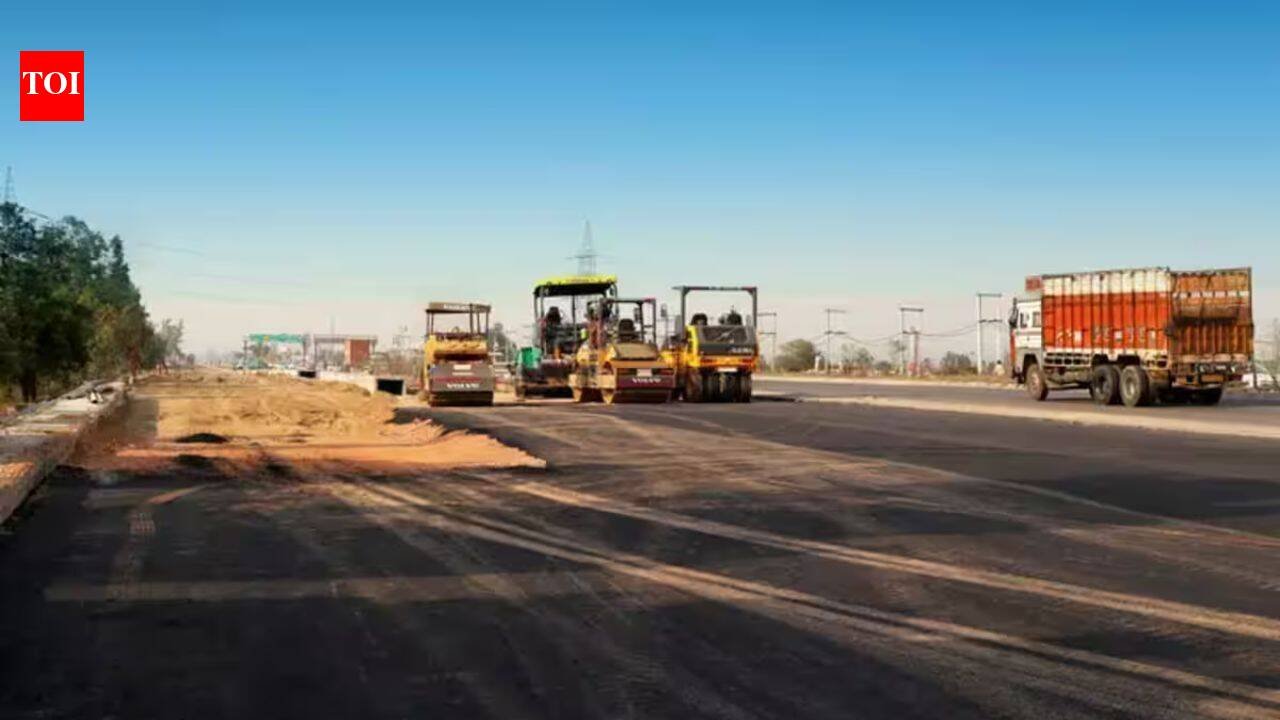
Uttar Pradesh has witnessed a fundamental transformation in its transport and connectivity landscape. Since 2017, the state’s approach to transportation has moved beyond merely building roads and increasing the number of vehicles on them. The emphasis has increasingly been on creating an integrated mobility network that connects villages with towns, towns with cities, cities with major economic centres and the state itself with national and international markets. Expressways, highways, rural roads, metro rail, regional rapid transit, airports, electric buses, digital transport services and new last-mile connectivity initiatives have together created a new architecture of mobility in Uttar Pradesh.The latest example of this transformation is the ‘Mukhyamantri Gram Parivahan Yojana’, which represents the government’s attempt to take the benefits of this expanding transport network to the doorstep of rural households. Approved by the Yogi Adityanath government in March 2026, the scheme has moved rapidly from policy to implementation. In less than four months, bus services under the scheme had begun in 56 of Uttar Pradesh’s 75 districts. A total of 1,012 applications had been received, 858 applicants selected and 215 mini buses put into operation on rural routes. The objective is to connect Gram Panchayats with transport facilities and make travel to block, tehsil and district headquarters easier for villagers.The scale of the early rollout demonstrates the importance being attached to the last mile. Prayagraj has recorded the highest number of buses under the scheme, with 43 vehicles in operation, followed by Muzaffarnagar with 27, Jhansi with 19 and Mathura with 18. Services have also begun in districts including Jaunpur, Hapur, Banda, Etah, Mau, Jalaun and Ballia. The scheme provides for diesel, CNG and electric mini buses with seating capacity of 15 to 28 passengers. In the NCR region, only CNG and electric vehicles are permitted. By bringing private operators into routes where Uttar Pradesh State Road Transport Corporation services are limited, the scheme is designed to fill gaps that conventional public transport cannot immediately address.The significance of this initiative becomes clearer when viewed against the larger transport transformation of the last nine years. Uttar Pradesh today has one of India’s most extensive multimodal connectivity systems. Invest UP describes the state as accounting for about 55 per cent of India’s expressway network, with 22 expressways listed—seven operational and 15 under construction. The state’s connectivity ecosystem also includes international and domestic airports, metro systems, the Delhi-Ghaziabad-Meerut Namo Bharat corridor and major freight corridors.The Expressway RevolutionPerhaps the most visible symbol of Uttar Pradesh’s transport transformation has been the emergence of the expressway network. The state has increasingly adopted expressways not merely as high-speed roads but as economic corridors linking agriculture, manufacturing, logistics, defence production, tourism and urban centres.The Agra-Lucknow Expressway created an important north-south connectivity axis, while the Purvanchal Expressway transformed east-west connectivity between Lucknow and eastern Uttar Pradesh. The Bundelkhand Expressway has opened a new transportation spine for one of the state’s historically less-connected regions. These corridors have reduced travel times, improved access to markets and created opportunities for industrial and logistics development along their routes.The Ganga Expressway represents the next stage of this strategy. Stretching approximately 594 kilometres from Meerut to Prayagraj, the six-lane, access-controlled corridor passes through or benefits districts including Meerut, Hapur, Bulandshahr, Amroha, Sambhal, Badaun, Shahjahanpur, Hardoi, Unnao, Rae Bareli, Pratapgarh and Prayagraj. The project was inaugurated in April 2026.The emerging expressway grid is important because it is changing the geography of economic activity. Industrial parks, logistics hubs, warehousing facilities and investment zones can now be developed around high-speed corridors. Uttar Pradesh’s logistics and warehousing strategy explicitly envisages logistics hubs along expressways and links them with industrial corridors and dedicated freight corridors.The next phase is already being planned. Proposed projects include the Chitrakoot Link Expressway, links between the Agra-Lucknow and Purvanchal Expressways, a Farrukhabad link to the Ganga Expressway, a Jewar-Bulandshahr-Ganga Expressway link, the Jhansi Link Expressway, Meerut-Haridwar Expressway and Vindhya Expressway. Thus, the expressway programme is evolving from individual projects into an integrated network.Rural Roads and the Last-Mile ChallengeHowever, an expressway can transform the state’s economy only when people and goods can reach it. This is why rural roads remain an equally important component of the transport story.Over the past nine years, extensive road construction and widening have improved village connectivity, with thousands of kilometres of new rural roads and widened roads reported across the state. The larger objective has been to connect habitations with block headquarters, markets, schools, healthcare centres and transport hubs.Yet physical road connectivity does not automatically mean mobility. A village may have a good road but still lack a regular bus. This is precisely the gap that the Mukhyamantri Gram Parivahan Yojana seeks to address.The scheme therefore represents a shift from road connectivity to mobility connectivity. Its objective is not simply to ensure that a road reaches a village, but that a villager can actually travel from the village to the tehsil or district headquarters at a reasonable time and cost.The use of 15-to-28-seater mini buses is particularly suited to rural routes where large buses may not be commercially viable. The involvement of local applicants, drivers and conductors also gives the scheme an employment dimension. In this sense, rural transport becomes both a public service and an avenue for local economic activity.The scheme’s provision for vehicles up to specified age limits, regional selection committees headed by District Magistrates and monthly monitoring by Regional Managers reflects an attempt to combine speed of implementation with administrative oversight.Metro Rail Changes Urban MobilityWhile rural Uttar Pradesh has been receiving greater attention through road and bus connectivity, the state’s cities have simultaneously undergone a major transformation in urban mobility.Lucknow became the first major example of the new metro era. The Lucknow Metro has evolved into an important component of the capital’s public transport system. Uttar Pradesh Metro Rail Corporation currently operates metro systems in Lucknow, Kanpur and Agra, while Noida’s metro connectivity has also strengthened the NCR transport ecosystem. UPMRC’s passenger platform now provides journey planning, station information, digital recharge and other passenger services.Kanpur Metro extended the metro revolution to Uttar Pradesh’s industrial heartland, while Agra Metro brought modern mass rapid transit to one of India’s most important tourism cities. The significance goes beyond the number of kilometres constructed. Metro rail provides an alternative to private vehicles, reduces dependence on congested roads and creates a more structured public transport system in rapidly expanding cities.The experience of these cities has also encouraged the state to think in terms of multimodal urban mobility, where metro stations, buses, roads, parking, pedestrian movement and digital ticketing increasingly need to work together.Namo Bharat and a New Generation of Regional MobilityPerhaps the most technologically significant addition to Uttar Pradesh’s transport network has been the Namo Bharat Regional Rapid Transit System.The Delhi-Ghaziabad-Meerut corridor represents a different model from conventional metro rail. Instead of primarily serving intra-city travel, regional rapid transit is designed to facilitate high-speed movement between major urban centres and the National Capital Region. Uttar Pradesh’s investment ecosystem describes the Delhi-Ghaziabad-Meerut corridor as India’s first Rapid Rail Transit System.For Meerut and western Uttar Pradesh, this creates the possibility of a much more integrated regional labour and economic market. People can live farther from Delhi while accessing employment, education, healthcare and business opportunities across the NCR.The emergence of Namo Bharat is therefore an important part of the state’s larger transport philosophy: connectivity is no longer confined to district boundaries. Economic regions are increasingly being connected through high-speed public transport.Electric Mobility and Cleaner Public TransportAnother major change over the past nine years has been the growing emphasis on electric mobility. Uttar Pradesh has increasingly incorporated electric buses into its urban transport strategy, alongside charging infrastructure and policies encouraging electric vehicles. The objective is not merely to modernise public transport but also to reduce dependence on fossil fuels, improve urban air quality and make public transportation more sustainable.The direction of policy is evident in the government’s continued expansion of electric bus procurement. Invest UP reported in July 2026 that Rs 400 crore had been earmarked for new electric buses in the state.The importance of electric buses is particularly high in cities where public transport demand is growing rapidly. Replacing conventional diesel buses with electric vehicles can simultaneously address mobility, energy efficiency and environmental concerns.The Mukhyamantri Gram Parivahan Yojana takes this philosophy into rural areas by allowing electric mini buses alongside diesel and CNG vehicles. This opens the possibility that rural transport expansion and clean mobility can progress together.Digitalisation of TransportThe transformation has also been digital. Modern transport in Uttar Pradesh increasingly involves digital ticketing, route information, vehicle tracking, online services and technology-based monitoring. Metro systems provide digital recharge and journey-planning facilities, while transport authorities have introduced systems for tracking buses and providing route information. The Transport Department’s Vehicle Location Tracking and Emergency Alert System, for example, is designed to enable bus-route searches and vehicle tracking.Digitalisation is gradually changing the experience of public transport from an uncertain service into a more predictable one. A passenger increasingly expects to know where a bus is, when it will arrive and how to plan the journey.The introduction of integrated and common mobility solutions, including initiatives such as One UP One Card, has further reflected the state’s effort to make public transportation more convenient.Air Connectivity Expands the Transport NetworkThe transformation of transport infrastructure has not been restricted to roads and railways. Uttar Pradesh has also expanded its aviation network.The state’s major airports at Lucknow, Varanasi, Kushinagar, Ayodhya and the newly emerging Jewar/Noida International Airport have strengthened air connectivity, while a wider network of domestic airports is bringing air travel closer to more districts. Invest UP currently lists five operational international airports and 16 domestic airports in its connectivity profile.The opening and expansion of airports have important implications for tourism, investment, trade and employment. Ayodhya’s growing connectivity, for example, has acquired significance because of its religious tourism potential. Varanasi’s international connectivity supports tourism and business, while Jewar is expected to become a major aviation and logistics gateway for western Uttar Pradesh.Transport as an Economic MultiplierThe most important aspect of Uttar Pradesh’s transport transformation is that roads, expressways, railways, airports and buses are no longer being viewed as separate infrastructure projects.The transport network is increasingly being integrated with industrial corridors, logistics parks, defence manufacturing, agricultural markets and tourism destinations. The Eastern Dedicated Freight Corridor has a particularly significant presence in Uttar Pradesh, while the state is also part of the Western Dedicated Freight Corridor network. Invest UP highlights the state’s strategic position at the intersection of freight, industrial and expressway networks.This has the potential to reduce logistics costs, improve supply-chain reliability and make industrial investment more attractive. Expressways enable faster road movement; freight corridors handle bulk cargo; airports handle high-value and time-sensitive goods; metro and rapid rail move workers; and rural buses connect people to the larger network.From Connectivity to Inclusive MobilityThe story of Uttar Pradesh’s transport transformation over the past nine years can therefore be divided into several stages. The first was strengthening roads and highways. The second was building large expressway corridors. The third was modernising urban mobility through metro rail. The fourth was introducing regional high-speed public transport through Namo Bharat. The fifth has been the transition towards electric and digital mobility. The latest stage is ensuring that these benefits reach rural communities through reliable last-mile transport.The Mukhyamantri Gram Parivahan Yojana is significant precisely because it addresses the final gap in this chain. A state can build world-class expressways and metro systems, but the transformation remains incomplete if a villager cannot easily reach the nearest town or district headquarters.With 215 mini buses already operating across 56 districts within months of the scheme’s approval, the government has sought to demonstrate that policy implementation can move quickly from the state capital to rural roads. The target of eventually covering all 75 districts and connecting Gram Panchayats represents a logical extension of the broader connectivity strategy.The next challenge will be to sustain service quality, ensure financial viability of rural routes, expand electric mobility, improve passenger safety and integrate village services with larger transport hubs.Nevertheless, the trajectory of the last nine years is unmistakable. Uttar Pradesh’s transport system is moving from a conventional road-and-bus model towards an integrated mobility ecosystem. Expressways are linking regions, metros are reshaping cities, Namo Bharat is shrinking regional distances, airports are opening new gateways, electric buses are supporting cleaner mobility, digital systems are improving passenger experience and rural mini buses are taking public transport towards the last mile.The larger transformation is therefore not simply about constructing kilometres of roads or adding buses and trains. It is about shrinking distances—between villages and towns, towns and cities, eastern and western Uttar Pradesh, workers and workplaces, producers and markets, tourists and destinations, and the state and the national economy.After nine years of sustained infrastructure expansion, Uttar Pradesh is increasingly building a transport system in which connectivity is becoming an instrument of economic growth as well as social inclusion. And with initiatives such as the Mukhyamantri Gram Parivahan Yojana, the focus is now moving decisively towards ensuring that the benefits of this transformation reach not only the major highways and metropolitan centres, but also the last village.
