




The location: absolutely picturesque. The people: warm and cordial. The culture: vibrant. But that’s precisely where the niceties dissolve. Confront them on an unforgiving 22-yard strip, and the warmth hardens into will, the smiles fade into steely stare-downs.
Ask domestic powerhouse and 42-time champion Mumbai. Ask two-time titleholder Rajasthan. Ask two-time winner Hyderabad. Ask five-time titlist Madhya Pradesh. Ask former title holder, Bengal. Now include eight-time powerhouse Karnataka.
Each will narrate a different battle. Different sessions seized. Defining moments wrested away. Yet the conclusion remains chillingly consistent — Jammu and Kashmir are fierce, relentless, and unapologetically serious about their craft. Now perched at the summit of the nation’s premier red-ball competition — the Ranji Trophy — they stand tall, composed, and commanding after overpowering Karnataka’s celebrated batting unit in the final. From the valleys to the pinnacle of Indian domestic cricket, they have earned their place at the top. Every remarkable journey needs heroes — and for J & K, they have come in numbers. Meet the protagonists. The men on the field, and just as importantly off it, who have crafted this story to near perfection.
Auqib Nabi: The Baramulla Express has been central to J & K’s historic triumph. Over the past two seasons, 2024-25 and 2025-26, he has derailed one side after another, establishing himself as the spearhead of a team that had never previously reached the top four in any competition.
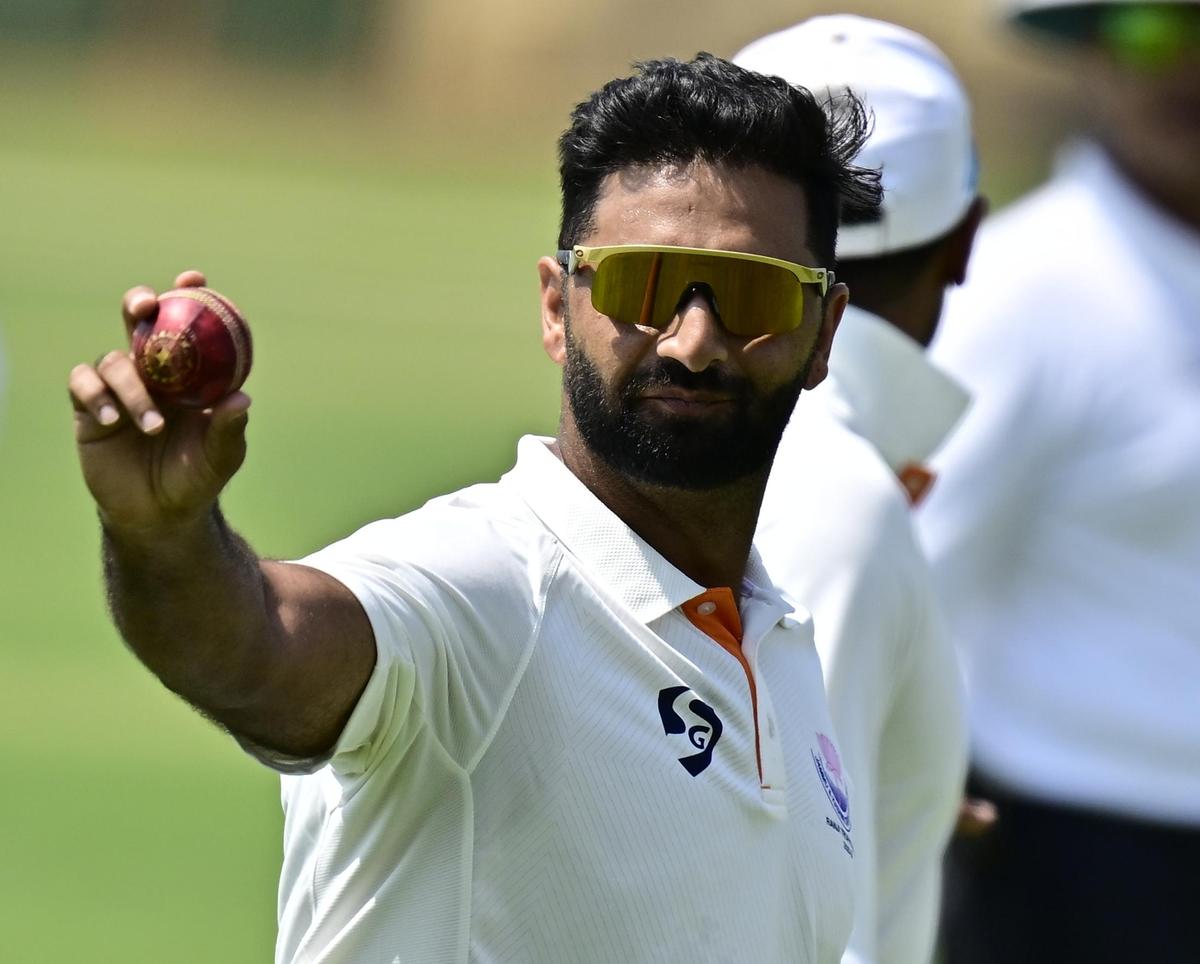
Auqib Nabi finished as the leading wicket-taker with 60 scalps.
| Photo Credit:
K. MURALI KUMAR
He hasn’t merely been effective; he has transformed J & K’s bowling identity. In the final at Hubballi, Nabi rose to the grandest stage. He dismissed accomplished Test batters K.L. Rahul and Karun Nair with deliveries of the highest quality — both pitched on a probing length, kissed the seam, and shaped away just enough. Rahul could only feather a faint edge, while Nair’s furniture disturbed as he stood momentarily stunned. Nabi wasn’t done. He went on to claim three more wickets, including the home side’s lone centurion, Mayank Agarwal and leading run-scorer R. Smaran, effectively breaking the backbone of Karnataka’s resistance.
This season, Nabi finished as the leading wicket-taker with 60 scalps. Across the two campaigns combined, he has amassed a staggering 104 wickets. In this period, he has registered 13 five-wicket hauls in just 18 matches. He became the first J & K bowler to claim 50-plus wickets in a single Ranji season and the first from the state to top the tournament’s bowling charts. Notably, he had already set a benchmark the previous year with 44 wickets.
In 2025-26 alone, Nabi recorded eight five-wicket hauls — the joint-most by any pacer in a first-class season in India. Only Maurice Tate (1926-27) and Ron Oxenham (1935-36) have matched that mark.
Such sustained excellence has inevitably sparked widespread clamour from stalwarts of the game, calling for his inclusion in the National side — and rightly so.
Sunil Kumar: The Silent Warrior has provided unwavering support from the other end. The 26-year-old left-arm seamer was a study in control throughout the season, operating with precision, patience and discipline. His ability to land the ball in probing areas, over after over, created the pressure that allowed breakthroughs to follow.
While the spotlight often tilted elsewhere, Sunil’s quiet spells squeezed opposition batters into mistakes. He concluded the campaign with 31 wickets, including two five-wicket hauls — numbers that reflect both consistency and craft. Understated in demeanour, Sunil has gone about his work without fanfare. If one end brought the thunder, the other ensured the storm never relented.
Abdul Samad: The Middle-Order Mauler’s immense skill, range, and potential flickered in phases. This season, it burned bright. If J & K had the arsenal to dismantle sides with the ball, they required a pillar with the bat to stack up the runs. Samad answered that call.
Often branded a white-ball player, the 24-year-old reshaped that perception in the recently concluded campaign. His red-ball game displayed maturity, patience, and a willingness to graft — qualities that added depth and assurance to the batting order.
Samad finished as the team’s highest run-scorer, amassing 748 runs in 10 matches at an impressive average of 57.53, including a century and five half-centuries. In the final, his composed 61 off 104 deliveries played a crucial role in powering J & K to a formidable 584.
Beyond the numbers, it was his temperament that stood out. Batting in the middle order, Samad provided stability in testing phases, absorbing pressure and constructing vital partnerships. Whether in the high-stakes final or in knockout clashes against Madhya Pradesh in the quarterfinal and Bengal in the semifinal, he delivered when it mattered most.
Paras Dogra: The Veteran and Leader’s journey in the Ranji Trophy began in 2002. Having represented Himachal Pradesh and Puducherry over a career spanning more than two decades, the seasoned campaigner finally realised a long-cherished dream — lifting the Ranji Trophy as captain of Jammu & Kashmir.
He will forever be remembered as the first skipper to guide J & K to a Ranji title. At 41, Dogra brought far more than runs to the table. His leadership, calm authority, and vast domestic experience offered direction and balance to a side scripting history. In tense phases, his presence steadied the dressing room; in defining moments, his bat did the talking.
Dogra ended the season as J & K’s second-highest run-scorer, compiling 637 runs in 10 matches at an average of 42.46, with two centuries and four half-centuries. This season also marked a personal milestone — Dogra crossed the 10,000-run mark in the Ranji Trophy, becoming only the second batter after former India opener Wasim Jaffer to reach that landmark in the tournament’s history.
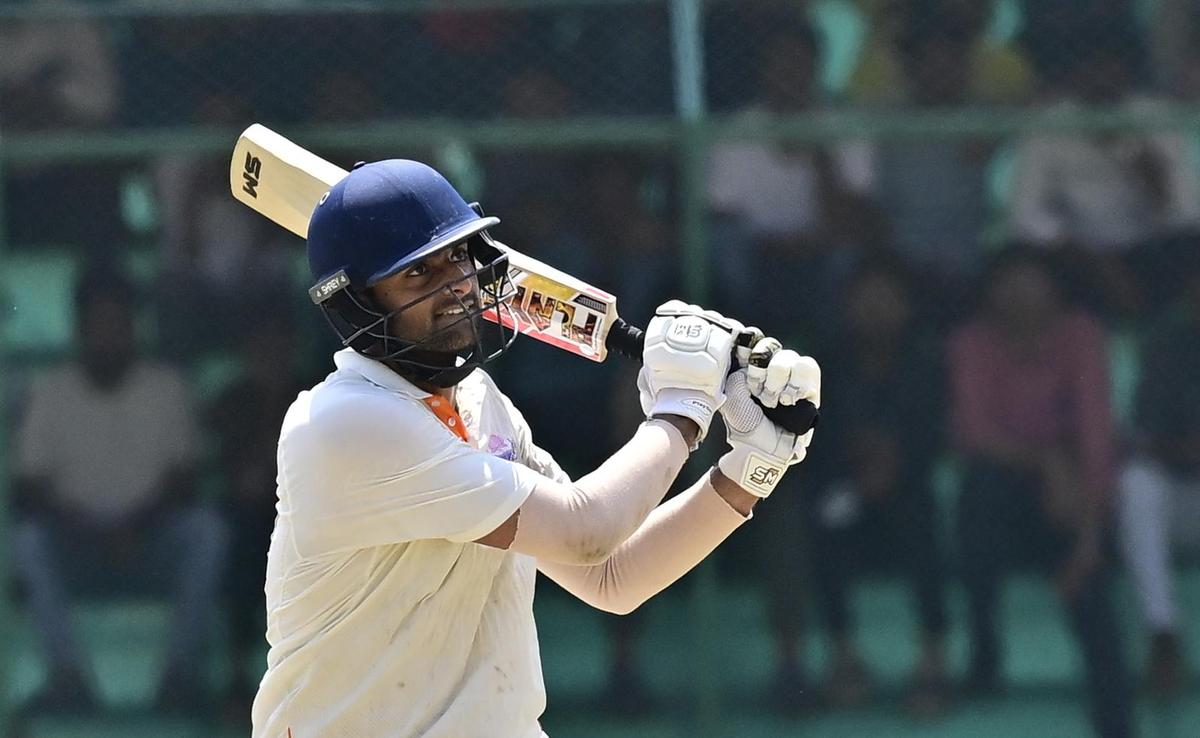
Qamran Iqbal notched up a hundred in the final.
| Photo Credit:
K. MURALI KUMAR
Qamran Iqbal: The Blaster’s appearance in the final was dramatic. Having featured in the earlier rounds, he was not part of the squad for the knockouts. But a last-minute injury to regular opener Shubham Khajuria forced the team management to fly him to Hubballi on the eve of the title clash — a sudden call that handed him a historic opportunity.
Qamran responded emphatically. In the second essay, he produced a monumental unbeaten 160 off 311 deliveries, after his side was reduced to 31 for two. It was an innings of endurance and authority, one that knocked out Karnataka.
Across the tournament, Qamran amassed 471 runs in six matches at an average of 58.87, including two centuries and two fifties. But it was that defining knock in the final — arriving as a last-minute replacement — that will permanently be written in J & K’s cricketing folklore.
Shubham Pundir: The Grinder was another vital cog in the J & K wheel. Heading into Hubballi, his place in the XI was under scrutiny following modest returns in the quarterfinal and semifinal against Madhya Pradesh and Bengal.
Pundir answered — with runs. Walking in at No. 3, he crafted a resolute 121 in the first innings of the final, anchoring the batting effort and steering J & K to a mammoth total. It was an innings built on patience, discipline, and determination, laying a rock-solid foundation for what would become a title-winning performance. He was rightly adjudged Player of the Match for his defining century. In the 2025-26 Ranji season, Pundir accumulated 330 runs in four matches, including two hundreds, at an average of 47.14 — a grinder who delivered when it mattered most.
Sahil Lotra: The Middle- and Lower-Order Punisher was as decisive as the other headline-makers. Coming into the summit clash, he rose magnificently.
In the first innings, Sahil struck a vital 72, providing valuable momentum from the middle order and helping push the total to imposing heights. If that was important, what followed was extraordinary. In the second, he compiled a commanding unbeaten 101. Alongside Qamran, he stitched an unbroken 197-run partnership for the fifth wicket, a stand that flattened Karnataka’s hopes and sealed the title.
Abid Mushtaq: The All-Round Engine ensured that J & K chugged along merrily to a historic Ranji Trophy triumph. An all-rounder in the truest sense, Mushtaq provided the balance every champion side requires — steady runs in the lower middle-order and timely breakthroughs with the ball.
This season, he amassed 445 runs in 10 matches at an average of 37.08, including a century and a half-century. With the ball, he was equally dependable, claiming 20 wickets at an average of 31.75 and maintaining a tidy economy rate of 3.20. His five-wicket haul during the campaign underlined his ability to influence games with more than just control. Mushtaq’s consistent presence across disciplines ensured J & K were never one-dimensional. His all-round impact stitched the campaign together, playing a crucial part in transforming a dream into a landmark achievement.
Ajay Sharma: The Monk, Mentor and Motivator always remained a step ahead of the opponent(s). A stalwart, who scored over 10,000 First Class runs and picked up crucial wickets during his playing career, the head coach brought a treasure trove of experience to the team — yet chose to lead quietly from behind the scenes, observing, guiding, and fine-tuning every detail.
Known for his strict discipline, Ajay demanded focus and commitment from every player. Initially, the squad found his methods exacting, even daunting. But as trust grew, so did their performance. His combination of rigorous preparation, tactical acumen, and belief in his players has been instrumental in shaping his team into the formidable force they are today.
Krishna Kumar: The Miracle Maker was instrumental in shaping the bowling unit into the potent force it has become. Much of the transformation happened away from the spotlight — in long pre-season sessions that began as early as the All India Buchi Babu tournament in Chennai last August.
It is no coincidence that bowlers like Nabi, Sunil, Yudhvir Singh and others have evolved into a lethal pack. Behind their sharp spells lies meticulous planning, clarity of roles, and relentless preparation, thanks to the former Rajasthan pacer’s influence as the bowling coach.
In a chat with the The Hindu during the Ranji season, he underlined what sets the side apart. “Unity is the key. We’re bonding very well. If someone makes a mistake, we don’t criticise them, we encourage them. The dressing room environment is fantastic. Earlier, some small aspects were ignored, but now everything is professional. Even a small misfield is discussed in meetings. That has made everyone responsible. We’re ticking most boxes, and that’s making a huge difference.” Those words now resonate louder than ever.
Dishant Yagnik: The Visionary boldly predicted during the Buchi Babu tournament that his side would lift the trophy. That prophecy has come true.
But Yagnik’s vision stretches beyond one crown. “Yes, and I’ll stand by it. I truly believe that JKCA will be the first team in Indian domestic cricket to win all three formats in a single season — Ranji Trophy, Vijay Hazare, and Syed Mushtaq Ali. Call it a vision, a dream, or a claim — but it’s rooted in what I’ve seen: the players’ mindset, the administration’s support, and the overall attitude. When a team wants to win that badly, victory is not too far away”.
Bold words — but after this historic campaign, few would doubt the belief that fuels this dressing room.

