



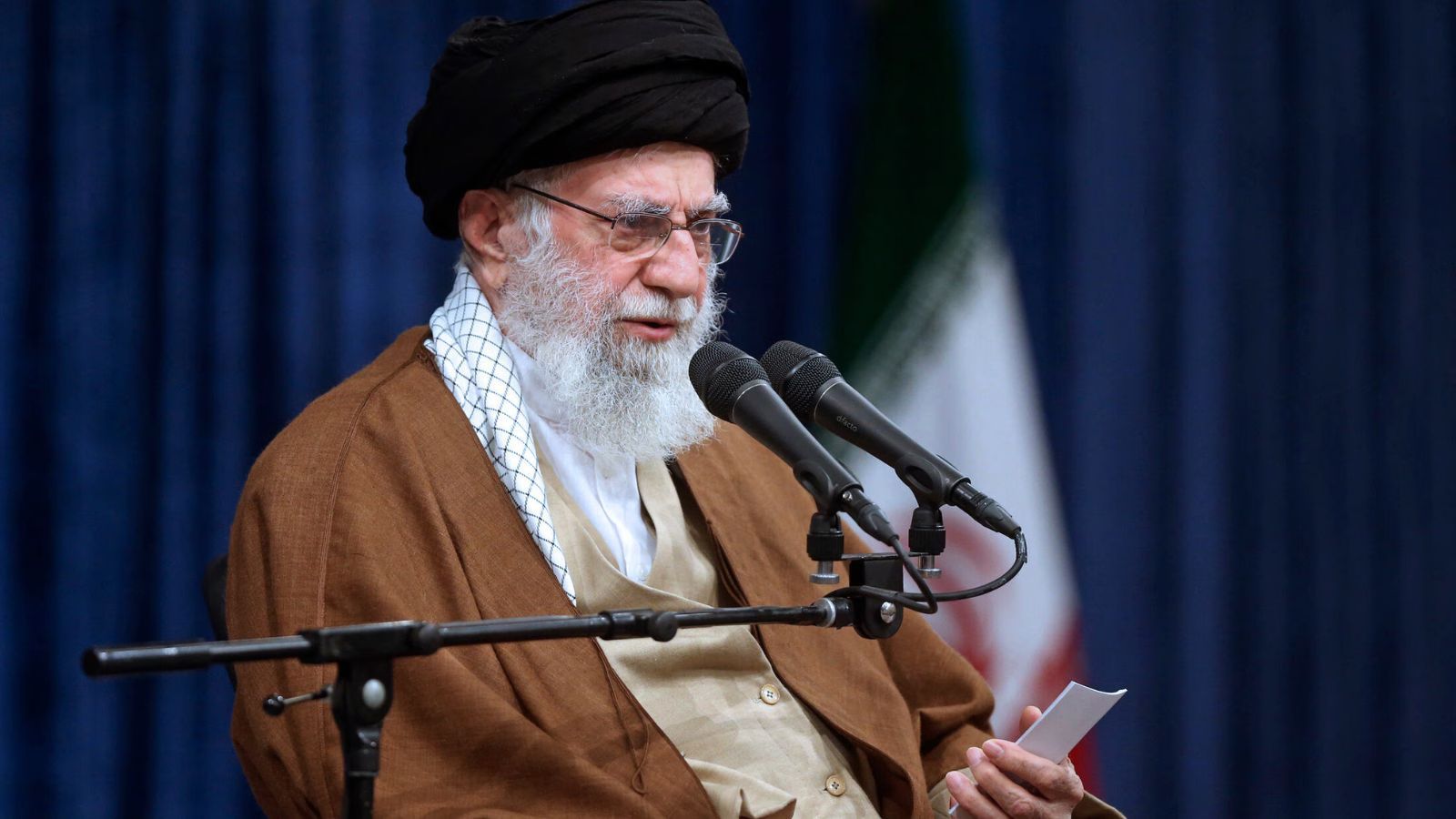
The attack on Iran by the US and Israel, killing the country’s supreme leader, Ayatollah Ali Khamenei, begins a new chapter in the future of Iranian politics and the power dynamics of West Asia. Several leaders have also been killed. They include Sayyid Abdolrahim Mousavi, the chief of staff of Iran’s armed forces and the country’s defence minister, Aziz Nasirzadeh. The strikes claimed the lives of high-level military officials, including Rear Admiral Ali Shamkhani, secretary of the Defence Council, and Mohammad Pakpour, commander of the Islamic Revolutionary Guard Corps.
The fact that multiple Arab states in the Persian Gulf, including Bahrain, Kuwait, Qatar and the United Arab Emirates, were targeted by the Iranian missiles shows that the Iranian regime views the situation as a fight for survival. However, it is practically impossible to determine the course events will take.

Israel has used the word “preemptive” to justify its attack, but US President Donald Trump has called on the Iranian people to rise and overthrow the country’s Islamic regime. To many in Washington and in the European capitals, it seems that what the US President intends to achieve is something similar to what happened in Venezuela in January — get rid of the unpopular leadership and invite reformists in the country to cooperate with Washington. However, this will not work the way it did in Venezuela for the simple reason that any regime change in Iran should necessarily include opposition figures in exile, and the most popular among them, Reza Pahlavi, the son of Iran’s Shah who was deposed after the Islamic Revolution.
Analysts know well that Iran is a much more complicated country than Venezuela. Its leadership structure is not only theocratic but also military. Khamenei can easily be replaced by another ayatollah (as he himself succeeded his predecessor, Ruhollah Khomeini), but the US and Israel will have to deal with the Islamic Revolutionary Guard Corps (IRGC), the Praetorian Guard of the Islamic Republic of Iran, a military, political, and economic organisation established in 1979. The IRGC is considered to be one of the strongest standing political structures born out of the Islamic Revolution. It was initially charged with protecting the ideological achievements of the Iranian Revolution. However, the IRGC has used its constitutionally mandated role to legitimise its power and extend its political influence. When it comes to its roles and responsibilities, the lines have become blurred in recent times.
Former IRGC commanders have increasingly dominated top positions in Iran, including the presidency (Mahmoud Ahmadinejad) and the speakership of the parliament (Mohammad Bagher Qalibaf), particularly in the past two decades. This has provided an avenue for the further accumulation of power and influence and the expansion of the IRGC’s roles and responsibilities within and outside Iran. The Islamic Revolutionary Guards are the true decision-makers of the Islamic Republic — their activities appear to go unchallenged, free from any clerical oversight.
The Islamic Revolutionary Guards control the three major areas of the Iranian regime. First is the economic sector, as they have gained what appears to be absolute control over all state contracts and investments. Second, the Revolutionary Guards have entrenched themselves in the internal political affairs of the state. And lastly, the military capabilities of the Guards are so extensive that challenging them could be disastrous for the clerics. Their military capabilities also pose a serious threat to any future political leadership in Iran. There is not a shadow of a doubt that the massacre of numerous Iranian protestors during the January 8-9 crackdown was ordered by Khamenei and organised by the IRGC. Also, until now, members of the IRGC have pursued a foreign policy that was not designed primarily to benefit the Iranian people, but rather to intensify their domination of the country’s economic and political spheres.
Trump has said that he will offer immunity to members of the IRGC if they put down their guns and stop fighting. But the truth is that the forces of the IRGC have long supported terrorism across West Asia, undermined regional stability and continued to advance their ideology against any effort of democratisation. They have also brutally repressed their own citizens and embezzled billions of dollars in oil revenue that rightfully belonged to the Iranian people and was never fully recovered.
If by any chance there is a non-bloody regime change in Iran, what the Iranian people will need is in the future is a third way — one between the extremes of vengeance and national amnesia, which consists of judicial mechanisms that would allow the victims of state crimes and abuses to tell their stories in their own words. All things considered, victim involvement in the future process of transitional justice would be a positive action for national healing in Iran. National healing speaks to something larger than any particular political offence and works its magic by a kind of therapeutic power that cannot be understood merely in terms of transition to democracy.
After all, what is important for Iran is not only to attain victory for democracy, but also to be mindful of the terrible past from which this democracy will come one day.
The writer is director, Mahatma Gandhi Centre for Nonviolence and Peace Studies, OP Jindal Global University
