



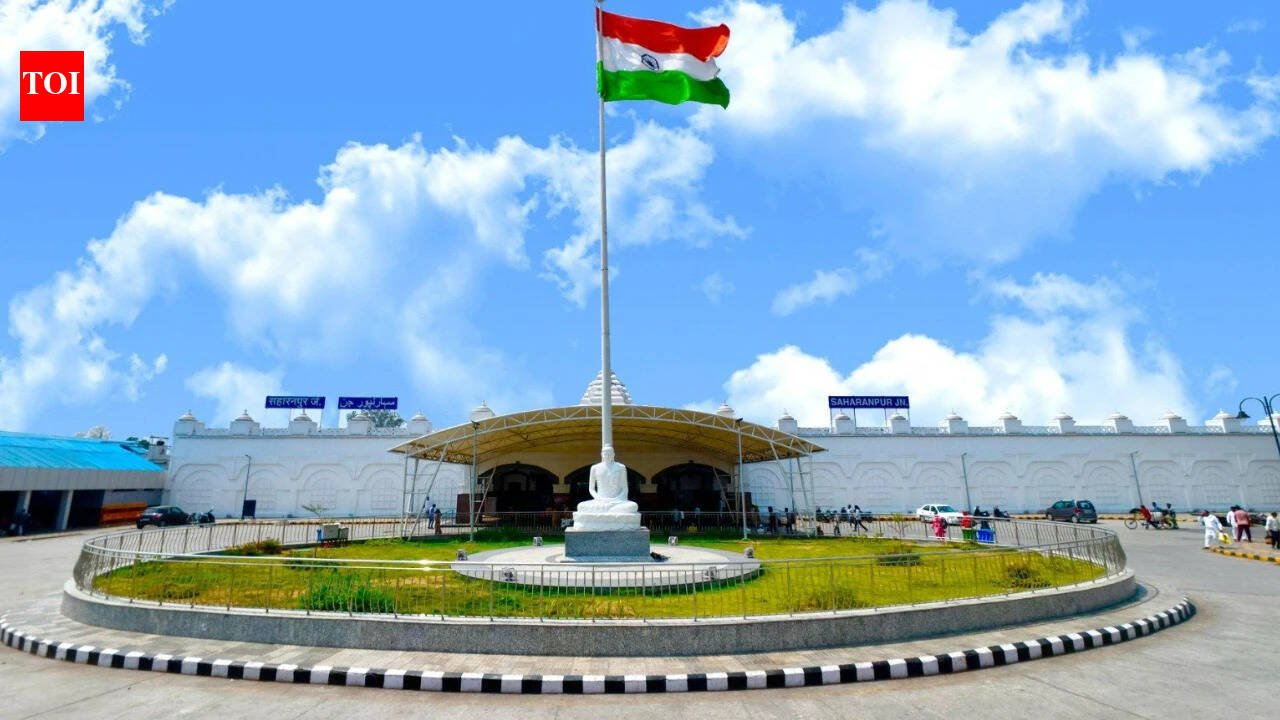
Saharanpur’s economic journey over the last nine years reflects the wider transformation taking place across Uttar Pradesh. Since 2017, the district has gradually moved beyond its traditional dependence on agriculture and small-scale industries, building a more diversified economic base supported by infrastructure expansion, improved connectivity, promotion of traditional crafts, industrial development and rising household incomes. While Saharanpur may not have emerged as an economic outlier on the scale of Gautam Buddha Nagar or Lucknow, it has established itself as a significant mid-tier economy of western Uttar Pradesh, with steady gains in output and per capita income.One of the clearest indicators of this transformation is the rise in Saharanpur’s Gross District Domestic Product. The district’s GDDP was estimated at around Rs 32,230 crore in 2019-20. After a relatively subdued period, the economy accelerated, reaching approximately Rs 33,900 crore in 2021-22 and Rs 41,365 crore in 2022-23. In 2023-24, the district economy was estimated at around Rs 45,942–Rs 46,935 crore, before rising sharply to approximately Rs 53,058 crore in 2024-25. This represented annual growth of about 13 per cent in the latest reported year. Saharanpur now contributes roughly 1.75–1.79 per cent to Uttar Pradesh’s GSDP and ranks around 13th among the state’s districts.Importantly, growth has not been confined to a single sector. Saharanpur recorded strong expansion across agriculture and allied activities, manufacturing and other industries, as well as services. In the latest reported year, the primary sector grew by around 16.5 per cent, the secondary sector by approximately 14.3 per cent and the tertiary sector by about 12.1 per cent. This broad-based expansion is significant because it indicates that the district’s economic growth is gradually becoming less dependent on agriculture alone. Agriculture remains an important pillar, particularly through sugarcane, food grains and allied activities, but manufacturing, trademark furniture, handicrafts, trade, transport and services are increasingly contributing to local economic activity.The rise in per capita income provides another important measure of the change. Saharanpur’s per capita income, measured on the Net District Domestic Product basis at current prices, was around Rs 63,264 in 2017-18 and increased to approximately Rs 68,880 in 2018-19. It reached around Rs 71,700–Rs 73,200 in 2019-20. Like much of the country, the district experienced the economic effects of the Covid-19 pandemic, with per capita income declining to around Rs 68,700 in 2020-21. The recovery thereafter was substantial. It rose to approximately Rs 86,235 in 2021-22, around Rs 89,000–Rs 90,000 in 2022-23 and close to Rs 1 lakh in 2023-24. By 2024-25, Saharanpur’s per capita income was reported at around Rs 1,12,705, representing annual growth of nearly 12 per cent in one estimate. Thus, compared with the levels prevailing in the latter part of the previous decade, the nominal per capita income of the district has increased substantially.This economic expansion has been accompanied by an important transformation in Saharanpur’s traditional woodcraft industry. The district is internationally recognised for its intricate wood carving, an industry that provides livelihoods to thousands of artisans and workers. Traditionally dominated by small workshops and family-based enterprises, the sector has increasingly received institutional support under Uttar Pradesh’s One District One Product programme. The woodcraft industry is estimated to have a turnover of around Rs 1,000 crore and includes hundreds of export-oriented units. Under ODOP and associated programmes, margin-money assistance of around Rs 87.75 crore has reportedly been provided to 506 beneficiaries, while toolkits and training have benefited more than 2,275 artisans. Such interventions have helped traditional craftsmanship move towards a more formal, market-oriented and export-focused economic model.The significance of ODOP goes beyond financial assistance. It has helped Saharanpur’s woodcraft acquire greater visibility in national and international markets, while encouraging artisans to improve designs, production techniques, packaging and market access. The combination of traditional skills and modern commercial support is creating opportunities for younger entrepreneurs as well as established craftsmen. In this respect, Saharanpur illustrates how Uttar Pradesh’s traditional industries can become engines of local economic growth rather than simply surviving as heritage occupations.Infrastructure development has been another major driver of the district’s transformation. Improved road connectivity has strengthened Saharanpur’s relationship with major markets in western Uttar Pradesh, Delhi and neighbouring states. The Delhi–Dehradun Expressway/Economic Corridor has been particularly important, reducing travel time and improving access to markets, tourism destinations and industrial centres. Better connectivity is expected to benefit not only the woodcraft industry but also agricultural producers, traders, manufacturers and service providers by reducing logistics costs and expanding the effective market available to local businesses.Road widening and strengthening projects have further supported this process. Recent investments include packages involving hundreds of crores of rupees for improving important roads in and around the district. Such infrastructure is especially important for a district whose economy combines agriculture, handicrafts, manufacturing and trade. Better roads facilitate the movement of raw materials to production centres and finished products to markets, while also improving access to education, healthcare and employment opportunities.Saharanpur has also witnessed efforts to broaden its industrial and investment base. Industrial park-related initiatives, handicraft development centres, investments linked to ethanol and power, hospitality projects and urban infrastructure have contributed to a gradually changing economic landscape. The objective is increasingly to create an ecosystem in which agriculture can be linked with processing, traditional skills can be connected to modern markets, and improved infrastructure can attract new enterprises.Urban development has simultaneously become more important as rising incomes and economic activity create demand for better civic infrastructure, housing, education, healthcare and services. Saharanpur’s position as a major urban centre in western Uttar Pradesh gives it the potential to serve as a regional commercial and service hub for surrounding areas. Airport-related development and improvements in higher education and other public infrastructure could further strengthen this role.The district’s transformation must nevertheless be viewed realistically. Much of the reported growth is measured at current prices, meaning that inflation accounts for part of the increase. District-level estimates are also periodically revised, and figures from different provisional releases may vary. Real growth after adjusting for inflation would therefore be lower than the nominal increase. Moreover, Saharanpur continues to face challenges relating to industrial infrastructure, access to finance for small enterprises, modernisation of industrial clusters and the quality of urban services.Even with these limitations, the direction of change is clear. Saharanpur today has a larger and more diversified economic base than it did at the beginning of the post-2017 period. Its GDDP has expanded significantly, per capita income has crossed the Rs 1 lakh mark, traditional woodcraft has received new institutional and market support, and connectivity has improved substantially. Agriculture remains important, but the district is increasingly combining agriculture, manufacturing, handicrafts, trade and services into a broader economic ecosystem.
