



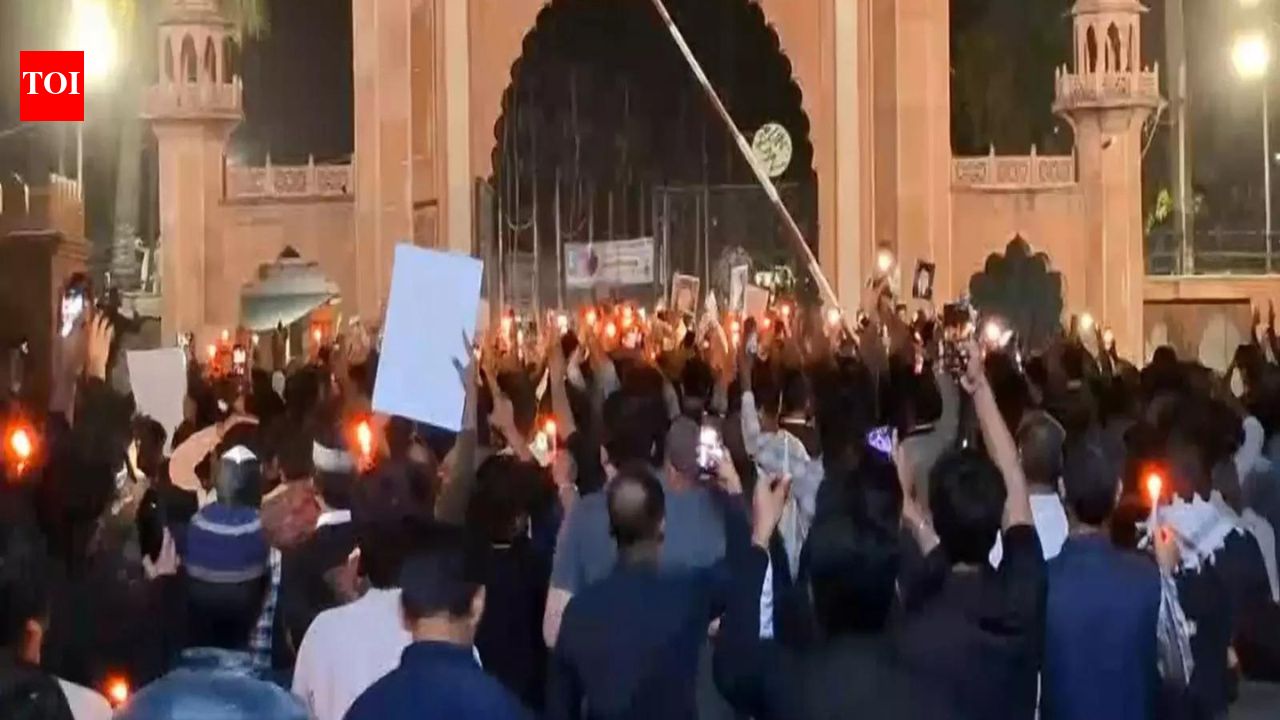
NEW DELHI: The death of Iran’s 86-year-old Supreme Leader Ayatollah Ali Khamenei in the recent US-Israel strike in Tehran has triggered an unusual response among sections of India’s Muslim community. In Lucknow, Hyderabad, Mumbai and Aligarh, condolence meetings, funeral prayers in absentia and messages online suggest a rare moment when Shias and Sunnis appear to be grieving the same leader, despite a long history of theological distance.Khamenei, who led Iran since 1989 after the death of Ayatollah Ruhollah Khomeini, was a Shia cleric and not a religious authority for Sunnis. Yet reactions to his death have crossed sectarian lines. For many Sunnis, the emotion has less to do with Iran and more with Palestine – a cause that cuts across sectarian divides in South Asia.“Iran’s leader was respected even among Sunnis because he spoke clearly and consistently on Palestine,” said Mufti Ahmad Khan, an Okhla-based cleric. “For many Muslims, the Palestinian cause matters more than sect.”Syed Sadatullah Husaini, chief of Jamaat-e-Islami Hind, said Khamenei’s life reflected political conviction as much as religious authority. A statement said his “martyrdom during the holy month of Ramadan has deeply saddened millions across the Muslim world”.Among some Sunni clerics, grief carried criticism of Muslim govts seen as silent. Imam Khumair, a Ghaziabad cleric, said it was the leader of the only Shia-majority country who “stood his ground and paid for it with his life”.Protests and condolence meetings were held across Shia pockets – from J&K and Ladakh to Lucknow, Aligarh, Hyderabad, Mumbai and Delhi. In several localities, black flags were raised outside imambaras, a gesture usually reserved for mourning linked to Karbala or the death of senior clerics. In Lucknow, Shia-led gatherings saw Sunni participation, with videos showing crowds chanting slogans.For many Shias, the language describing his death drew from Karbala, the defining event of Shia history. SM Tahir Husain, a Shia activist, said Muslims often ignored sectarian lines. “The Ayatollah was not just a leader for Shias”.At Aligarh Muslim University, students held funeral prayers in absentia. Scholar Basharat Ali said that in Shia political imagination, martyrdom becomes a source of unity and political strength.For many Shias in India, Iran carries religious significance as the world’s largest Shia-majority country and home to clerical centres such as Qom and Mashhad. For Sunnis, response has largely been political, framed around Palestine and opposition to Israel.

