



In the moonlit gardens of a palace, I stand in a cabbage patch with a chef and a hoe.
Chef Bikram Chandra Khadka cuts through the warm earth, careful to keep his white apron pristine. There is a clang. We kneel and lift out a steamy bundle, wrapped in sackcloth and bound with wire. A little deeper, we unearth a sealed handi. The seductive scent of caramelised meat, threaded with damp earth and smoke, wraps around us.
Dinner is served.
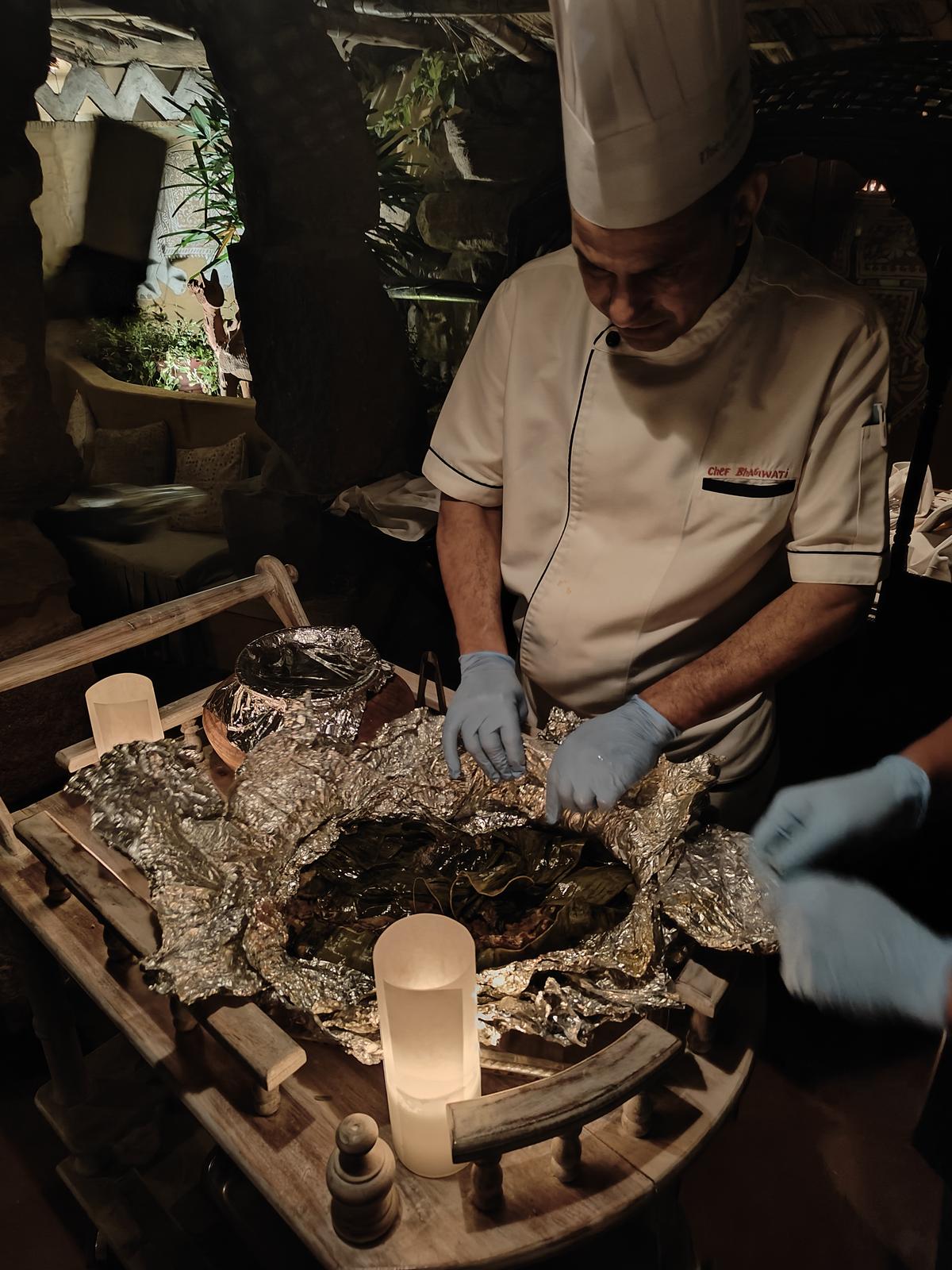
Chefs unwrap meat that has been slow cooked underground at Ajit Bhawan
| Photo Credit:
Shonali Muthalaly
I am at Ajit Bhawan, built in 1927 as the residence of Maharaj Dhiraj Sir Ajit Singh, the younger brother of Maharaja Umaid Singh of Jodhpur. In the late 1970s, part of it was opened to guests by the family, introducing the romance of royal Rajasthan to the world.
Heritage hotels across Rajasthan tend to lean heavily on history, glamour and laal maas. Ajit Bhawan is breaking away from the clichés by reviving and updating lost royal recipes for a modern audience, learning from the past while building for the future.
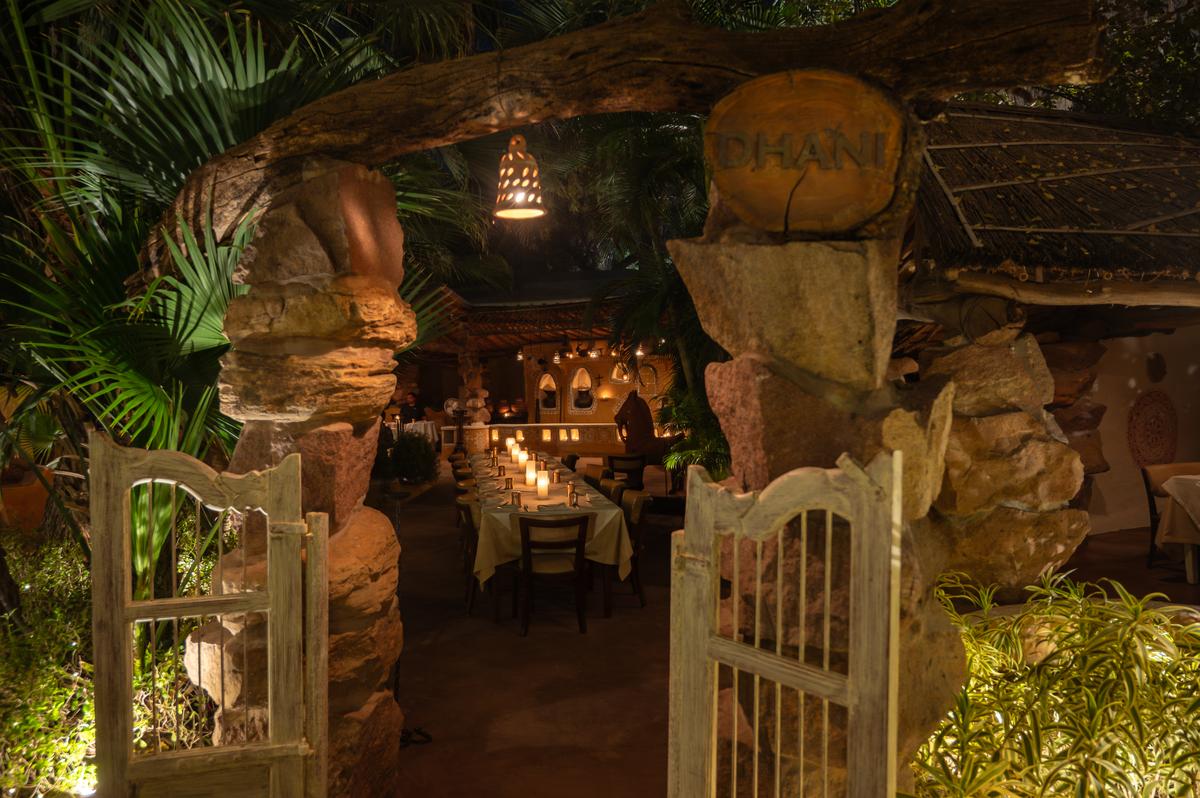
Dinner is served at Dhani, an open air restaurant celebrating traditional Rajasthani food
| Photo Credit:
Special Arrangement
My first lunch of jungli maas at the hotel is deeply satisfying. Made with lean, flavour-dense mutton from Narlai village, where herds roam freely and feed off the arid grasslands, it stays true to the simple recipe that originated from royal hunts: just ghee, salt, garlic and local brick-red Mathania chillies, famed for their complex, smoky heat.
“Now, they eat light food at the palace, things like salads and soups,” smiles Chef Bikram. But even as the palace kitchens have quietened, the hotel is becoming a testing ground for extravagant menus that keep the past alive.
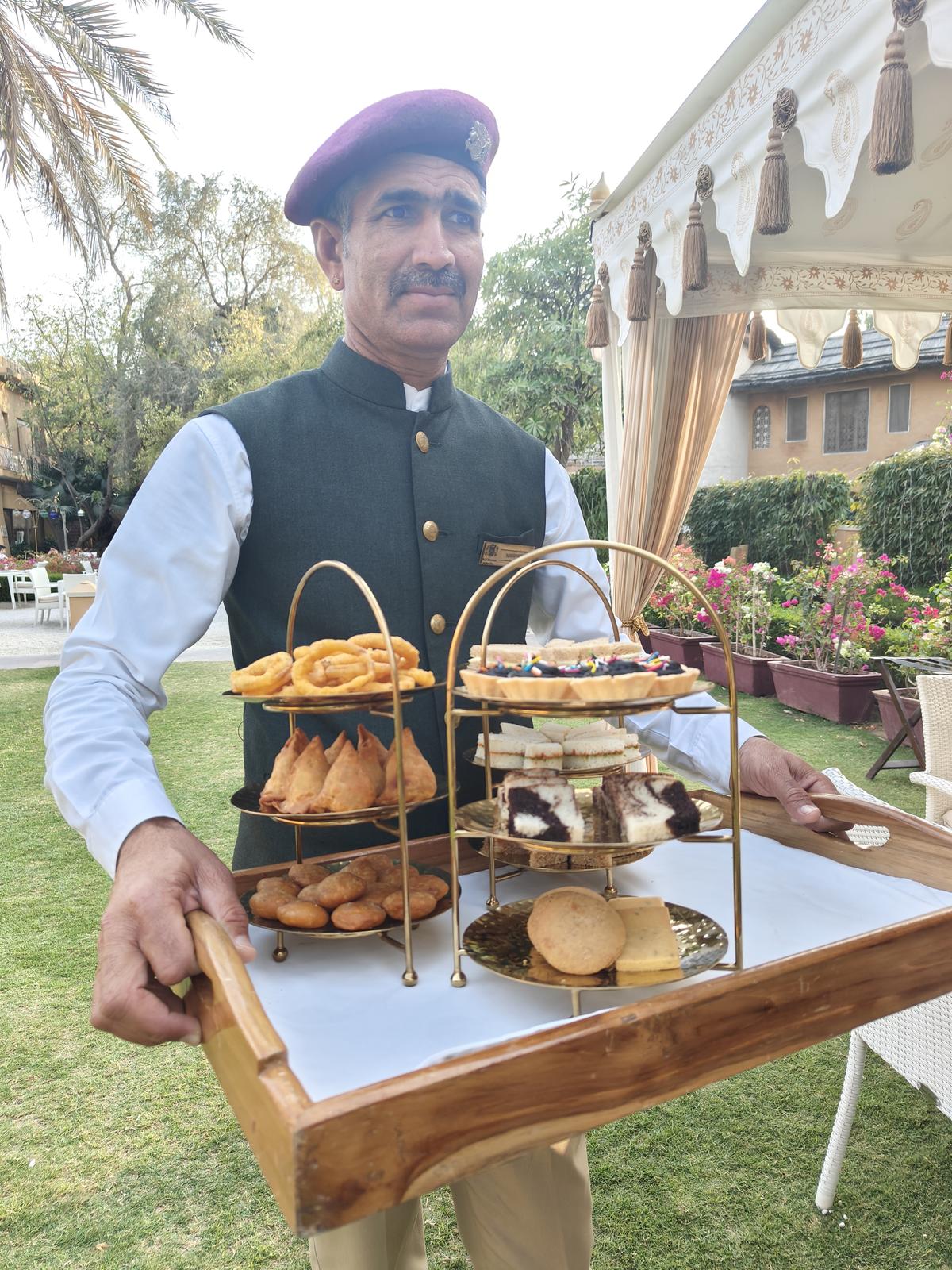
High tea at the palace lawns featuring samosa and kachoris
| Photo Credit:
Shonali Muthalaly
After all, this is a family that created what is arguably India’s first heritage hotel.
“In the early days, the family would take care of each guest personally, from taking bookings to supervising the rooms. Maharaj Swaroop Singh ji would say every guest is an ambassador,” says Magan Kanwar, assistant front office manager, as she checks me in and hands me my ornate brass room key. She adds, “He started the Bishnoi village safaris. He would drive the jeep and take visitors to show them the culture of Rajasthan.”
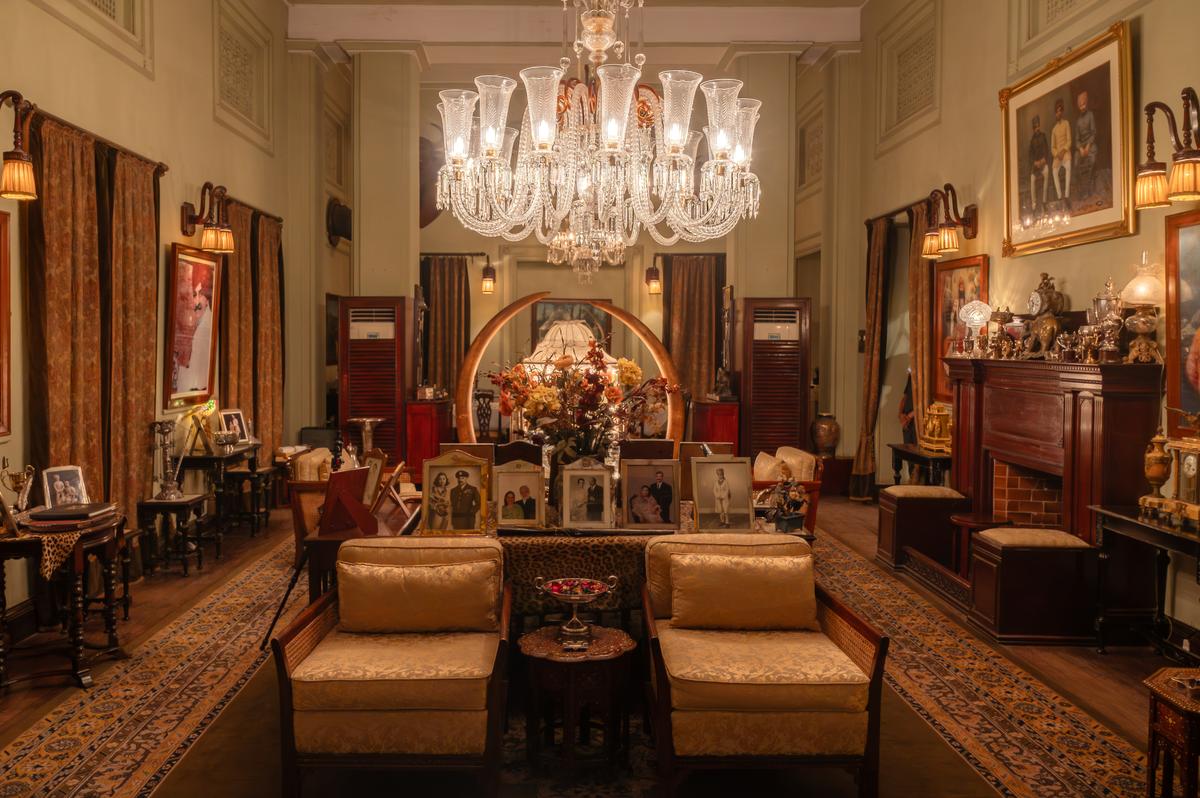
Gol Kamra at Ajit Bhawan Palace, once the family dining room and now a private space for them to meet visiting dignitaries
| Photo Credit:
Special Arrangement
Suraj Panwar, the reservations and revenue manager, explains how the palace, built in 1927, is still home to the royals, who occupy a section of the sprawling six-acre estate. Like the rest of the staff — some of whom have worked at the property for three decades — he talks fondly of the family, who are still deeply involved with the hotel. “They check the rooms, approve the fabric and linen. Rani Usha Devi oversees the gardens…” Raj Ratnu, front office manager, nods: “They know all of us, and meet our families as well as locals during the annual Holi celebrations.”
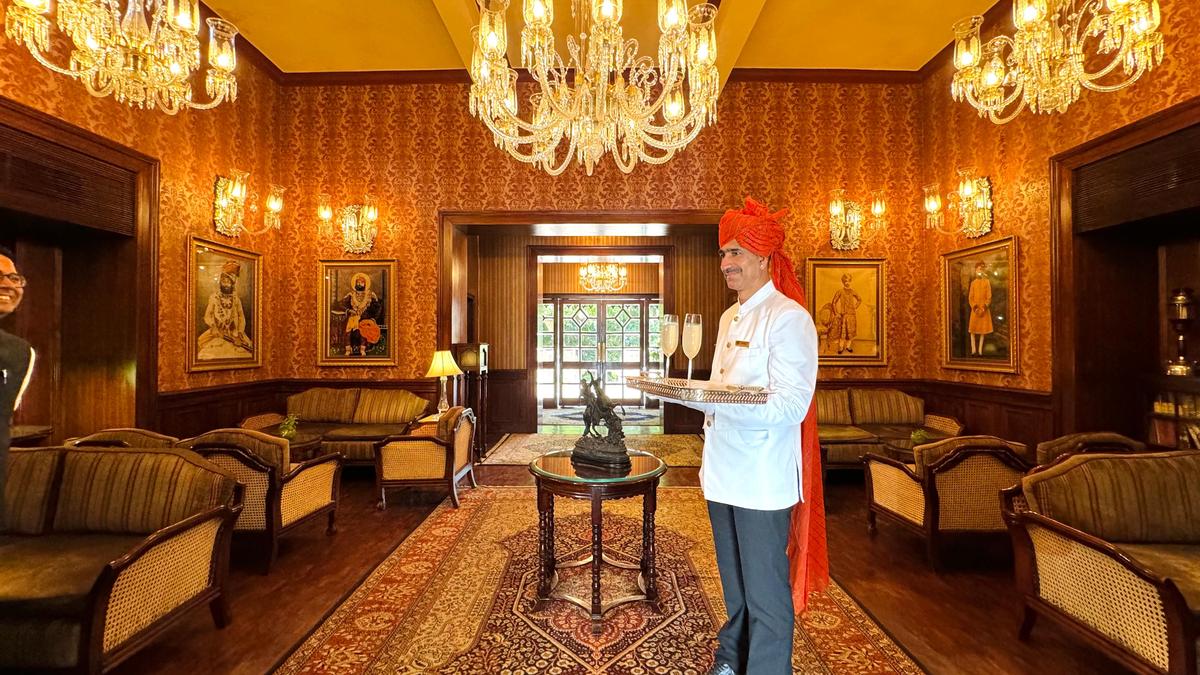
Pair this loyalty with the drive of Ajit Bhawan’s current generation, Raghavendra Rathore (the popular fashion designer) and Suryaveer Singh, and the result is a lovingly tended, unapologetically whimsical getaway: we eat samosas for high tea under a canopy in the garden one day, supervised by the friendly palace cat, and nibble on kachoris the next, in the royal Gol Kamra shimmering with chandeliers and crystal decanters beneath curved elephant tusks and a giant stuffed alligator.
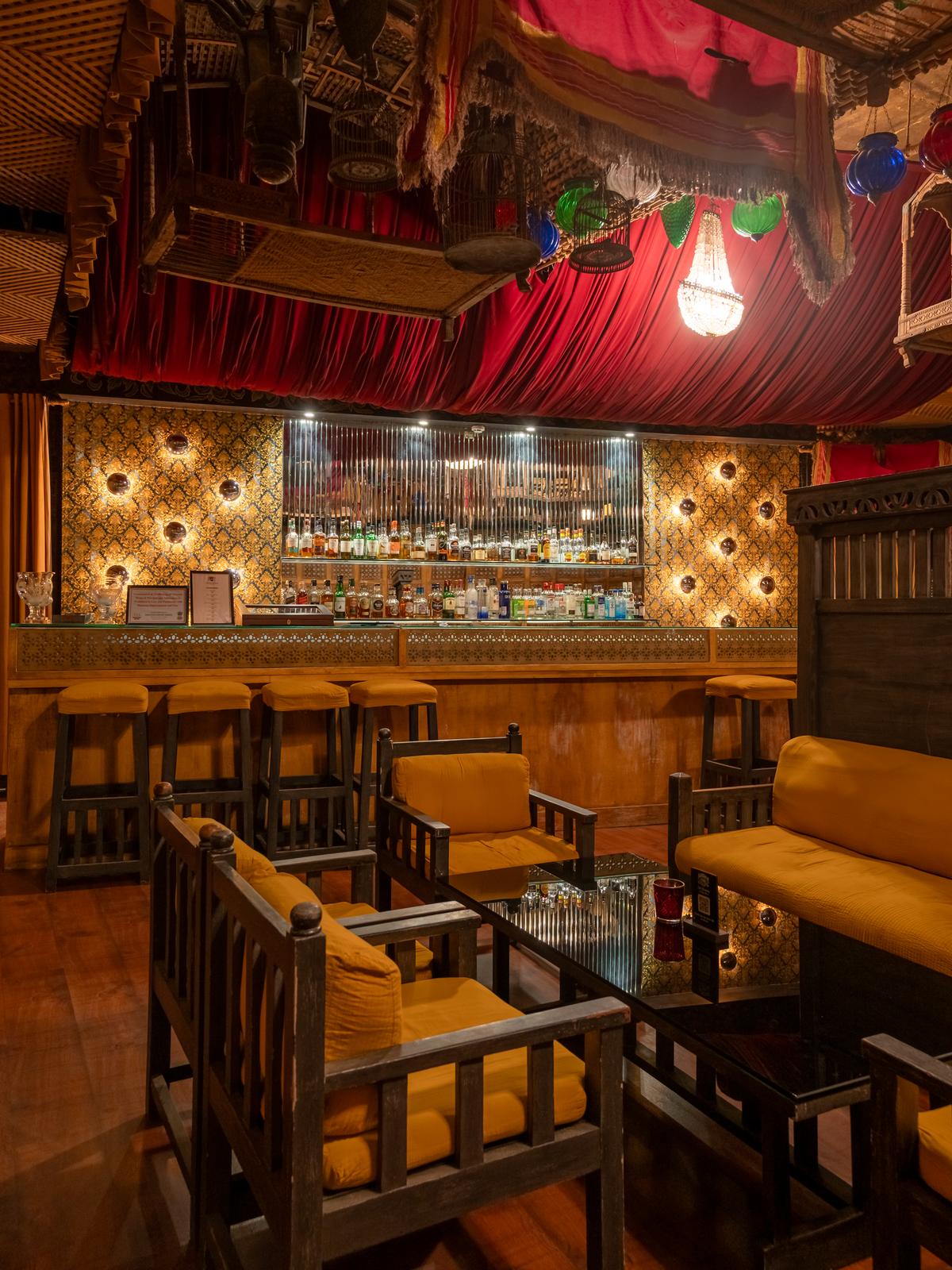
The J Bar at Ajit Bhawan features a ceiling strewn with palanquins, gleaming bird cages and polished kettles
| Photo Credit:
Special Arrangement
At night, we sit in the shadowy bar, drinking spicy picantes under a roof strewn with vintage palanquins. As we walk back to our rooms, we are guided by buttery, flickering lamps, painstakingly set out and lit by the palace staff every evening.
Which brings us back to that handi in the mud. It is the highlight of our dinner at Dhani, the hotel’s open-air restaurant lit with starlight and dramatic lamps.
Nitin Sud, the charismatic area general manager, who also oversees the family’s other hotel, Rawla Narlai, set in a 17th Century hunting lodge, talks about how working with the royals has given him a new understanding of luxury. “It is not about amenities or room size. It’s about hospitality, about consistency and personalisation. It is about people,” he says.
And patience. “We marinated the meat for 8 hours. Then wrapped it in wheat and banana leaves before putting it in the ground at 5 pm,” says Chef Bikram, looking at his watch. “It is 9 pm now.”
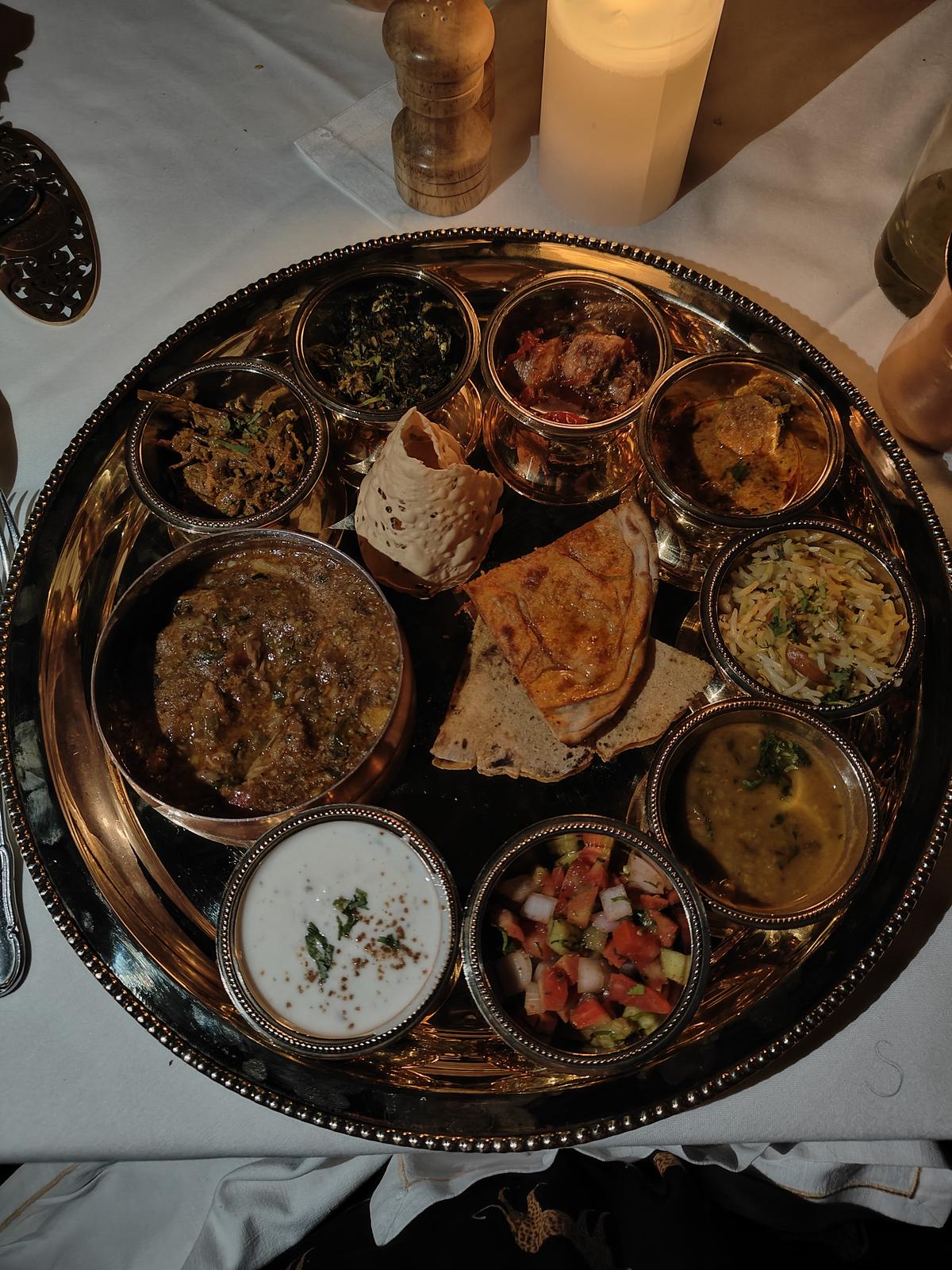
A thali that highlights recipes from the Jodhpur royal family
| Photo Credit:
Shonali Muthalaly
Traditionally made with game meat like wild boar, khada maans originated in the 15th Century and was cooked in hot sand dunes through the day. It is fall-off-the-bone tender, and the whole spices hum gently in the background. The boneless mutton in the handi, a recipe from the former Maharaja Ajit Singh, is delicate yet deeply savoury, the meat seared with ghee and thinly sliced onions, then cooked with Mathania chillies, whole spices and masala powders.
The thali that follows is a century away from the quick, modern versions now popular across the country. There is a cooling Bajra raab to drink, emerald green chandaliya ki subzi, a traditional rural stir-fry made from the local leafy green that grows wild during the monsoon, and a comforting maans ka soweeta, a one-pot meal from Marwar, where chunks of mutton are slow cooked with bajra and vegetables.
Similar to jungli maas, I try sikari murghi made by Rajput warrior cooks on hunts. “It was done with a local breed of hen that is harder to catch,” says Chef Bikram, adding with a laugh, “As it browns, we just add water. Rajasthani water has a high sodium content, it is like stock.” There is also a slow-cooked layered rice, fragrant with saffron and crunchy with nuts, cooked in heavy sealed pots and sometimes slow-baked underground.
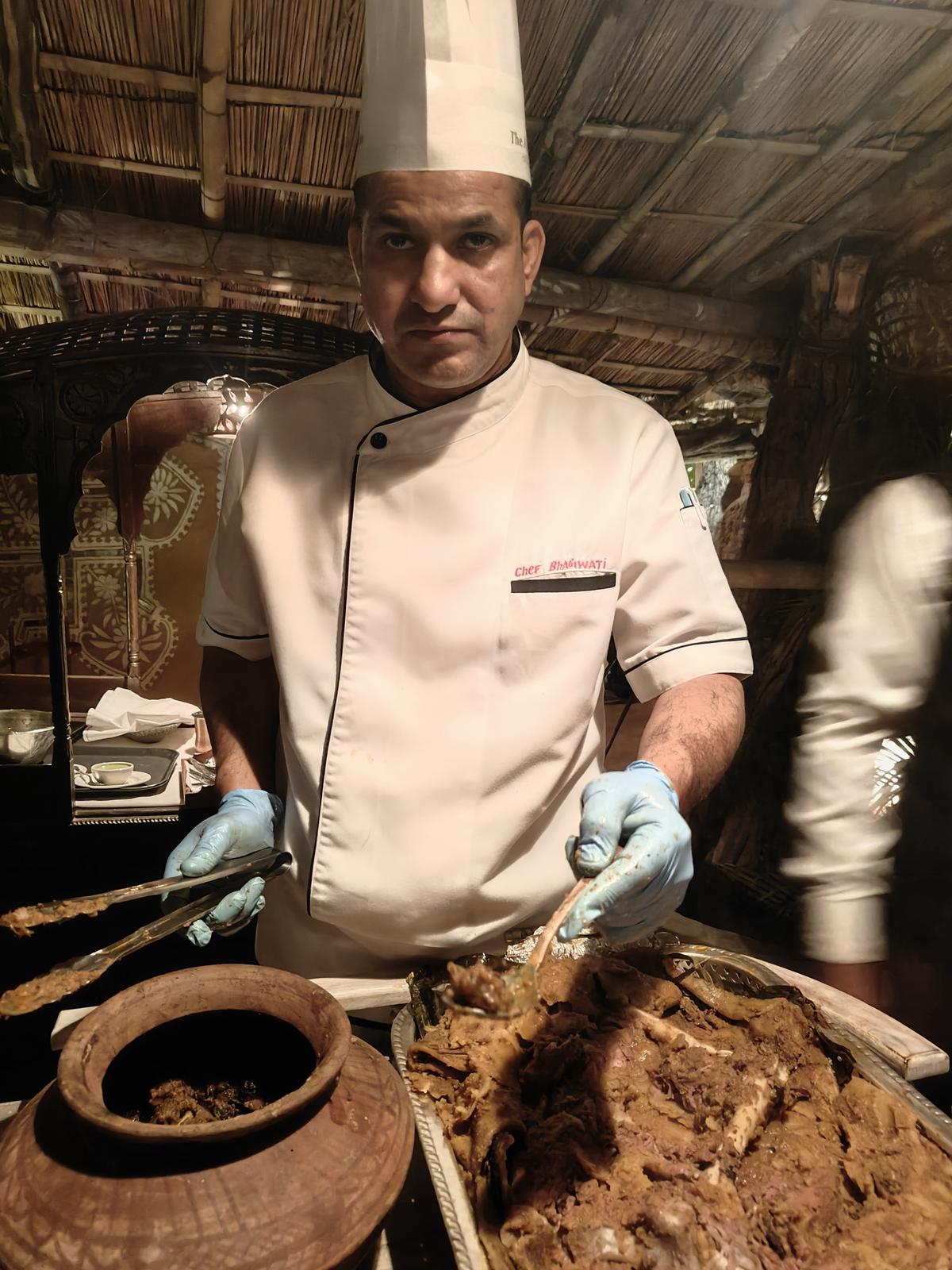
A chef unwraps meat that has been slow cooked underground at Ajit Bhawan
| Photo Credit:
Shonali Muthalaly
Earlier in the day, we explored the blue city’s century-old havelis, picking our way through garbage and open sewers to admire the intricate jaali work and the beautiful hues of blue. In between, I tried all the street food legends: makhania lassi at Mishrilal Hotel that was overwhelmingly sweet, plump gulab jamuns that were rather mellow and huge kachoris fried in ghee.
At a time when food revels in theatrics, what makes Ajit Bhawan’s menus so alluring is restraint. I cannot put down their version of makhania lassi, served in small mud cups: it’s tangy with an almost elusive whisper of saffron.
In keeping with tradition, Nitin had taken us to the Bishnoi village in the morning, where Tulsi Ram, who learned all his English on the BBC, smiled and declared, “I’m going to spread my dreams beneath your feet,” before rolling out his handmade dhurries and explaining how each one takes a month to make.
In the evening, as dinner gives way to late-night tequila shots accompanied by slices of oranges topped with caramelised sugar and cinnamon, Nitin tells us how he once helped the team light 1,500 diyas at the Rawla Narlai stepwell, so guests could eat dinner in their flickering light.
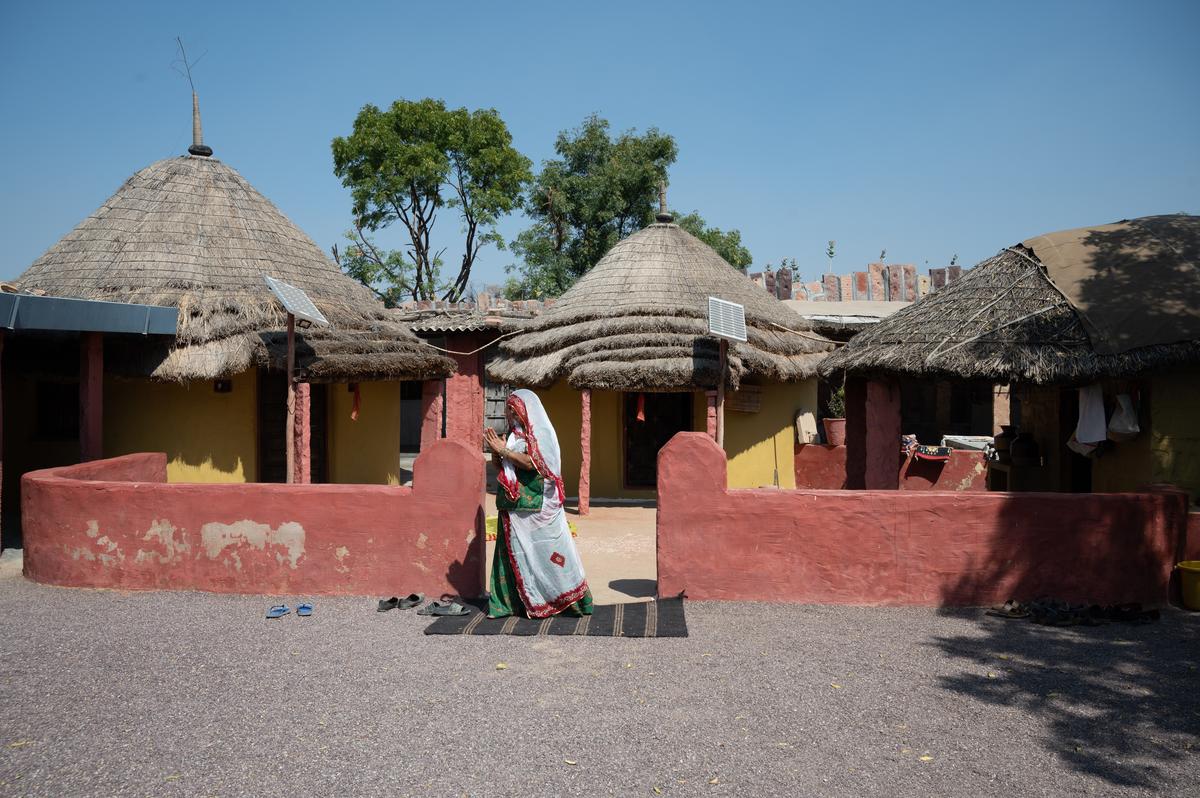
Ajit Bhawan’s royals pioneered the Bishnoi village safaris, which are now popular with Jodhpur tourists
| Photo Credit:
Special Arrangement
I lean back and look at the stars, under gloriously tangled bougainvillea bushes aflame with flowers. A weekend revelling in the extravagance of a palace is undeniably a privilege. But this glimpse of royal life also reveals that real luxury lies in being surrounded by a loyal community, generous with their time and talent.
The writer was in Jodhpur on invitation from Ajit Bhawan

