



4 min readMar 5, 2026 04:04 PM IST
First published on: Mar 5, 2026 at 04:04 PM IST
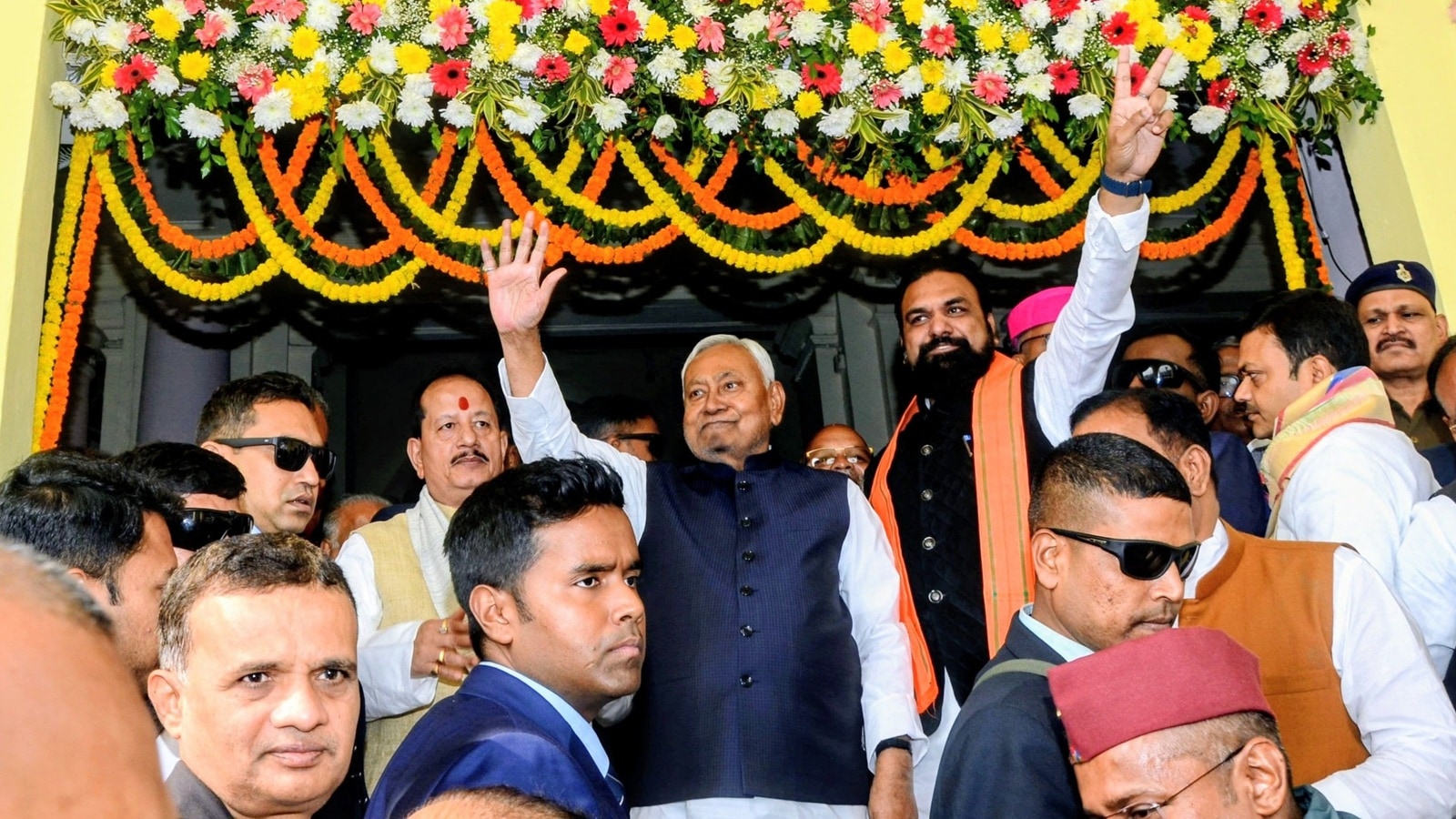
Nitish Kumar’s exit from Bihar politics due to ill-health makes the BJP, which is likely to have its first Chief Minister there, the dominant NDA partner in the state. It also potentially opens up the extremely backward caste (EBC) vote bank that Nitish had carved out in the state. With no successor already groomed by Nitish — his son Nishant is just about to begin his political innings when his father will no longer be CM — the EBC voters will be wooed by the BJP, RJD and JD(U) alike.
The future prospects of both the BJP and RJD will depend on who this large group of several castes — constituting 36 per cent of the state’s population — leans towards. The BJP, with its high tally of 89 in the Bihar assembly, seems to have the initial edge over the RJD, which has just 25 MLAs. For the JD(U), the challenge will be to retain votes, and the EBCs will be its greatest challenge, although the Kurmis, the caste to which Nitish Kumar belongs and which constitutes 2.8 per cent of Bihar’s population, are likely to go with the party.

Over the last 20 years, Nitish’s impact on the politics of Bihar and the country has been immense. In his early years as CM, he partially reversed the negative image of the state from the days of Lalu Prasad, sending out the message that lawlessness had gone down after he came to power. While his five flip-flops — his back-and-forth with the NDA and the Opposition over the years — may have dented Nitish’s image, they gave a boost to the BJP. For he had a “secular” image that helped the BJP in times when it was accused of being “communal” — the prime political narrative from 1992 to 2014. The fact that both camps have been eager to bring him on board actually disrupted the secular-communal binary itself.
For now, the politics of Bihar will increasingly seem bipolar, as Nitish’s exit makes the BJP and RJD appear to be the key players in the state — unless the JD(U) shows the ability to retain its position in the 2029 Lok Sabha and the 2030 Bihar Assembly elections. However, as these are a few years away, the JD(U) will appear somewhat diminished for now. However, the BJP cannot rest on the laurels of 89 seats in the 2025 Bihar assembly elections, as the recent verdict was a vote of gratitude to Nitish that helped ally the BJP, too, and tanked the RJD.
Nitish, who first came to power in alliance with the BJP, was aware that the Kurmis are numerically much smaller than the Yadavs, who constitute about 14 per cent of the population. He overcame this limitation by carving out fresh constituencies among the EBCs, women, and Mahadalits (Dalits except Paswans — though he eventually included Paswans in the category, thus rendering it defunct). Nitish is departing, but the constituencies stay.
In a way, his term in Bihar also saw a deepening of political democracy. If Lalu’s 15 years between 1990 and 2005 marked the decline of “upper caste” dominance in the state, the 20 years of Nitish Kumar stretched the process to also ensure the decline of the Yadavs — the most dominant OBC group in Bihar.
In doing so, Kumar also became an agent for the splitting of the Bahujan discourse, with the non-Yadav OBCs and EBCs making common cause with the “upper castes”. His version of Mandal politics thus destroyed the forward-vs-backward binary by aligning the “upper castes” and sections of the backwards and extremely backwards.
The writer is deputy associate editor, The Indian Express. vikas.pathak@expressindia.com
