



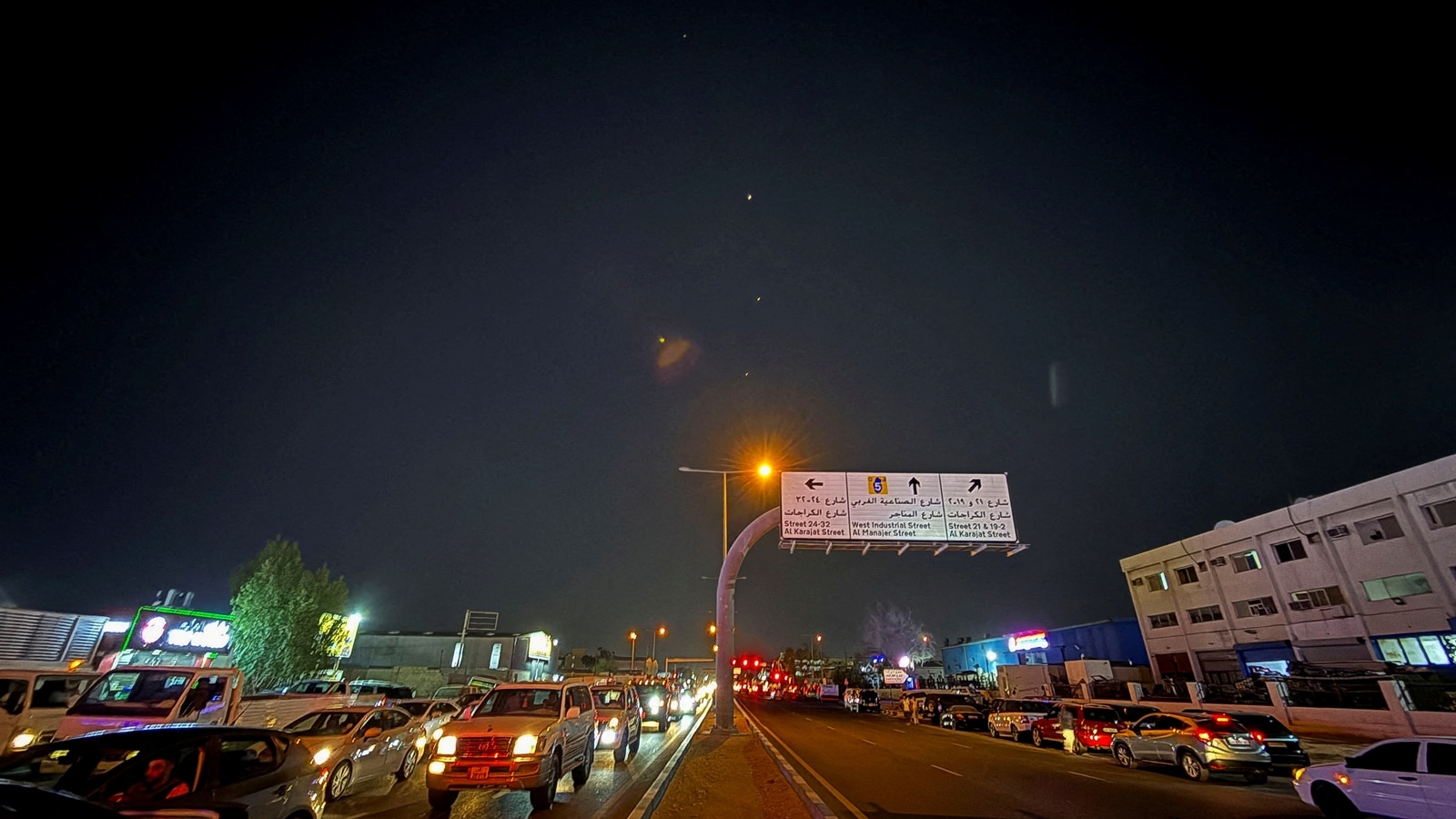
The Hamad International Airport in Doha is closed, and our househelp, a Sri Lankan woman, has a flight to Colombo this weekend. A single mother of three girls, she wants to be home for Eid. She wants to go shopping — her youngest, a nine-year-old, has asked for kunafa chocolate and more. I ask her to wait another day; we don’t know if the malls are open.
“They probably are,” my husband texted from work. The streets are fairly empty, he said. Schools are closed; so are many offices. On his drive home, he sees no cars abruptly switching lanes in the usual Ramadan rush to reach home to break fast in time.

It is the fourth day of the war. Israel and the United States attacked Iran on February 28, with Tehran launching retaliatory strikes in several Middle Eastern countries, including Qatar.
“I have never seen such ‘bombings’,” said my son’s speech therapist, Mark, a Filipino, whose embassy had asked him to stay home. He came anyway.
“Neither have I,” I said. There are violence and attacks in India, like communal riots and bomb blasts, and border skirmishes, but I have not witnessed anything up close like this. This war is happening in the air, and we can watch it from the ground.
As Iran began to fire missiles at Al Udeid, which is the US’s biggest military base in the Middle East, and which is roughly 40 km from where we live, we could see fireworks right above our heads as sirens blared.
The interceptions turned the skies white and orange, and our glass windows and doors shook. We were supposed to be away from glass as it could shatter from impact. I saw a reel where a family here was taking shelter in bathtubs. But we made videos, like everyone, to forward to friends and families in India.
My daughter wanted to send those videos to her friends — one of her friend’s father is “white, maybe British or American, I am not sure, but he is in the military”. We refused.
Our phones screeched with a national emergency alert asking us to stay indoors unless there’s an emergency. That alarm sounded several times throughout the day, each one making us jump.
Amid all this, however, there was a belief that the missiles were going to be as harmless as last April, when the attacks from Iran were only symbolic, that we were not to worry about safety or food. We were not panicking — yet.
The morning it started was also the night of a rare astronomical event; the planets were aligning for the first time in 40 years. We could make out their shape in the night sky; it was a perfect row. My daughter believes Israel deliberately timed the attacks on the “planet parade day” or “because they wanted to ruin Eid”. She is a bit jumpy but mostly fine as she spends time talking to her friends.
Our friends and families in India are more worried than us. A friend asked us to move to a basement — our residential compound has none. Another said there must be a bunker.
One family member asked: “US planes have crashed there…how are you all? I said: “What? I don’t know anything about it,” as I began googling in another window. It happened in Kuwait, which is over 500km away by air.
It’s amusing how the geography of even the smartest people dissolves when it comes to this part of the world. One didn’t know that Doha is in Qatar; another thought Dubai was in Saudi Arabia; yet another guessed Kuwait and Oman were the same or something like that.
News alerts tell us that a missile targeting Doha airport has been intercepted. QatarEnergy has stopped LNG production and closed its facilities. There was also a fire at a refinery, probably from falling debris.
My sister asked: “What will you do about cooking gas?” I don’t know. I don’t even know if I have to worry about it. We are fasting and not cooking that much, and wouldn’t the war be over before Eid?
Food delivery apps are working. So are cab services. Earlier in the day, Mark booked an Uber amid faint sounds of explosions. The gig economy anywhere is indifferent to workers and geopolitics.
But the quiet confidence that “we will be fine” is thinning.
The expats’ women’s group on Facebook had discussions about keeping a bag of essentials ready. US President Donald Trump said the war could go on for four weeks; Israeli Prime Minister Benjamin Netanyahu said it could be less than a year. Iran is targeting more installations in Qatar.
The explosions have become, in my daughter’s words, “background noise”.
Sixth day into the war, residents living near the US embassy, which is barely 5 km away, were evacuated early in the morning. Soon after, there are missiles in the sky and a government message on our phones warns us of an “elevated level of threat”. My daughter’s online classes are called off midway, and we contemplate stocking up on groceries.
The househelp shows me a Tamil-language news report on her phone claiming the airport is open; I tell her it is false. Later in the day, we get an email intimating her flight has been cancelled. She begins to cry. “My children,” she says. “Their father doesn’t care.”
Children. Hers and mine. The ones in Gaza. In Lebanon. In Iran. In Tehran, where two girls’ schools were struck — their small bags strewn in the rubble.
The writer is a Doha-based journalist

