



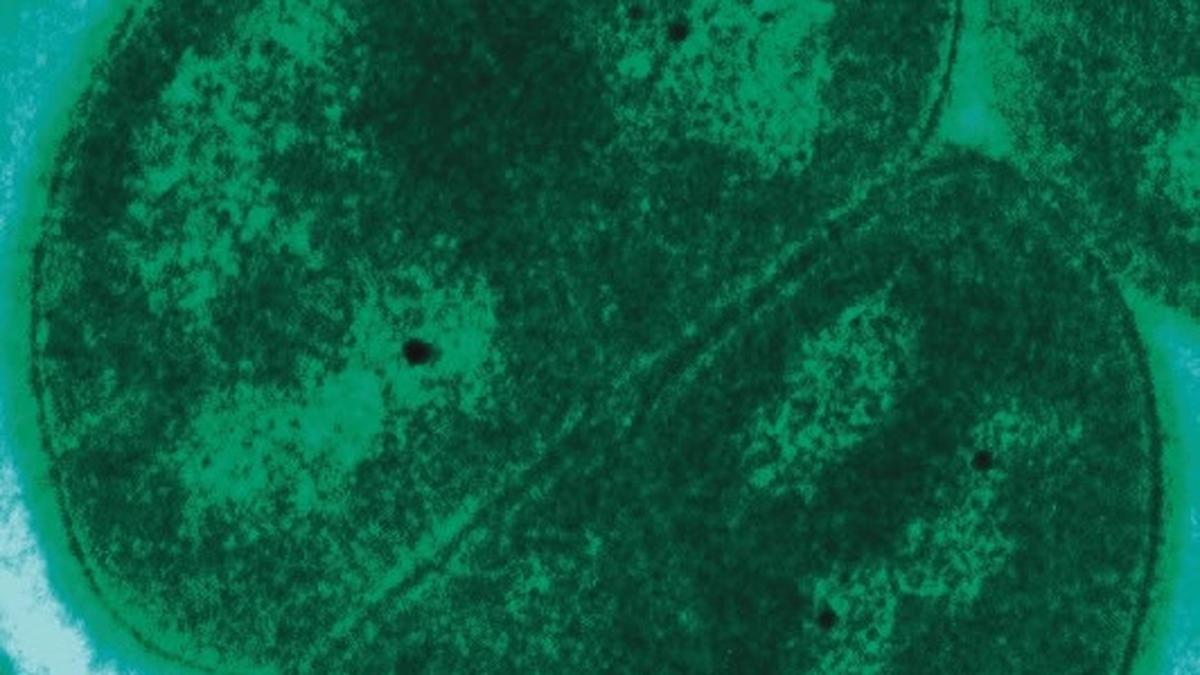
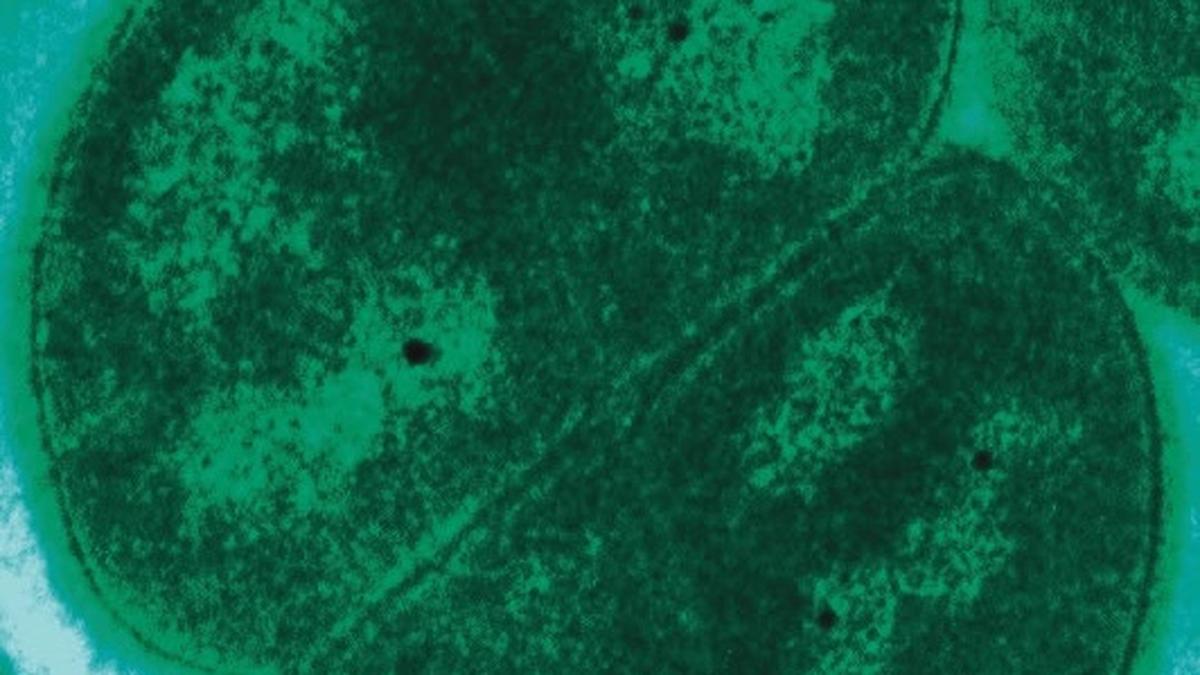
A transmission electron micrograph of Deinococcus radiodurans.
| Photo Credit: Public domain
Supertough bug may also survive colliding worlds
The bacteria Deinococcus radiodurans is famous for being able to survive extreme radiation and dryness. Researchers have found it can also survive the intense pressures of being blasted off of a planet’s surface: 14,000-24,000 earth atmospheres. Genetic analysis revealed the survivors focused on DNA repair and iron transport to recover from the trauma. The findings support the idea that life could travel between planets inside ejected rocks, potentially expanding our search for extraterrestrial life.
Koalas beat evolutionary ‘doom’ with rapid expansion
Australia’s Victorian koalas, which almost vanished in the 1890s, are surmounting their genetic bottleneck, scientists have found, thanks to rapid population growth. The expansion has reshuffled their DNA, fostering new mutations to help the species adapt. However, populations in Queensland and New South Wales continue to decline, carrying heavier mutational loads of harmful variants. The finding means rapid expansion can restore a species’ evolutionary potential and that genetic bottlenecks aren’t necessarily an evolutionary dead-end.
Two biomarkers point to swab test for schizophrenia
Researchers have found two biological markers for schizophrenia that can be collected with a cheek swab. Their study wrote that patients with schizophrenia have significantly higher levels of Sp4 mRNA and HSP60, a protein, in their mouth cells compared to healthy individuals. More Sp4 correlated with more severe symptoms and poorer memory while more HSP60 predicted slower reaction times. Because these markers are easy to collect, they could offer a painless alternative to invasive tests.
Published – March 08, 2026 07:30 am IST

