



4 min readMar 10, 2026 06:05 AM IST
First published on: Mar 10, 2026 at 06:05 AM IST
The winter season is over, and the importance of air pollution in public discourse seems to be receding. Many of us seem to believe that air quality is synonymous with PM2.5 and PM10 — once their levels drop below the “poor” category in Delhi, a sense of relief sets in. However, air pollution does not disappear in winter. It changes form. Surface ozone is a fast-emerging new challenge in summer. It is a hazardous air pollutant and a potent greenhouse gas, which poses serious risks to human health and harms agricultural productivity. As climate change and extreme weather events intensify, the threat of ozone looms large, particularly across rural India and in a few urban centres. When ozone is the lead pollutant, its health impact is more severe than that of particulate matter. It is hence more insidious than the particulate matter that dominates winter headlines.
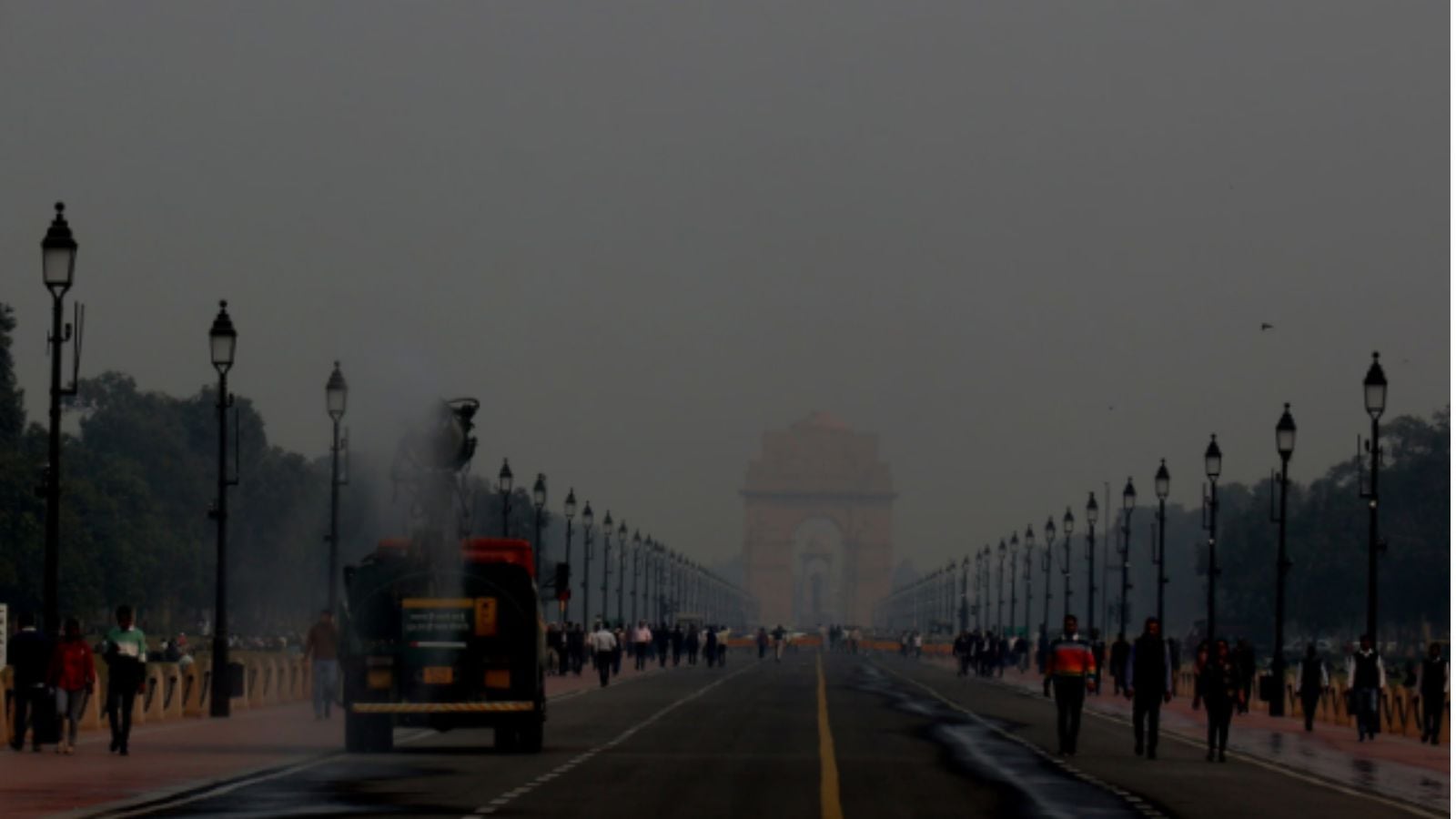
Beneath the serene and manicured landscape of Lutyens’ Delhi lies a hotspot of ozone pollution, which becomes active during the summer months. Why don’t its greenery and seemingly pristine environment protect the area? Let’s find out.

Ozone pollution is the result of a reaction of the oxides of nitrogen with volatile organic compounds (VOCs) under sunlight. Traditionally, VOCs accrue as a result of human activities — vehicular emissions, power plants, and industrial sources. However, scientific evidence now shows that VOCs are also emitted naturally by certain trees, particularly when there is strong sunlight and temperatures are high — these compounds are called biogenic volatile organic compounds (BVOCs). Not all trees behave the same way. Some emit either negligible BVOCs or none, while others release significant amounts of BVOCs that can increase the surface ozone.
Lutyens’ Delhi is home to a significant number of plants that have a high BVOC-emitting capacity. These include various ficus species such as Phyllanthus sp, Bauhinia sp. The areas have comparatively fewer near-zero-BVOC-emitting vegetation such as amla, babul, bael, and Siamese cassia. The ecological composition of an area matters. Delhi experiences the highest ozone levels during summer (March-May). A recent decadal analysis by the National Institute of Advanced Studies (NIAS) indicates a growing influence of BVOC indices on surface ozone levels. During severe summers, high temperatures lead to greater BVOC emissions, amplifying ozone formation and creating local hotspots. This helps explain the stronger ozone episodes in Lutyens’ Delhi compared to other parts of the city. In 2019, for instance, ozone levels exceeded the permissible 50 ppb standard on nearly 91 per cent of summer days. In contrast, 2020 experienced fewer extreme heat days and correspondingly lower BVOC indices, reinforcing the link between temperature intensity and ozone formation. “Hot days” are defined as critical temperature thresholds beyond which ozone production accelerates sharply, a decisive trigger.
La Niña is currently transiting to neutral conditions, and there is a possibility of Super El Niño by summer — this could disrupt global atmospheric circulation patterns. The result is a potent combination — more heat, more sunlight and less ventilation. So there is a high risk of BVOCs and severe summer ozone episodes, even if emissions from other anthropogenic sources remain unchanged. The concern is particularly acute in Lutyens’ Delhi. This is a reminder that under changing climate dynamics, air quality risk is not governed by emissions alone. Citizens and policymakers should, therefore, look beyond the thermometer in the coming summer. The sky may appear blue. The air may seem clear, unlike the smog-laden winter. But all this can be deceptive. Under the invisible science of heat and sunlight, an ozone surge can unfold quietly and persistently, and have tangible consequences for human health.
Story continues below this ad
Climate change is projected to intensify both the frequency and severity of high-ozone days in the years ahead — a phenomenon often called the “climate penalty” on air quality. Emerging findings from NIAS studies highlight the urgent need to integrate vegetation-sensitive urban planning into ozone mitigation strategies. Climate mitigation and air pollution control are not parallel agendas; they are deeply interwoven. Measures that reduce fossil fuel combustion simultaneously cut greenhouse gas emissions and the precursors that drive ozone formation. The path forward requires preparation sans shortcuts — grounded in science-based policymaking, adoption of an airshed approach rather than narrow city-centric plans, decisive emission reductions, and sustained public awareness.
The writer is chair professor, NIAS, IISc-Campus and Founder, SAFAR
