



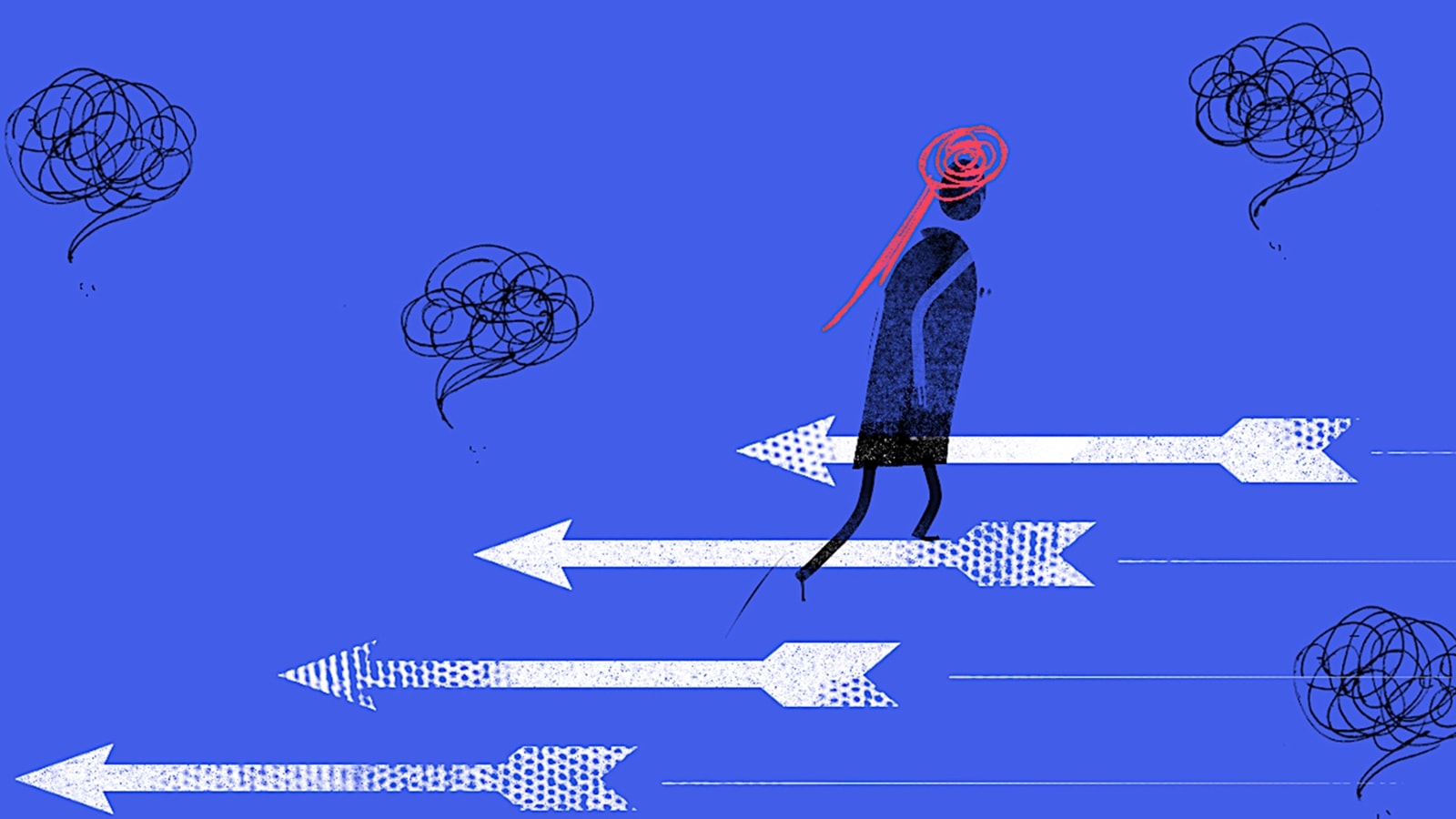
One of the more surprising elements of the unfolding Indian debate on the war in the Middle East is the concern — if not anguish — that India has “tilted to one side” in the current Gulf war. For a section of the commentariat, the essence of Indian foreign policy is, and ought to be, a refusal to take sides in conflicts between other states.
That idea aligns with the traditional notion of neutrality. In the early decades after Independence, however, Delhi was at pains to argue that its doctrine of non-alignment was not neutrality. India did not avoid taking positions; rather, it claimed the right to form them on the merits of each issue — based on independent judgement rather than bloc loyalty.

In practice, India’s record tells a more complicated story. Delhi has often taken sides — sometimes vehemently, sometimes defensively, and sometimes only implicitly. There have also been moments when India simply flip flopped as governments changed.
It has been relatively easy for India’s political and intellectual establishment to adopt strong moral positions when the offender was the United States or the West. This habit was part of what Shashi Tharoor once described as India’s tradition of offering a “running moral commentary” on world affairs.
The anti-Western reflex had deeper roots. Part of it reflected the lingering residue of anti-colonial sentiment. Part of it was grounded in Delhi’s genuine Cold War contradictions with Washington — over Pakistan, Kashmir, and nuclear non-proliferation.
India’s moral clarity, however, tended to blur when Moscow transgressed norms that India supported. That ambivalence was visible in Delhi’s muted responses to the Soviet invasions of Hungary (1956), Czechoslovakia (1968), and Afghanistan (1979), as well as to Russia’s annexation of Crimea in 2014 and its occupation of eastern Ukraine after 2022.
Many would call this hypocrisy. Yet double standards are a universal feature of international life. India’s reluctance to criticise Moscow was rooted in the strategic value Delhi attached to the Russian connection in managing its security challenges.
There were, however, brief moments of deviation. When Soviet forces invaded Afghanistan in December 1979, the Charan Singh government took a critical line. That position was consistent with the Janata Party’s long-standing critique that Congress foreign policy, while professing non-alignment, was in practice tilted towards Moscow.
But within weeks, Indira Gandhi returned to power in January 1980 and proved the point. She instructed India’s Permanent Representative at the United Nations, Brajesh Mishra, to abstain on the resolution condemning the Soviet Union.
More tellingly, Indian diplomacy soon began arguing that the Soviet intervention had been necessitated by external interference against the communist government in Kabul. The echo of this reasoning in the widespread refrain in Delhi after 2022 — that the Russian invasion of Ukraine had been “provoked” by the West — is hard to miss.
The transition from Janata to Congress also altered India’s position on Cambodia. The Janata government had held back from recognising the government installed in Phnom Penh after Vietnam’s invasion of Cambodia in 1978. Congress reversed that position in 1980, justifying it as part of an effort to balance China in Southeast Asia by supporting Vietnam. Ironically, Cambodia eventually became one of China’s strongest Asian partners.
Both choices carried costs. India’s reluctance to criticise Soviet actions in Afghanistan damaged its standing in the Islamic world. Endorsing the Vietnamese-backed government in Cambodia provoked backlash across Southeast Asia. There was an earlier precedent, too.
In 1950, Indian diplomacy actively sought to prevent the United Nations from condemning China’s military intervention in the Korean War. Jawaharlal Nehru was then investing heavily in building a partnership with Beijing to construct a new Asian order. That “tilt” towards China in the 1950s also carried costs.
In 1990, Delhi struggled to articulate a credible response to Saddam Hussein’s annexation of Kuwait. India avoided condemning the Iraqi action, partly because Saddam was viewed as a ‘“secular” leader in the Middle East who often supported India on issues involving Pakistan. Iraq was also an important source of oil.
Foreign Minister I K Gujral travelled to Baghdad after the invasion to secure Iraq’s cooperation in evacuating thousands of Indians stranded in Kuwait. If India’s reluctance to defend Kuwait’s sovereignty might have lacked a moral basis, it could nonetheless be explained in terms of India’s significant equities in Iraq.
For decades, India framed its Middle East policy around two broad contradictions: The US versus the region, and Israel versus the Arabs. But the Indian debates paid far less attention to the region’s internal rivalries — between Arabia and Persia and between conservative monarchies and republican forces (both secular and Islamic) in the Arab world.
Over the decades, those internal contradictions, for example between Gulf Arabs and Iran, have become far more consequential. The Gulf Arab states’ reliance on the US for security against various forms of radicalism, and the gradual normalisation of relations between Israel and several Arab countries, have altered the regional picture. India’s debate, though, appears stuck in the mental maps of the past.
India’s current approach to the unfolding war in the Gulf is shaped by the scale of its stakes in the Arabian Peninsula. India today has roughly $200 billion in trade with the Gulf, depends heavily on the region for energy supplies, and has nearly nine million citizens living and working across the Arab Gulf states. Protecting these interests has become the overriding concern for Delhi in the present crisis. This is not an unreasonable calculation.
Looking ahead, Delhi must operate on the basis of a simple strategic reality: The security and prosperity of India and Arabia are now indivisible. Political support for Arabs was an important principle articulated at the very outset of independent India’s foreign policy. Eight turbulent decades later in the Middle East, it has acquired a new meaning — in the form of a deepening interdependence between India and the Gulf Arab states. The current nightmare in the Gulf will eventually end, but managing India’s deep interdependence with the Arab Gulf will remain one of Delhi’s enduring challenges
The writer is a contributing editor on international affairs for The Indian Express. He is associated with Motwani-Jadeja Institute of American Studies, Jindal Global University, and Council on Strategic and Defence Studies, Delhi
