



5 min readMar 11, 2026 03:48 PM IST
First published on: Mar 11, 2026 at 03:48 PM IST
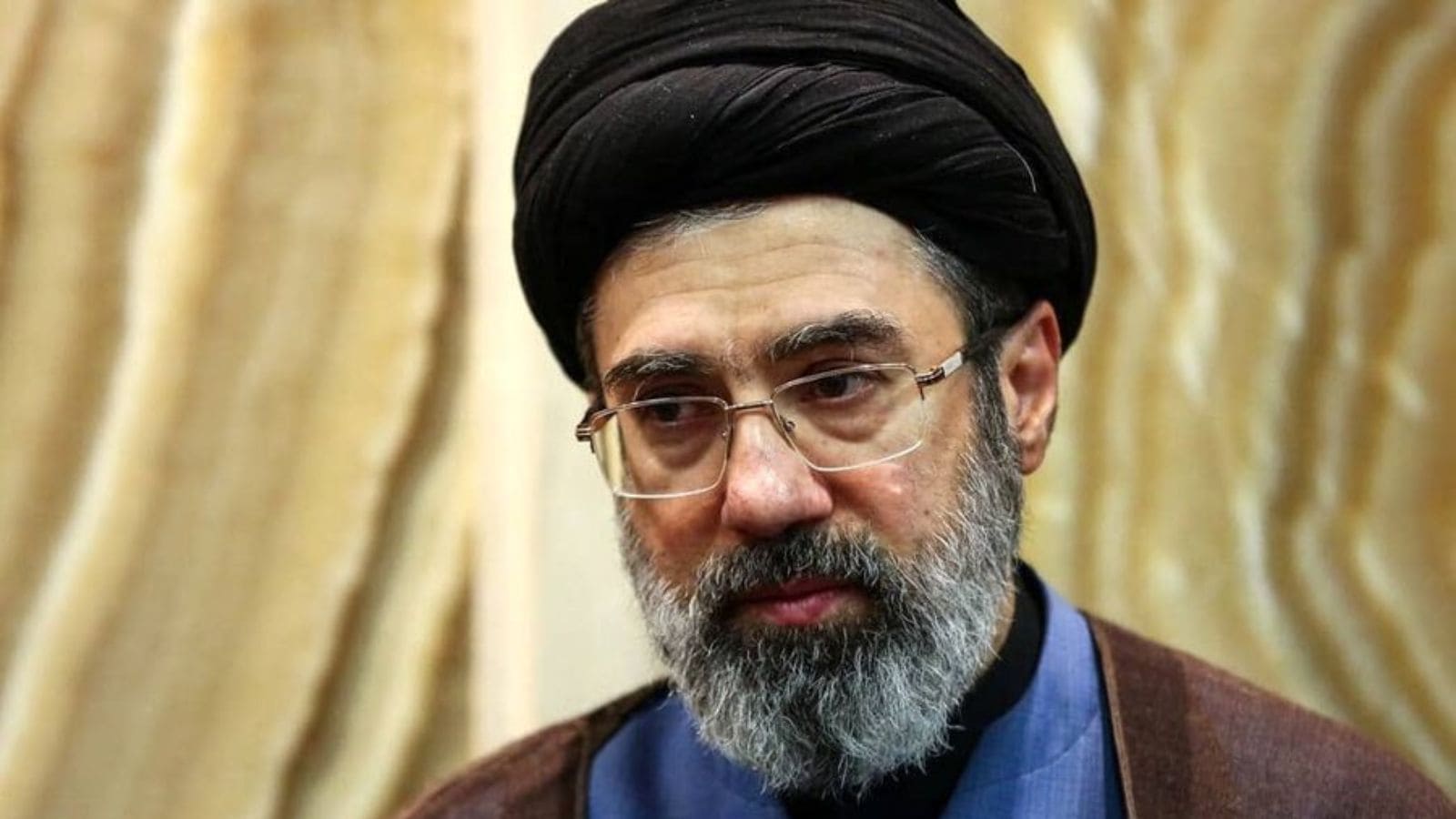
The election of 56-year-old Mojtaba Khamenei as Iran’s new Supreme Leader by the 88-member Assembly of Experts represents the first major blow to the American and Israeli objective of regime change. The move has effectively dashed the hopes of US President Donald Trump, who, since the onset of hostilities, has repeatedly expressed a desire to influence the selection of a successor to the late Ayatollah Ali Khamenei. While Russian President Vladimir Putin has welcomed this appointment, the Israeli military has already signalled its intent to target the newly elevated leader.
More than the kinetic war itself, the assassination of the elder Ayatollah Khamenei appears to have galvanised the Iranian regime and its populace’s resolve against the American and Israeli war machine. This phenomenon recalls the observations of McGeorge Bundy, National Security Advisor to former US president Lyndon B Johnson, who noted that the most surprising element of the Vietnam War was the “endurance of the enemy”. The elevation of Mojtaba Khamenei is a potent symbol of that endurance – a factor that the American and Israeli leadership seemingly failed to weigh before committing to war.

According to noted Iran expert Vali Nasr, Bundy’s cautionary tales were essential reading in early 2009 at the White House. However, they appear lost in the current Trump administration. For Prime Minister Benjamin Netanyahu, a war against Iran has been a four-decade ambition; consequently, many now view this conflict less as a strategic necessity of the US and more as “Bibi’s War”.
In a recent press briefing, President Trump indicated he had considered several figures to lead a post-war Iran, only to note they had been “killed as well.” It remains unclear whether these preferred candidates fell victim to the bombing or were purged by the loyal army of the assassinated Iranian leader Ali Khamenei. If the latter is the case, it demonstrates a high level of vigilance within the Iranian regime against America and Israel’s post-war project. After 11 days of war, less than 1,500 killed in Iran means that the entire ground force of the Islamic Revolutionary Guard Corps and others are standing unharmed. If America and Israel prolong the war, the outcome might be even more bitter than Iraq or Afghanistan.
The decision to elect the son of Ayatollah Khamenei as his successor by Iran’s revolutionary regime — whose founding objective was to end dynastic rule in Iran — appears to run counter to the very spirit of the revolution. Yet, there is little evidence that the elder Khamenei sought this path for his son. Rather, the Assembly of Experts’ decision appears motivated by a strategic necessity to ensure that the “Khamenei chapter” of the Iranian Revolution is not forcibly closed by foreign powers.
Previously, the younger Khamenei served as a gatekeeper for his father. US diplomatic cables released by WikiLeaks in the late 2000s described him as “the power behind the robes.” Without the assassination of his father, the succession might have taken a different shape; however, he has emerged as a living symbol of defiance against the American and Israeli plan for Iran.
Regarding Iran’s future, former United States Secretary of State Henry Kissinger once remarked in a 2008 interview that “Iran will have to decide whether it is a nation or a cause.” By electing Mojtaba Khamenei, Tehran has signalled its determination to be both. The new Supreme Leader’s stance on key issues will now dictate the fate of the war and the global suffering it has unleashed.
Foremost is the nuclear question. As recently as 2012, Khamenei maintained that the possession of nuclear weapons was a “great sin”. Yet the devastation currently unfolding inside Iran may discourage his successor from foreclosing the nuclear option permanently. It is worth remembering that Iran’s nuclear ambitions were not a product of the 1979 Revolution; they were initiated in the 1970s by the pro-American Shah regime. He built the first nuclear plant in the city of Bushehr and established nuclear research facilities in Iranian universities.
No doubt, the revolutionary regime took it forward. With Russia and China, as Iran’s allies, there is a fair chance that the regime will explore alternatives to realise its nuclear ambition sooner or later, and the war must have convinced the Iranian regime of its existential indispensability. It is worth remembering that it was China, not its known ally, the US, which helped Pakistan to get nuclear weapons.
Furthermore, the US-Iran relations have not always been defined by total confrontation; there have also been moments of cooperation. For example, Iran provided airbases and logistical support for America’s fight against the Taliban in Afghanistan and assisted in tracking and eliminating Al-Qaeda leaders. In 2003, Iran even submitted a written proposal offering to end its support for Palestinian militant groups and to persuade Hezbollah to lay down its arms, along with addressing several other outstanding issues. The American leadership, however, chose to ignore the proposal.
As the new Supreme Leader takes the helm, the world waits to see which direction he will swing. For the sake of a durable post-war peace, clarity on these issues must be established at the earliest.
The writer is a political scientist and teaches at Jamia Millia Central University, New Delhi

