



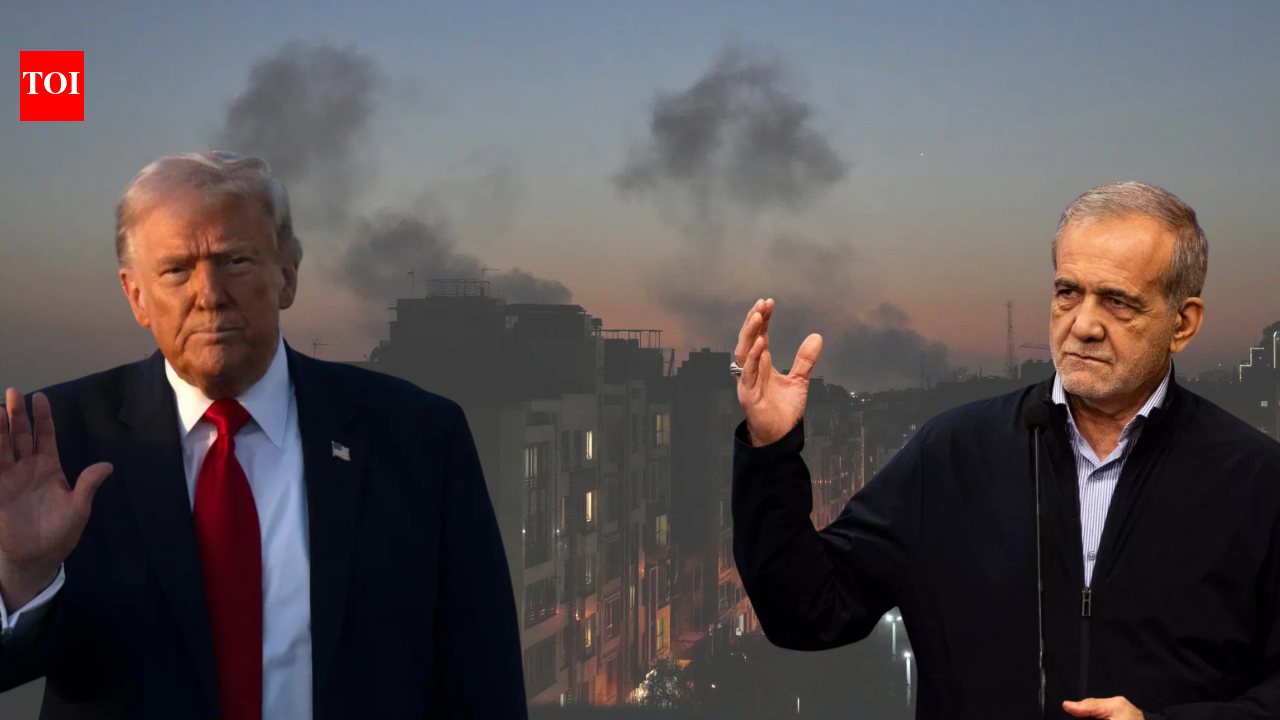
As fighting between Iran and the United States continues to intensify, Iranian President Masoud Pezeshkian has indicated that Tehran may be willing to return to negotiations, but only under strict conditions.Pezeshkian spoke with leaders from Russia and Pakistan over the past two days, signalling that diplomatic channels could reopen despite the ongoing war. According to Iranian officials, Tehran would consider renewed talks with Washington only if three key demands are met: recognition of Iran’s sovereign rights, reparations for damage caused during the conflict, and firm guarantees that future military aggression will not occur.Iranian leaders have repeatedly said they are waiting for a response from the other side but remain deeply sceptical about Washington’s intentions. Officials in Tehran say years of confrontation and the current war have eroded trust in negotiations with the United States.The comments come as the conflict between Iran, Israel and their allies continues to expand across the region, raising fears of a prolonged war with significant economic and humanitarian consequences.Violence has spread across the Gulf and the eastern Mediterranean in recent days. A container ship near the United Arab Emirates was struck by a projectile, sparking a small fire, though the crew were reported safe. In the vital Strait of Hormuz, three crew members remained trapped aboard a Thai bulk carrier that was hit while transiting the waterway, highlighting growing risks to global shipping routes.Regional tensions escalated further after authorities in Bahrain reported attacks on fuel tanks in Muharraq Governorate and urged residents to remain indoors as emergency crews battled fires. Meanwhile, Saudi Arabia said its air defences intercepted multiple drones targeting strategic areas, including one heading towards the Shaybah oil field. Kuwait also reported intercepting several drones.Israel said a fresh wave of Iranian missiles was launched toward its territory, prompting the deployment of air defence systems. In response, Israeli forces carried out what they described as “wide-scale” strikes in Tehran and against Hezbollah positions in Beirut. Lebanese authorities reported multiple casualties from Israeli strikes, including attacks on areas where displaced families had been sheltering.The fighting has also disrupted global energy markets. Attacks on shipping near the Strait of Hormuz — one of the world’s most important oil transit routes — have pushed the price of Brent crude above $100 a barrel, raising concerns that the war could trigger wider economic instability.Meanwhile, Donald Trump insisted that US strikes had already severely weakened Iran, telling supporters that the country was “pretty much at the end of the line”.
