



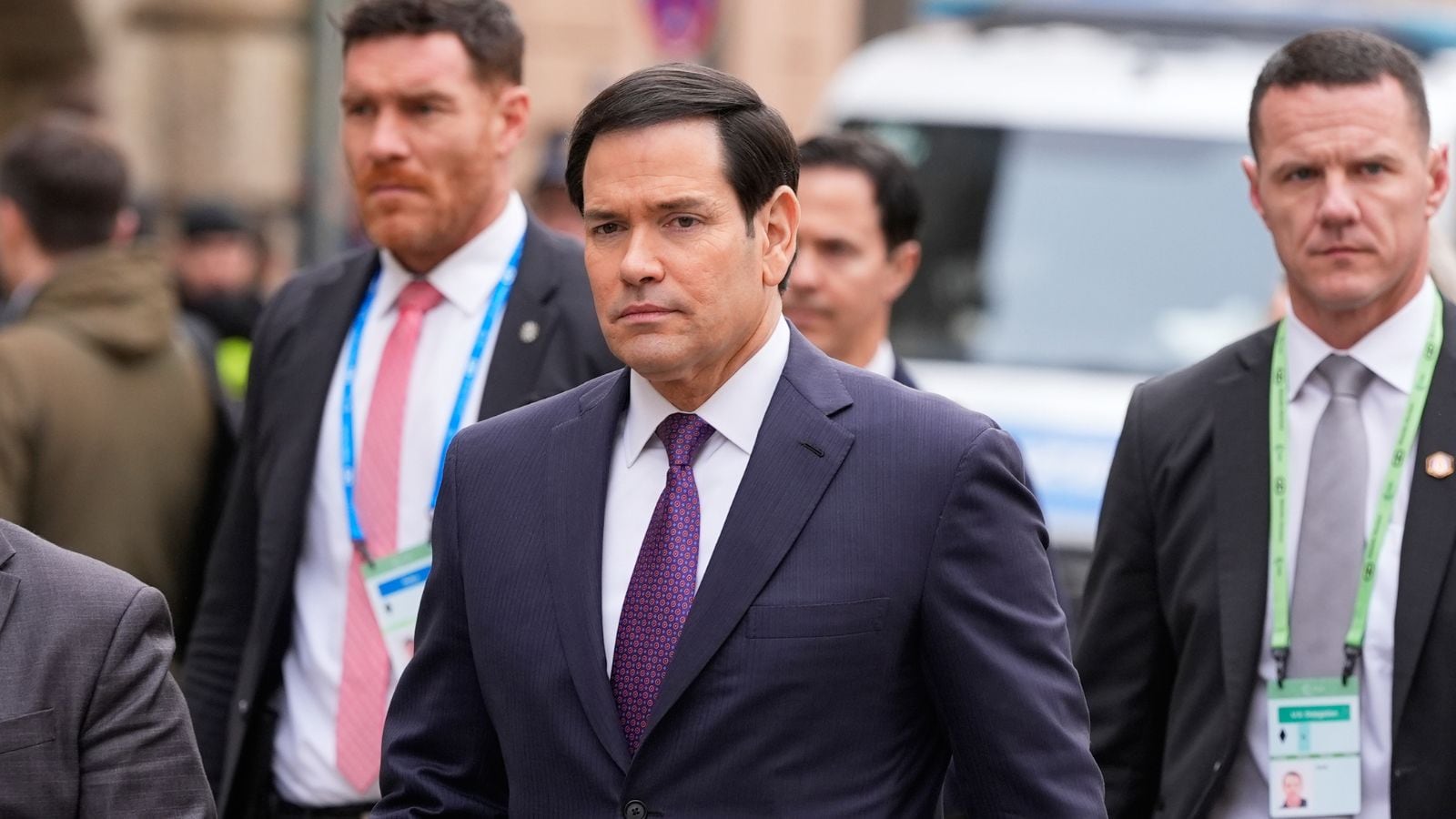
Is the US-Europe schism under Trump 2.0 narrowing? At the recent Munich Security Conference, US Secretary of State Marco Rubio tried to reassure concerned European leaders. Still, he maintained firm US expectations that European nations shift their policies on several issues, including immigration (seen as a risk to the continuity of Christian culture and civilisation), free trade, climate policy, and greater responsibility for their own security.

Rubio’s tone was in stark contrast to last year’s fiery and chastening address by US Vice President J D Vance’s at the Munich Security Conference. Vance argued that a schism had emerged between Europe and America. He strongly criticised Europe’s democratic institutions, accusing them of restricting free speech, and claimed that censorship — not the threat posed by Russia — represented the most serious risk to Europe’s future. Vance lauded right-wing parties in Europe to Brussels’ great consternation. EU officials perceived his remarks as interference in their domestic affairs and an attempt at disrupting EU unity, with the Trump administration looking to pick a fight with Brussels.
President Donald Trump has also repeatedly criticised Europe, most recently in his remarks at the World Economic Forum in Davos in January. He seems to hold a strong personal hostility toward the EU, which he has previously labelled an “enemy” body designed to “screw over” the US. In disputes over tariffs and trade imbalances, Trump has consistently identified the EU and its member countries as key rivals. He has also repeatedly questioned his commitment to defending US NATO allies, arguing that many member states have not raised their defence spending to sufficient levels.
The 2025 US National Security Strategy delivers unusually sharp criticism of Washington’s European allies, effectively holding them responsible for prolonging the war in Ukraine. At Davos, Trump argued that Europe was moving in the wrong direction, attributing many of its current difficulties to policies on green energy and migration. More troubling for many Europeans, growing doubts have emerged about whether the US itself could one day become a military rival, given Trump’s repeated provocative remarks — including his calls for the US to take control of Greenland, a territory of Denmark.
Europe also has major grievances with the Trump administration, with Ukraine emerging as the most serious point of contention in transatlantic relations. Trump’s efforts to broker a peace deal have widened rifts with European allies over the future of strategic cooperation. Key disputes include Washington’s pressure on Kyiv to concede territory, its resistance to Ukraine’s membership in NATO, and wider debates about Europe’s security framework. Many European governments fear that Trump and Vladimir Putin could push through a Moscow-leaning settlement, forcing Ukraine to give up land while sidelining Europe and potentially encouraging further Russian aggression against other European states.
European leaders also feel that the Trump administration operates with a fundamentally different worldview from their own. They see it as dismissive of established rules, long-standing partnerships, and the trust built over decades, and they are wary of such an approach becoming the dominant paradigm. Although many remain reluctant to confront Trump openly, calls are growing across Europe to reduce reliance on the US — especially in defence and security — raising concerns about the future strength of the transatlantic alliance.
The US-Europe divide is also evident in the strikes on Iran, with the EU side-lined by Washington and European allies not supporting the US strikes. Washington broke from the custom among strategic allies by not informing some of its European allies prior to the strikes on Iran. European nations did not allow Washington to use their military bases for the Iran strikes and none of them have taken part in the strikes. After a formal request from the Trump administration, London allowed Washington to use its bases for defensive operations only, a decision which was opposed and criticised by other political parties in the UK. Trump castigated UK Prime Minister Keir Starmer for taking too long to make the decision, stating “that’s probably never happened between our countries before.”
European officials are gravely concerned regarding the flagrant violation of international law by the US, but have not been vocal about this apart from Spanish Prime Minister Pedro Sanchez who severely criticised “the unilateral military action by the United States and Israel.” Trump threatened to impose a full trade embargo on Spain for refusing to allow Washington to use Spanish bases for the Iran strikes, leading to a war of words with Madrid.
Rubio’s speech in Munich emphasised the need for renewed US-European cooperation, reflecting an effort by the Trump administration to draw Europe closer to its strategic outlook. But it seems unlikely Europe will join the US bandwagon. Rubio’s subsequent visit to Hungary heightened concerns that the US may be fuelling divisions among allies amid disputes over Ukraine, Greenland, trade, and defence spending. Many Western European governments continue to prioritise Europe’s autonomy and core values over transatlantic ties, showing little willingness to compromise them to accommodate Trump.
Both the US and Europe must recognise that from a geopolitical, geostrategic and geoeconomic perspective, a strong transatlantic partnership serves the shared interests of both sides. A broad “grand bargain” is needed to preserve the alliance, with Washington acknowledging that its own security is tied to a stable Europe and that strategic withdrawal would embolden rivals elsewhere. Rather than stepping back from Ukraine, Europe, and NATO, the US should reaffirm its commitments. In return, the EU and the UK should support the US in the Indo-Pacific, where Washington should continue to be the primary strategic leader. EU member states need to honour long-standing calls from the US to raise defence spending. Europe should also strengthen alliance ties by setting clearer strategic priorities and deepening military integration and coordination within both NATO and EU frameworks.
The writer is a non-resident scholar at the Elliott School of International Affairs, George Washington University

