



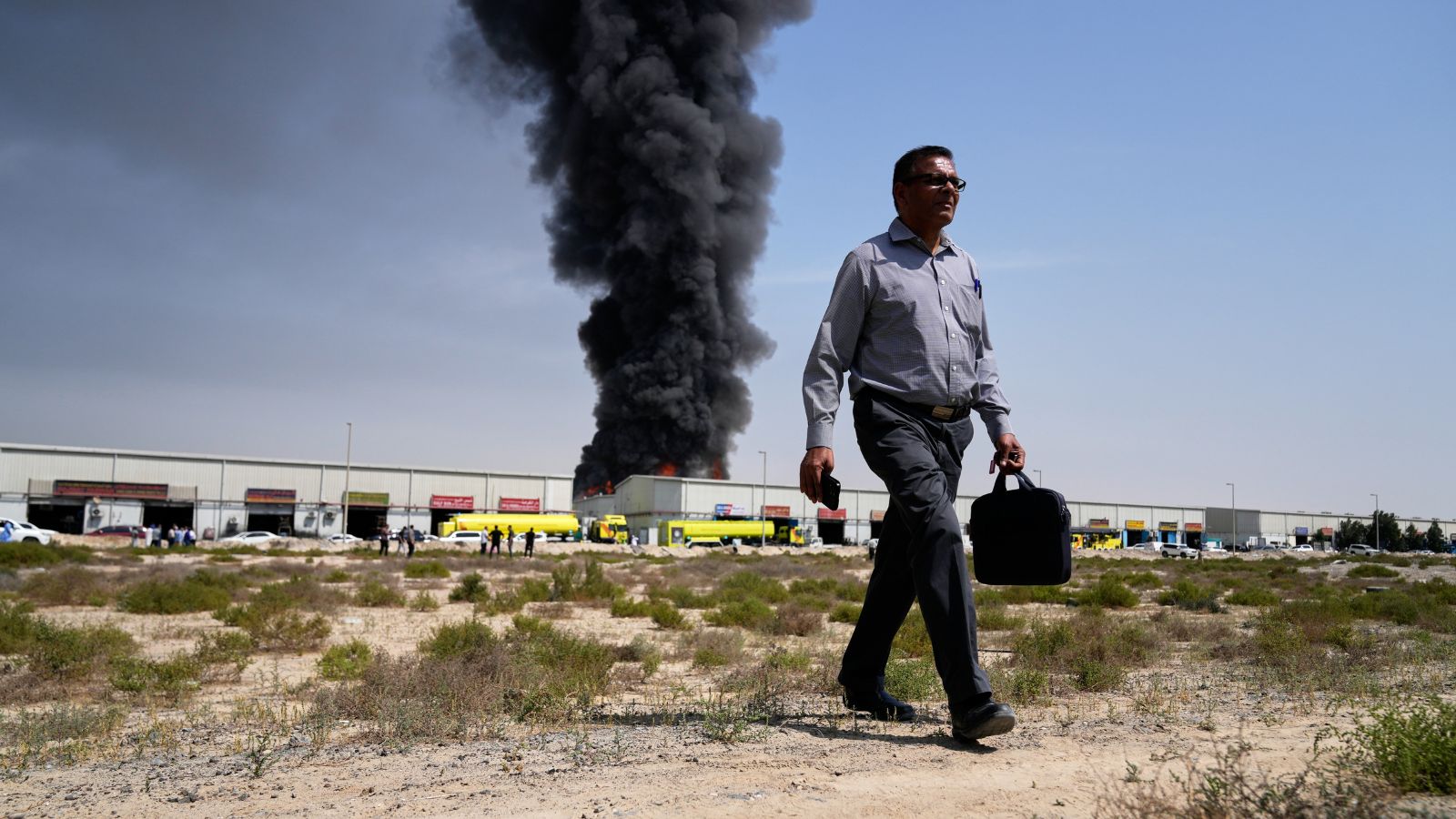
My father fought two wars as a pilot defending India. For our family, war and adaptation have never been daunting. Yet, our hearts sank on February 28, as we watched a swarm of missiles flying over our heads in Dubai, the city that is now our home. Our child sobbed. Nobody is prepared to be targeted by 167 missiles and 200-plus drones in a day.
The UAE is a small, peace-loving country. It has stark, golden expanses of sand and jagged peaks, where turtles claim the shorelines. The UAE’s history is told by the desert, not by built structures. Its culture is defined by the rich flavours of its cuisine, traditional attire and a legendary spirit of generosity. The emirate of Dubai is a tapestry of 200 nationalities, while the Emiratis make up about 5 per cent of the population. In Dubai’s vibrant and diverse economy, based on meritocracy and economic pragmatism, oil accounts for less than 1 per cent of GDP. Ironically, unlike in Switzerland, France, or any of the other Western countries I have lived in, no one in Dubai bats an eyelid seeing a woman wearing an abaya or one in a bikini. That, to me, is beauty.

This is what was attacked.
Despite restricting the US since 2024 from using its bases to launch retaliatory strikes against the region, the UAE is so far the hardest hit by Iranian missiles and drones in the ongoing war between US-Israel and Iran.
Yet, on the 12th day of war, of the 262 ballistic missiles that hit the UAE, 241 were intercepted, 19 fell in the sea, and only two fell on UAE territory. Amongst the 1,475 drones targeted at the UAE, 1,385 were intercepted. There have been six deaths so far. The UAE has clearly invested heavily in world-class, multi-layered air defence systems that have demonstrated a tremendous rate of success.
However, the UAE’s true strength lies in its composure. While it evidently possesses the military sophistication to strike back, it has instead chosen to prioritise its people by opting for regional de-escalation and peace. UAE President Sheikh Mohamed bin Zayed Al Nahyan recently said while visiting those injured in the Iranian attacks, “As for the residents who live amongst us, they are our guests and our extended family. They have truly honoured us with their stance. We hope they will forgive us if we have fallen short in any way. I promise them that we will fulfil our duty, because it is our obligation to protect our people and our country…The UAE has thick skin and bitter flesh. We are no easy prey. We will carry out our duty towards our country, our people, and our residents who are also part of our family.”
Pragmatism and calm trump knee-jerk reactions to events. The UAE Ministry of Foreign Affairs has reiterated, “The UAE officially confirms it remains in a strictly defensive state against this direct aggression. The UAE strongly emphasises it actively avoids being drawn into broader, unnecessary destructive regional conflicts.”
There is frequent communication throughout the day from the government, assuring residents, helping them identify shelters in or around their homes, alerting them when necessary, and providing clear data on the attacks at the end of each day. Flights are arranged for all those who want to leave, escorted by a jet to keep passengers safe. There is a 24-hour helpline for coping with anxiety and storybooks circulated to explain the attacks to children.
Communities have created WhatsApp groups to share resources, yet there is no scaremongering. Groceries, food, and essentials are plentiful, and no one is hoarding. People are showing up at work, without being mandated to. We hear loud booms through the day and night, which evoke gratitude, not fear, because now we know that those are missiles being intercepted by the UAE defence systems. We reflect the same calm as the UAE’s leadership as we watch social media memes, jokes, rumours, and fake news about Dubai falling like a pack of cards. Perhaps the latter might be a reason why Iran too decided to fire more ammunition at Dubai than anywhere else.
However, the truth is that Dubai did not break.
Life is merely more indoors. There is awareness. There is laughter. There is a shared sense of responsibility amongst the large majority of residents who have decided to stay, a fact that never hit the headlines.
Twelve days into the conflict, life in Dubai is calm. There is profound beauty — now more than ever — in Dubai’s stoic grace and resilience. It comes from a deep confidence amongst its residents that the leadership has the power to protect the skies and the compassion to prioritise its people over ego. The last words of the UAE Armed Forces pilot, First Lieutenant Ali Saleh Ismail Al Tunaiji, who was martyred in a helicopter crash on March 9, were, “And if God grants us life, it is enough for us that you are well, sleeping and at peace.” There is indeed no fear.
It is this extraordinary resilience that will mark the next era of Dubai’s ascent as a model city for modern times. When the dust settles, all that will remain is proof of Dubai’s undaunted spirit.
The writer is CEO, Sustain Labs Paris and a Global Leadership Fellow alumna of the World Economic Forum
