



In financial circles, every couple of months, there is a certain childlike excitement among global market participants in anticipation of the US Federal Open Market Committee’s (FOMC) interest rate decision. Just yesterday, as the US Federal Reserve Chair, Jerome Powell, announced the central bank’s decision to hold interest rates, it went as unnoticed as a cold piece of bread in a bespoke fine-dining. But these are hardly ordinary times.
Rather, the world was focused on a rapidly deteriorating security situation in West Asia. On Wednesday, Israeli forces carried out airstrikes on Iran’s South Pars gas field, the ownership of which is shared between Iran and Qatar. In response, Iran’s Revolutionary Guards carried out strikes on Qatar’s largest gas facility, housed in the Ras Laffan Industrial City, which accounts for a fifth of global Liquefied Natural Gas (LNG) supplies.

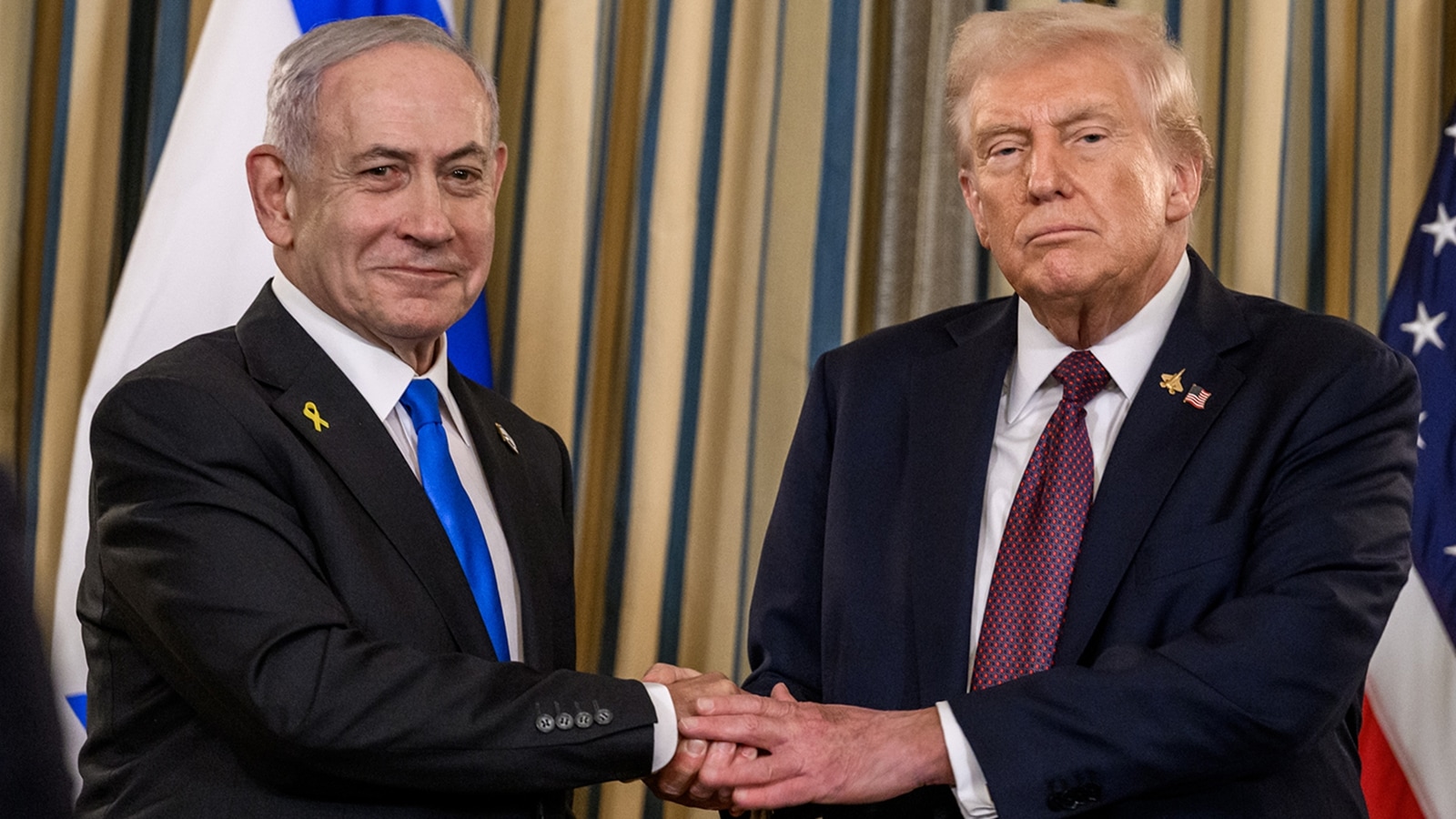
In a bizarre sequence of events, immediately following the first attack, US President Donald Trump denounced the Israeli strikes on Iran’s gas facility and claimed he had no prior knowledge of it.
“The United States knew nothing about this particular attack, and the country of Qatar was in no way, shape, or form involved with it, nor did it have any idea that it was going to happen,” noted Trump’s statement on Truth Social. “Unfortunately, Iran did not know this, or any of the pertinent facts pertaining to the South Pars attack, and unjustifiably and unfairly attacked a portion of Qatar’s LNG gas facility.”
More significantly, the next part of Trump’s statement read, “NO MORE ATTACKS WILL BE MADE BY ISRAEL pertaining to this extremely important and valuable South Pars Field unless Iran unwisely decides to attack a very innocent, in this case, Qatar.”
Amid this frenzy, some commentators are pointing to the fact that this marks the first instance of the US publicly disagreeing with Israel since Operation Epic Fury commenced.
Yet, most reportage coming out from Washington suggests that, in contradiction to Trump’s statement, he was indeed aware of Israel’s attack on the Iranian gas field. For instance, Alex Ward of the Wall Street Journal reported, “Trump, who knew about the Israeli strike on South Pars in advance, supported it as a message to Tehran over its blockade of the Strait of Hormuz.”
Similarly, Barak Ravid of Axios tweeted, “Contrary to Trump’s statements, Israeli and US officials said that the United States had prior knowledge of the Israeli strike and even approved it in an attempt to pressure Iran. After the Iranians retaliated against Qatar’s gas fields, Trump is now changing course.”
In the fog of war, the only reliable conclusion is that any analysis is probably flawed. Thus, it is nearly impossible to guess whether this instance marks a wedge between the US and Israel’s war strategies. Rather, it might be more useful to take a step back and assess whether the US and Israel’s fundamental motives behind continuing this war are beginning to diverge.
While nobody other than the US President himself really knows what prompted the initiation of the war against Iran, it is beginning to get glaringly obvious that the existing status quo in the Strait of Hormuz is not tenable from an American point of view.
The impact of this war on the global energy landscape is beginning to look bleak. Following the attack on Qatari gas facilities, the global fuel markets were visibly panicking. The oil price rose to over $112 per barrel, and gas prices were up around 30 per cent across geographies. Beyond rising oil and gas prices, there is another looming risk for the global economy: A shortage of oil across major global ports might bring the movement of global shipping to a halt, according to global energy analyst Javier Blas.
The fear of energy inflation is spreading across the world, including in the United States. After all, Powell’s stated reason for not lowering interest rates in the face of a deteriorating labour market was the lurking danger of energy price-fuelled inflation in the US. These are no run-of-the-mill inflationary fears. The ghost of the 1970s oil shocks stemming from West Asian wars still haunts American monetary economists and politicians alike.
Thus, the US strategy in the Persian Gulf is increasingly looking like an effort in compellence. The idea is to keep attacking Iran and degrading its missile-launching capabilities to compel the Revolutionary Guards to reopen the Strait of Hormuz.
More pressingly, it is not just global energy supplies; what is also at stake is the reputation of the US’s deterrence capacity and the ability of American naval forces to safeguard global maritime chokepoints.
For decades, its ability to safeguard global maritime chokepoints was one of the central features of US security hegemony. From Malacca to Hormuz to Panama, the US’s ability to singlehandedly allow the free movement of shipping was assumed to be the cornerstone of American power. Iran’s ability to effectively choke the Strait of Hormuz has forced US allies to reassess Washington’s reliability as a security guarantor, and more importantly, the very premise of extended deterrence amid simultaneous crises.
What likely started as a push for regime change has now, at least in terms of its immediate objective, become an effort to compel the Revolutionary Guards to reopen Hormuz and restore the free flow of oil and gas tankers.
In stark contrast, Israel is arguably still aspiring for a fundamental regime change in Tehran. Given how rapidly things are unfolding, sometimes 48 hours seem like weeks, if not months. But it has barely been two days since an Israeli strike took out Ali Larijani, who was thought to be the de facto Iranian security tsar. Thus, while American efforts are narrowly focused on reopening Hormuz, the Israelis still seem to be pushing for the termination of their long-held existential enemy: An Iranian state built around the worldview of the Revolutionary Guards and the former Supreme Leader Ali Khamenei.
Are the US and Israeli war agendas diverging? It is possible that the US was completely on board with the Israeli strike on South Pars. However, while Netanyahu was escalating to usher in regime change, Trump may have seen it as an exercise to reopen the Strait of Hormuz. It is worth remembering that even decades after a war ends, its dynamics remain difficult to fully grasp. An effort to understand them in real time is, unfortunately, akin to gossiping on a lazy Saturday afternoon.
The writer is associate fellow, Observer Research Foundation (ORF)
