



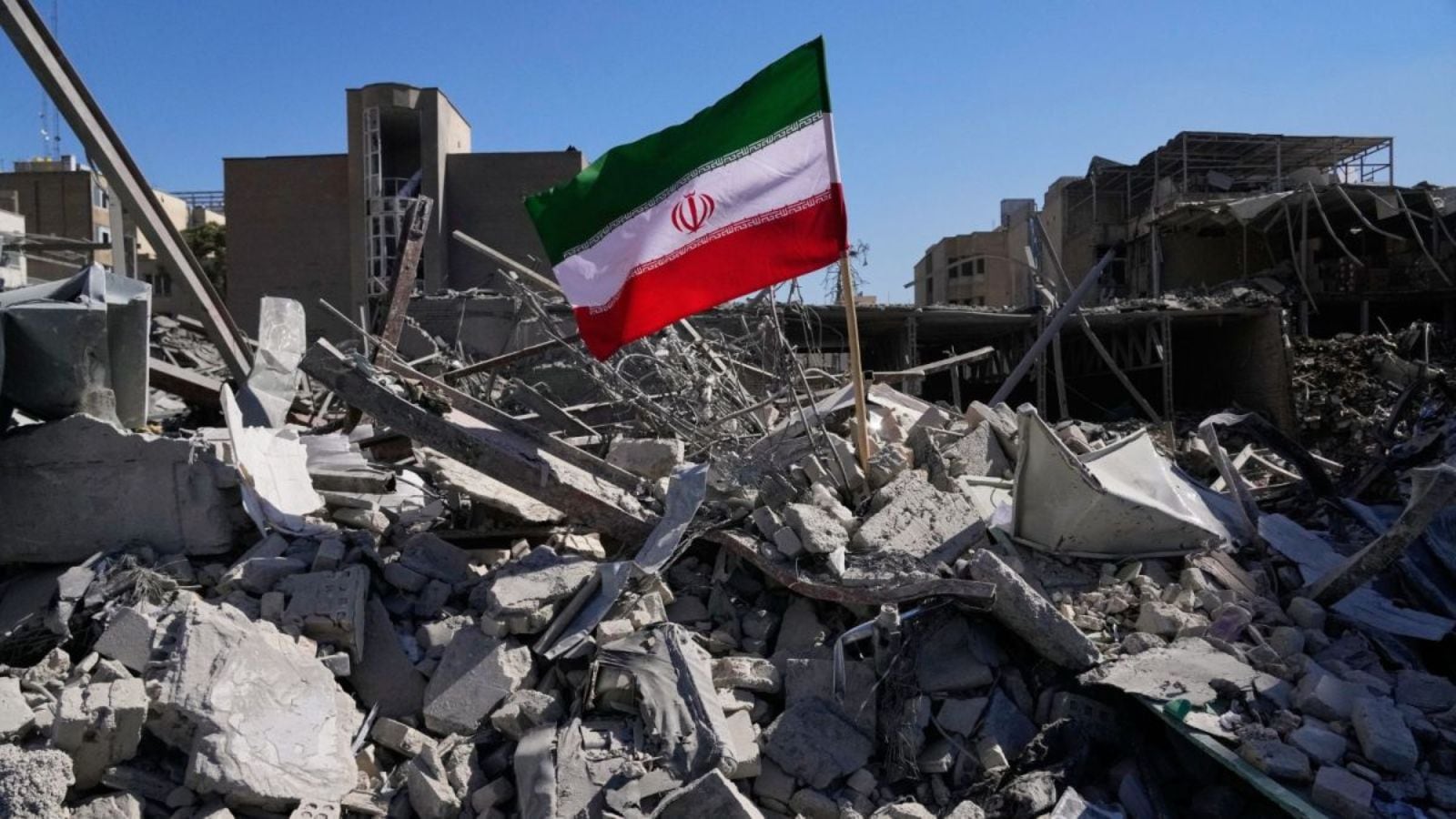
The Indian people can legitimately expect that the political class that governs on their behalf will rise above politicking whenever there is an extraordinary national difficulty. That there is now such a difficulty because of the Iran war is obvious. Its depth and gravity are growing as the war enters its fourth week. Now oil and gas production and refining facilities have been targeted, and that is a dangerous omen. The Arabian Peninsula states have not entered the war as yet, but they are indicating that their patience is running out.
There is no indication when the war will end. Its conclusion depends on many imponderable factors. But that the Iran war will have a substantial negative economic and perhaps social impact is clear even now. The political class cannot, therefore, adopt an ostrich-like approach.

Yet the political class, as a whole, has shown no desire, let alone urgency, to evolve a consensus to chart a way forward to address the national difficulty. The development of a consensus is the responsibility of all sections of the political class. However, the ruling dispensation has to take the lead and engage the Opposition. On its part, the Opposition must respond constructively. This is notwithstanding the coming state elections, which will be contested bitterly.
Prime Minister Narendra Modi has spoken to his Gulf counterparts and, once, to the Iranian president. External Affairs Minister S Jaishankar has been active in maintaining regular contact with his counterparts in Iran, Israel, and the Gulf countries. He has also visited Brussels, where he met with the leadership of the European Union (EU) and the foreign ministers of some EU member states. That would have given him an indication of what these countries were thinking about the duration and consequences of the war. What has not been publicly revealed is the government’s interactions with the Donald Trump administration on the Iran war. Doubtless, the National Security Adviser, Ajit Doval, would also have activated his channels to discuss the war and its implications for the region and the world.
Have these conversations and information from other sources given an indication to the government about how long the conflict will continue and how destructive it is likely to become? The government should share these assessments, even if they are tentative and partial, with leaders across the political spectrum.
It is doubtful, though, that anyone can predict how much damage the war will do because Israeli Prime Minister Benjamin Netanyahu seems determined to expand its scope. That is complicating a very fraught situation. As for its durability, only President Trump can decide the end of hostilities. Israel will definitely fall in line with whatever decision he makes. The problem is that Trump is caught in the quicksand of West Asia, and there is no sign that he is aware of how close he is to getting bogged down. He may even now declare victory, though there is no indication, as yet, that he will do so. Perhaps he still wants the Iranians to cry “uncle” and do a Venezuela, but they are very unlikely to oblige.
How will Iran respond if Trump wants the hostilities to end? It has laid down conditions, which include reparations and guarantees that there will be no further attacks. These will naturally not be agreed to. The hardliners in Tehran may be inclined to carry on the struggle, but one former Indian official with almost two decades of working experience in Tehran mentioned to this writer that the pragmatists may resort to Ayatollah Ruhollah Khomeini’s example of agreeing to end the Iran-Iraq War in 1988. He then told his people that they would have to drink from the poisoned chalice. But now the pragmatists have been weakened with the elimination of Ali Larijani, secretary of the National Security Council.
There are three distinct strands to the Iranian character: The impulse for “shahadat” (martyrdom), the elements derived from its civilisational ethos, which makes it what can be best captured by the Hindi word “rasik” (refined and cultured), and pragmatism. These instincts continuously jostle in Iran. The decapitation strike in which Supreme Leader Ayatollah Ali Khamenei and members of his family were killed, including his infant granddaughter, strongly revived memories in the entire Shia world of the martyrdom of the Prophet Muhammad’s grandson, Imam Hussain, at Karbala.
This has naturally been felt most in Iran and has led to cries for revenge. In addition, the devastating American and Israeli airstrikes against Iran are also leading Iran to close ranks. This includes some of those who are implacably opposed to the Iranian system of velayat-e-faqih.
While these tendencies will propel some to continue to fight, there will be others who wish to pursue the example of Khomeini. What eventually matters is what the current Supreme Leader, Mojtaba Khamenei, decides. There are reports that he is incapacitated. That will make a decision to call for a halt to Iranian attacks even more difficult.
In sum, it is impossible to envisage the endgame — either in substance or in precise timing — of the Iran war. It is, therefore, prudent to plan for it to continue for many weeks, possibly months. That would mean that India’s multidimensional national difficulties would not end early. Hence, the political class needs to come together to give confidence to the people.
The writer is a former diplomat

