



5 min readMar 22, 2026 07:03 AM IST
First published on: Mar 22, 2026 at 07:00 AM IST
For nearly four decades of the history of the Republic of India, not many people noticed the Election Commission of India (ECI). Not many were aware of the provisions in Part XV of the Constitution of India.
Elections were held once in five years to the Lok Sabha and to the State Assemblies. People flocked to vote but few were aware of the law, the rules, the arrangements, the preparations, and the process leading to the outcome. If one found his/her name in the electoral rolls, one could vote — several millions did vote and several thousands did not vote. Whichever candidate won the election in a constituency, a big majority of voters accepted it, and moved on.

Elections were largely uneventful barring some incidents of violence or impersonation. However, behind the calm facade there lay many injustices. Vast numbers of people were not included in the electoral rolls. Large sections of the electorate were prevented from exercising their right to vote — especially Dalits, tribals, groups of persons belonging to the backward communities in areas where there was a dominant community, and religious minorities. There was a hue and cry for a few days, but it died down soon.
Enter crusader
The ECI was represented by the Chief Election Commissioner. The CEC was a distinguished civil servant but, by and large, faceless and silent. The CEC was rarely dragged into controversies or to the Courts. The reported instances where the CEC was drawn into the limelight were when parties split and there were public fights over the reserved symbols.
T N Seshan was appointed CEC in 1990 and breathed life into Part XV of the Constitution. He enforced strict compliance with the Acts, rules and instructions. He made people aware of the ECI and its enormous powers. He instituted cases in the Supreme Court and invited verdicts that became binding rules. He was scrupulously neutral, showed no favour or disfavour, and became a folk hero. Other distinguished CECs included Mr J M Lyngdoh, Mr T S Krishnamurthy, the late Navin Chawla and Mr S Y Quraishi. The slide began in the last decade and CECs have been embroiled in controversies.
To sir with mischief
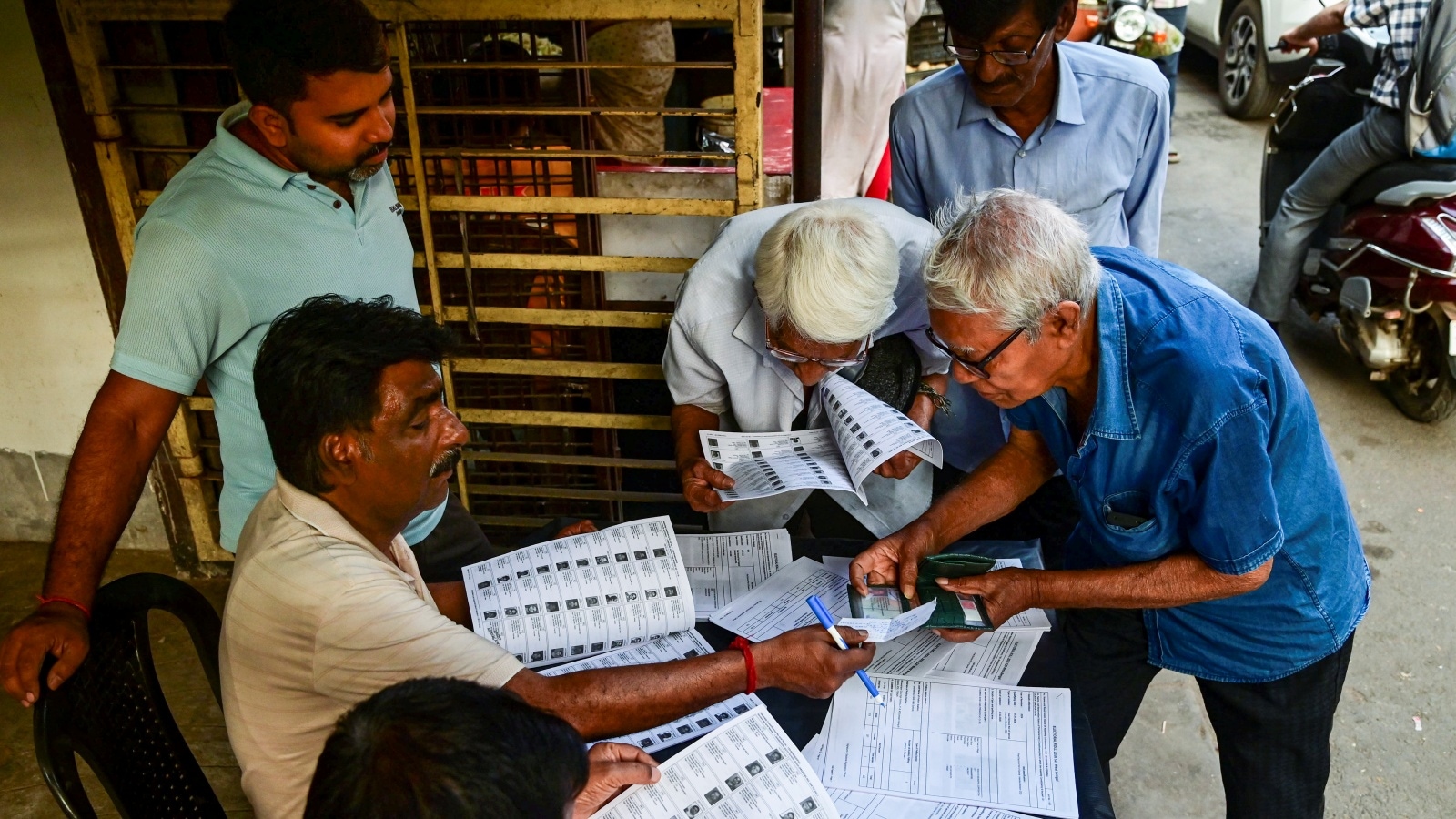
The Special Intensive Revision (SIR) in 2025-26 exploded the neutrality of the CEC. Under Article 326 of the Constitution, “elections …shall be on the basis of adult suffrage; that is to say, every person who is a citizen of India and who is not less than eighteen years of age… shall be entitled to be registered as a voter at any such election”. The stress is on adult suffrage, citizen and entitled to be registered as a voter.
The plain meaning of these words is that the electoral rolls must include the adult population of the country unless the person is not a citizen of India. Normally, the total number of voters in the updated electoral rolls of every state must be nearly equal to the adult population of the State. If a Census were held every ten years, the count of the adult population would be accurate. The last Census in India, unfortunately, was held in 2011. However, there are advanced statistical tools to estimate the population, and these tools are employed by expert bodies. Therefore, it is logical to argue that the total number of voters in the updated electoral rolls of a State must be nearly equal to the estimate of the adult population of that State.
The post-SIR electoral rolls have revealed an unpleasant surprise. Mr Yogendra Yadav has demonstrated that the divergence between the number in the post-SIR electoral rolls and the estimated number of the adult population in States is shockingly high — leading to the conclusion that the SIR was not inclusive and left out millions of adult citizens. Here is a tell-tale table (on the left):
Perverse result
Ideally, the last column in all the rows should be 100 per cent, but we do not live in a perfect world. A small number of genuine adult citizens may be left out of the electoral rolls despite an earnest effort by the government, political parties and citizens groups. However, such an effort was conspicuously absent during the SIR exercise. Contrast with the effort made in the United States under the Civil Rights Act, 1964, to enroll black Americans who had been excluded on illegal grounds. The burden was on the ECI to ensure that persons were included in the electoral rolls on the basis of adult suffrage. On the contrary, under SIR, the ECI adopted a hostile attitude and cast the burden upon the voters to prove their citizenship; those who were unable to do so were promptly excluded from the electoral rolls.
As can be seen from the last column of the Table, millions of the adult population — on average 10 per cent — are missing from the electoral rolls. Are the missing persons adult, yes. Are they citizens, yes, unless proved to the contrary. So, why are they missing?
Instead of preventing proven non-citizens becoming voters, the ECI has ‘succeeded’ in turning millions of eligible citizens into non-voters.
(Next column: April 5, 2026)

