



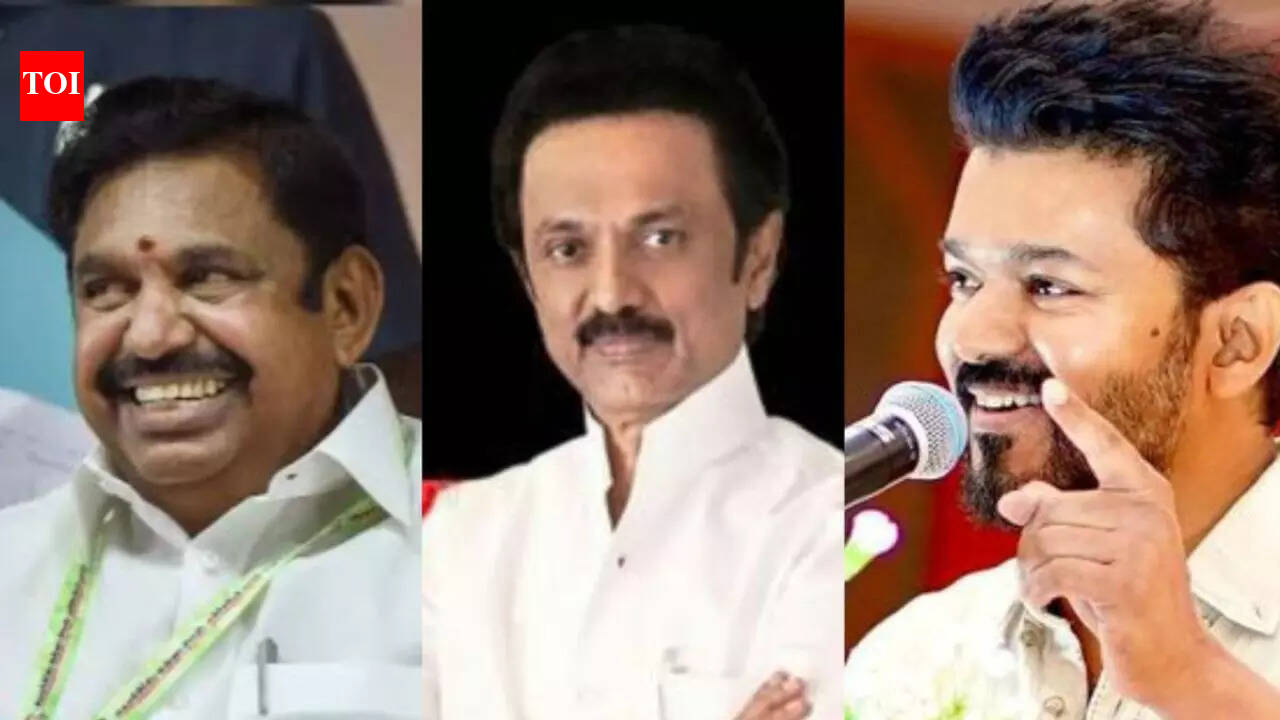

NEW DELHI: With the Tamil Nadu assembly election approaching, political activity in the state has intensified, with major alliances consolidating and parties recalibrating strategies based on past performance and evolving voter dynamics. The contest is expected to once again centre around the DMK-led alliance and the AIADMK-led NDA front, though the BJP is attempting to expand its footprint.The AIADMK on Monday finalised seat sharing with its key allies, allotting 27 seats to the BJP, 18 to the PMK faction led by its president Anbumani Ramadoss, and 11 to TTV Dhinakaran-led AMMK, wrapping up negotiations among major constituents of the opposition front for the assembly polls.In the 2021 Tamil Nadu assembly election, the Dravida Munnetra Kazhagam (DMK)-led alliance secured a decisive victory, winning 159 out of 234 seats, returning to power after a decade. The DMK itself won 133 seats with a vote share of around 36.8%. Its principal ally, the Indian National Congress (INC), won 18 seats with a vote share of about 4.4%.On the other side, the All India Anna Dravida Munnetra Kazhagam (AIADMK)-led alliance managed 75 seats, with the AIADMK winning 66 seats and securing roughly 33.3% vote share. The Bharatiya Janata Party (BJP), contesting as part of the AIADMK alliance, won 4 seats with a vote share of approximately 2.6%.Smaller players also played a role in shaping outcomes. The Pattali Makkal Katchi (PMK) secured 5 seats, while the Viduthalai Chiruthaigal Katchi (VCK), aligned with DMK, won 4 seats. Left parties including the Communist Party of India (CPI) and Communist Party of India (Marxist) (CPI(M)) won 2 seats each, contributing to the DMK-led bloc’s overall tally.The vote share split highlighted a bipolar contest, with the DMK-led alliance collectively polling close to 45%, while the AIADMK-led front secured around 39%, indicating a relatively consolidated anti-incumbency vote against the then AIADMK government.As the state heads into the next election cycle, alliances are once again fluid. The DMK is expected to retain its core coalition with Congress, Left parties, and VCK, banking on welfare schemes and governance record. The AIADMK, meanwhile, is navigating internal challenges and alliance uncertainties, particularly after shifts in its relationship with the BJP.The BJP, despite its modest vote share, is attempting to emerge as a more influential player by contesting on more seat this time aiming to convert its incremental vote gains into seats.What is at stake in the upcoming election is not just power in one of India’s most politically distinct states, but also the future trajectory of Dravidian politics, which has historically resisted national party dominance. While the DMK will seek to defend its mandate, the AIADMK faces the challenge of rebuilding leadership coherence, and the BJP will test whether its expansion strategy can disrupt Tamil Nadu’s entrenched political binary.
