



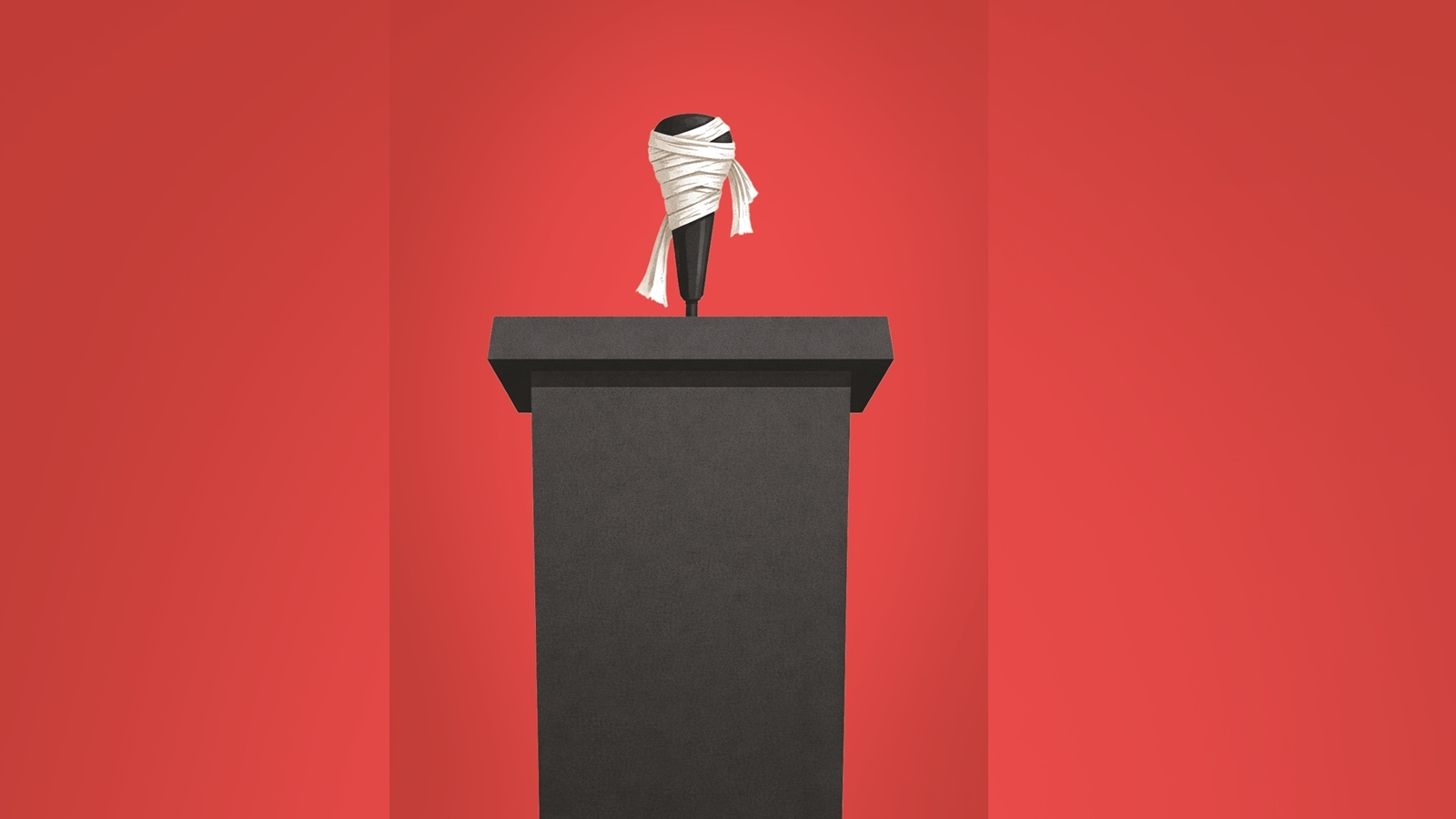
The debate in India over the conflict in West Asia centres on the meaning and application of strategic autonomy. There is a view that the government’s approach, marked by silence and expediency, has effectively equated strategic autonomy with the absence of a moral or ethical stance. The Narendra Modi government has been accused of remaining silent on what is described as a unilateral, immoral and illegal war initiated by the US and Israel on Iran.
Modi’s statements in Parliament have only reinforced those charges. The Prime Minister has detailed the contours of the crisis, cautioned the country on the painful days that lie ahead, but shied away from answering the core question.

New Delhi doesn’t need to pick a side in this war, but for a country dreaming of vishwaguru status, it is important to take a stand. The Global South, too, expects that. Once the fog of war clears, just how does India plan to address the trust deficit we are accumulating through this painful balancing act?
The war is inflicting severe harm. Every sector of the economy, from petrochemicals to mining, is reeling, leading to widespread unemployment and rising inflation that burdens households. The PM himself underscored the long-term costs of this war when he told Parliament that its impact is likely to be felt for a long time.
Historically, India has never interpreted strategic autonomy as synonymous with silence or strict neutrality. During the 2003 Iraq War, then Prime Minister Atal Bihari Vajpayee ensured that both houses of Parliament passed resolutions condemning the invasion, despite the US having strong allies and a fabricated pretext of “weapons of mass destruction.” The current conflict lacks any credible justification, and even Western allies have expressed wariness about US and Israeli plans. Domestic opinion in the US, generally supportive of such initiatives, has been appalled by the recklessness involved.
India, which positions itself as a leader of the Global South, now appears to side with the US and Israel. While Western allies distanced themselves from Netanyahu, India’s PM was seen embracing him just 48 hours before the war began. When the PM told Vladimir Putin that “this is not an era of war,” it carried a certain moral perspective. Yet, while addressing the Knesset, the tone and content of his remarks appeared closer to cheerleading.
India has condemned Iran’s actions multiple times, including co-sponsoring resolutions deeming attacks on GCC countries and Jordan as egregious. But what of the origins of the crisis, the assassination of Iran’s Supreme Leader and other top figures, the bombing that killed 165 children in a Tehran school, or the attacks on Iranian fighters after India hosted them in the Indian Ocean?
Those who equate strategic autonomy with a kind of strategic muteness must note that the US has never shied away from stating its intentions regarding India’s role. Washington has repeatedly signalled that it opposes India’s rise, with officials stating that the “mistakes” made with China will not be repeated. Figures like Marco Rubio have invoked civilisational and colonial anxieties in urging Western unity. Can anyone seriously claim that halting oil purchases from Iran and Venezuela protected India’s strategic autonomy?
Ironically, India’s ambivalence has won unexpected endorsement from figures like Congress MP Shashi Tharoor. His views appear to contradict the stance articulated by his own party. The Parliamentary Standing Committee on External Affairs, with Tharoor as chairman, has not aligned itself with any conclusive view on the full range of issues. Instead, Tharoor has launched a strong critique of so-called liberals who have condemned the government’s silence.
Tharoor bases his argument on the premise that strategic autonomy means pursuing national interests without being burdened by moral, ethical, historical or civilisational considerations (‘India’s silence on West Asia war is not moral surrender. It is responsible statecraft,’ IE, March 20). In essence, he suggests that if subservience to the US and Israel yields greater dividends, that should define India’s approach.
In the multipolar disorder now unfolding, India must remain flexible in responding to emerging situations. Yet, as the world’s most populous democracy, it cannot be reduced to mere geography. The struggle for Independence and the ethical principles that shaped India’s worldview, rooted in non-violence and non-alignment, must not be sacrificed at the altar of political expediency. This is not even true expediency; it is counterproductive and retrograde.
The writer is Rajya Sabha MP, CPIM, and a member of the standing committee for Ministry of External Affairs

