



4 min readMar 26, 2026 06:20 AM IST
First published on: Mar 26, 2026 at 06:20 AM IST
India’s BRICS presidency comes at a moment of geopolitical stress that directly affects its diplomatic choices. Escalating tensions in the current Iran crisis have placed New Delhi’s foreign policy under pressure, even as they draw attention to the expanded BRICS grouping. Iran, one of the newest entrants into the BRICS+ framework, is now in direct military confrontation with the US and Israel. The crisis tests whether the BRICS can act as a cohesive counterweight to Western power. For India, however, the moment is less about the cohesion of BRICS and more about the viability of its own multialignment strategy under conditions of conflict.
India’s approach to foreign policy, entrenched in strategic autonomy, has always given precedence to flexibility over alignment, fostering ties across competing power centres. In recent years, this has translated into deepening strategic cooperation with the US, expanding defence and technological ties with Israel, maintaining connectivity and energy interests with Iran, and preserving critical economic links with the Gulf. This has provided India with room for manoeuvre. Yet it also means that moments of conflict bring these relationships into direct tension — as the Iran crisis illustrates.

BRICS has evolved into a plurilateral platform of diverse economies rather than a coalition for geopolitical alignment. Its emphasis has been on economic cooperation and institutional reform. The recent expansion, bringing in members from West Asia and Africa, has reinforced its positioning as a platform of the Global South, while also incorporating countries with increasingly divergent geopolitical alignments. For India, this creates a more volatile diplomatic terrain. It must engage with the grouping’s aspirations while safeguarding its own strategic partnerships. Such dilemmas are not unique to India; they reflect a broader feature of the emerging international order.
The Iran crisis further strains a global order where multilateralism already faces unprecedented challenges. It illustrates how the diffusion of power in the 21st century is producing a fragmented form of multipolarity rather than a new Cold War–style alignment. In such a setting, states respond primarily in line with their national interests, limiting the prospects for coordinated action. BRICS reflects this reality.
It has been more than 20 days since the supreme leader of Iran, Ali Khamenei, was assassinated, and the world is witnessing intense militarisation of the sea lanes of communication in the Strait of Hormuz. BRICS members have responded as individual actors with distinct geopolitical interests. India co-sponsored a UNSC resolution condemning Iran’s attack on Gulf Cooperation Council countries. While some view the crisis through the lens of balancing Western influence, others are shaped more directly by regional security concerns and economic interdependence with the Gulf. India continues its increasingly precarious balancing approach — prioritising maritime security, energy stability and relationships with multiple strategic partners.
Lacking a collective security framework or unified foreign policy apparatus, BRICS functions more as a coordination platform than an agency determined to devise instruments of geopolitical action. States now interact across multiple competing partnerships simultaneously. Their cooperation tends to be issue-specific. This produces a landscape in which alignment is situational rather than structural, and where coalitions are better understood as flexible arrangements than fixed geopolitical camps. For India, this underscores that its diplomatic choices are shaped not only by its own strategy, but also by the structural limits of the coalitions it engages with.
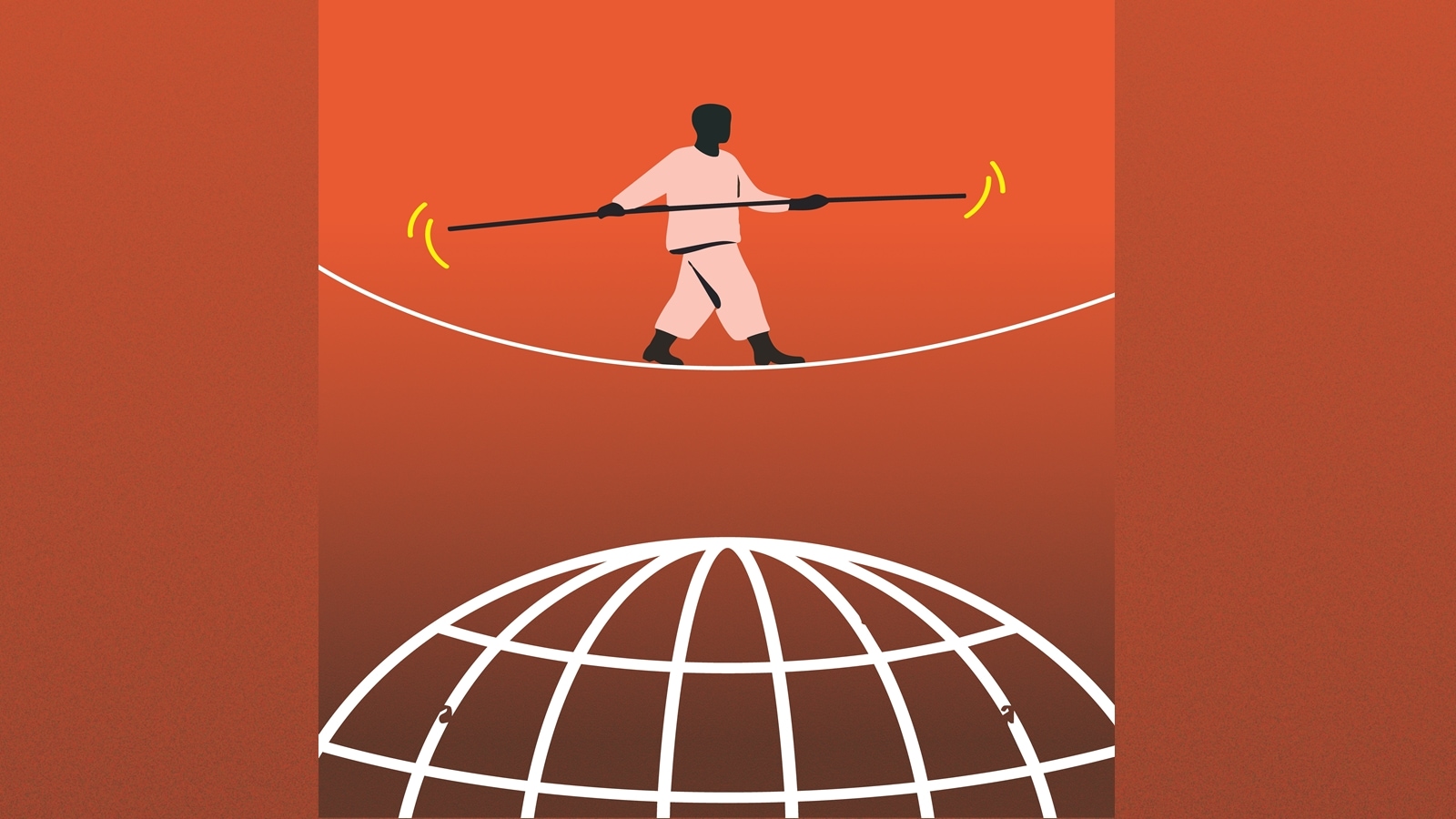
Having positioned itself as a voice of the Global South, New Delhi must balance these aspirations with the demands of its own strategic partnerships. In the present crisis, this is likely to translate into an emphasis on dialogue and de-escalation rather than alignment with any camp. India’s role as BRICS host may therefore lie less in forging a unified geopolitical stance and more in managing diversity within the grouping. In a multipolar order defined by overlapping and competing alignments, the ability to navigate such contradictions — rather than resolve them — may well become the defining feature of India’s diplomacy.
The writer, a Fulbright and Institute of Chinese Studies (ICS) fellow, is professor at IIM Indore. Views are personal
