



(AP file photo)
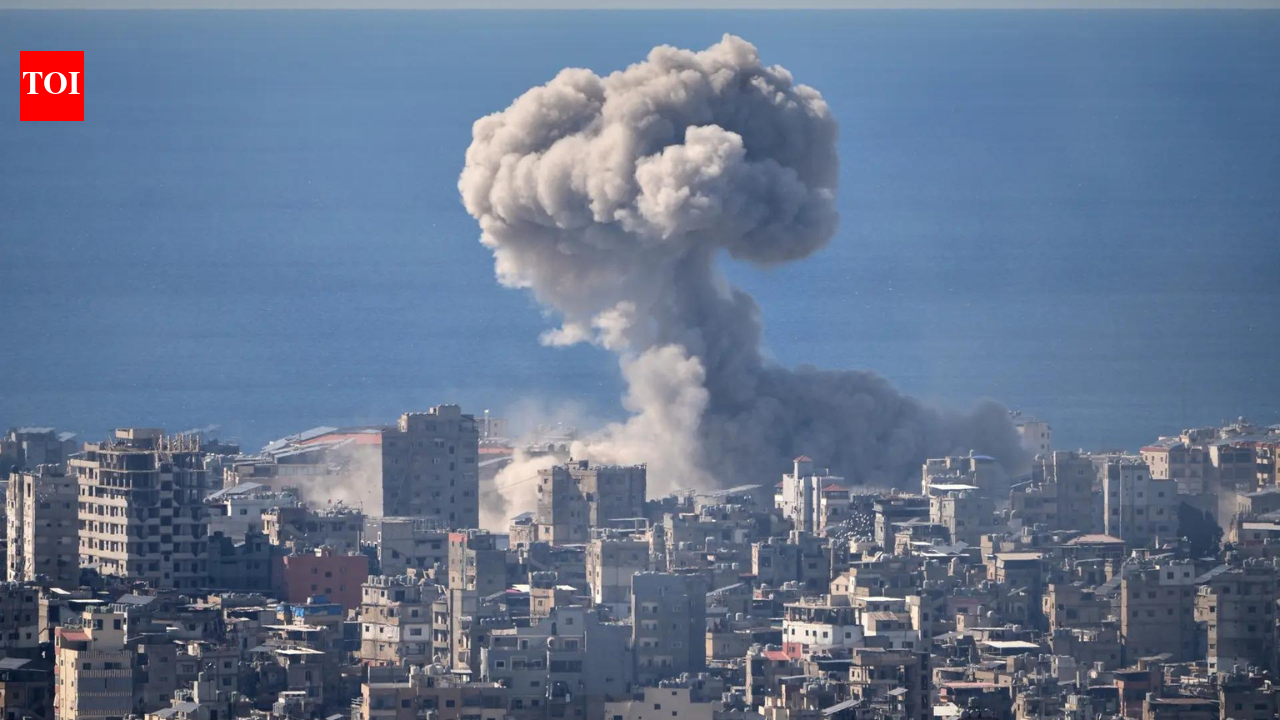
As the war in the Middle East entered its second month, efforts to de-escalate and push for peace gathered pace, with Pakistan attempting to position itself as a key diplomatic player. However, an Israeli envoy firmly dismissed Islamabad’s role, instead expressing a clear preference for India as a “better mediator.”Fleur Hassan-Nahoum, special envoy at Israel’s foreign ministry, told news agency ANI from Jerusalem that the conflict expanded almost immediately after it began. “Well, we’ve been involved in a multi-front regional conflict since the 7th of October, when we were attacked by the Iranians’ proxy Hamas from the south. And then on the 8th of October, when we are attacked by an Iranian proxy from the north. And so multi-front is already something happening for a long time, unfortunately.”
Highlighting developments over the past month, she pointed to what she described as substantial degradation of hostile capabilities. “Today, we see that after a month, there are considerable military gains. 80% of the rocket launches of the Islamic Republic have been destroyed. The entire navy has been destroyed. The entire top echelon of their military leadership and political leadership has mainly been destroyed.”She also claimed growing internal instability within Iran. “And we see every day cracks in the regime leadership, defections from the Basij, and absolute chaos when it comes to their strategies at the moment. They’re just, you know, sending rockets at any country that they can get their hands on. So I think that there have been considerable military gains.”On the evolving United States approach, Nahoum underscored what she described as a dual-track strategy combining diplomacy with military pressure. “At every single moment, at every single crossroads of this, President Trump has always given a chance to negotiate a settlement. And it has been the intransigence of the Islamic Republic that didn’t get to a settlement and nothing else.”She added that such an approach allows space for de-escalation while maintaining pressure on the ground. “I think that is a good strategy to always give them a ladder to climb down from the tree, but at the same time, keep making those military gains to destroy them when we have to.”Commenting on reports of Pakistan attempting to play a mediatory role despite lacking diplomatic ties with Israel, she expressed scepticism. “I mean, I don’t know what the Pakistanis think they’re doing. I think they’re trying to make themselves relevant. They are themselves a huge problem in the world of jihadi terrorism. But, you know, they can try. I’m not sure they’ll be very successful.”
Poll
Do you support the dual-track strategy of diplomacy combined with military pressure?
On Iran’s nuclear programme, she ruled out any compromise. “No, absolutely not. We cannot have a regime calling for total destruction, at the same time having weapons of mass destruction. There cannot be any compromise when it comes to the nuclear weapons that they have, or they can enrich quickly.”Referring to India’s diplomatic outreach, she acknowledged New Delhi’s balanced positioning. “India is a very close ally to Israel. As you know, your prime minister was here only a few days before the war. And we understand that India keeps great relations with everyone. And they can be a much better mediator, if you ask me, than Pakistan. But let’s see how things develop.”
