



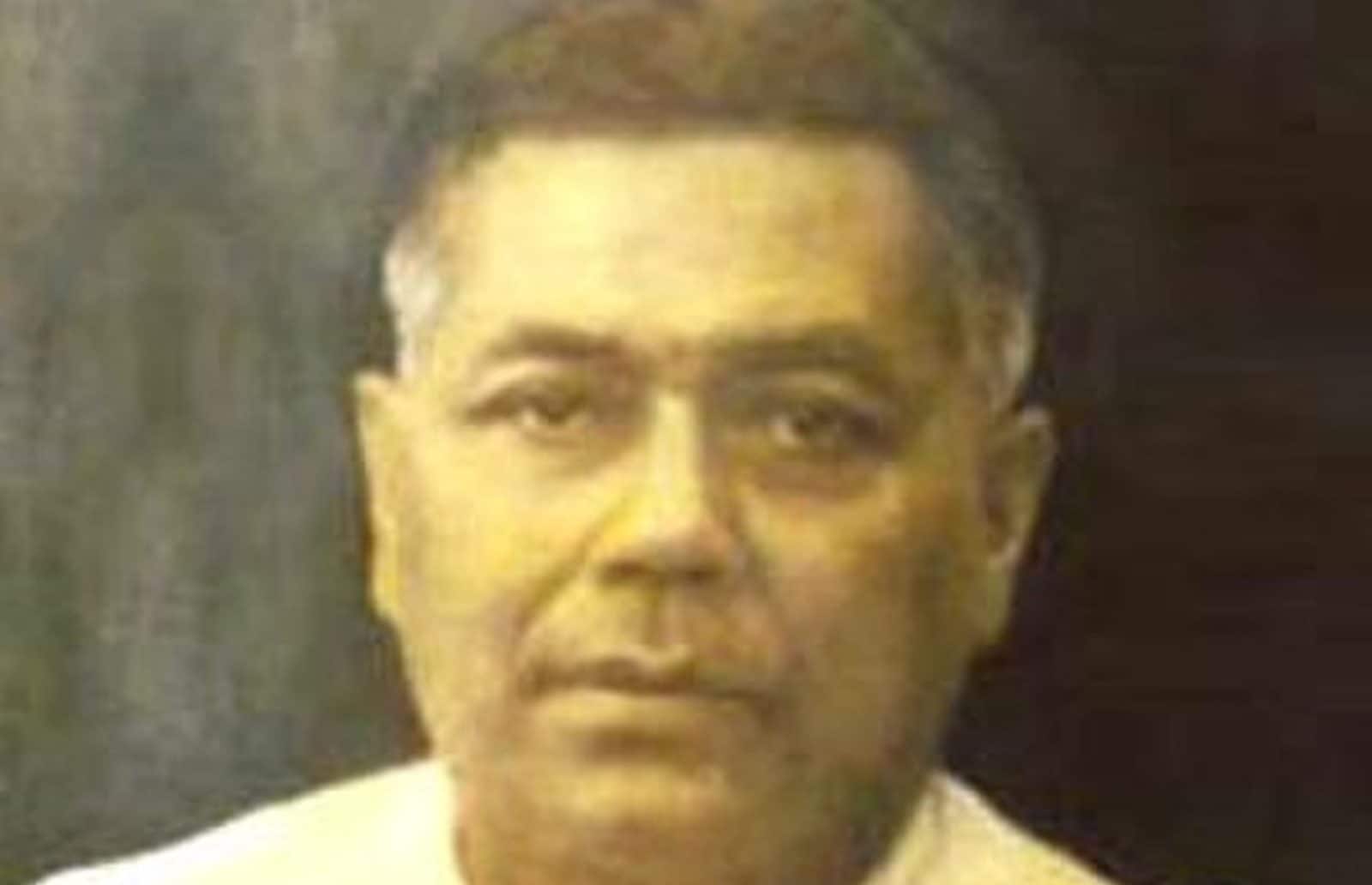
Gopinath Bordoloi, born in 1890 in colonial Assam, became a significant figure in India’s freedom struggle against the colonial regime in the Northeast Frontier and served as Assam’s first Chief Minister from 1946 to 1950. Bordoloi navigated his leadership position in Assam at a time when the state was fractured by communalism. Closely associated with M K Gandhi, he consistently addressed the minority question through negotiation and conciliation and did not succumb to any communal pressure. This is evident in his resistance to Assam’s inclusion in a Muslim-majority group under the Cabinet Mission Plan without resorting to any anti-minority/anti-Muslim rhetoric. This episode of Bordoloi’s life is often cited by the current dispensation to portray him as a patriot who safeguarded Assam from becoming part of East Bengal during Partition. However, it is ironic that his own political party, Congress, overlooks him, and the current state dispensation in Assam (Bharatiya Janata Party) hardly shares his political principles but still leverages his legacy in electoral campaigns. Bordoloi’s neglected ideas need to be brought back, particularly considering Assam’s current political situation.

The discussion between Bordoloi and his compatriots, including Fakhruddin Ali Ahmed, offers crucial insights into the daily routine of the Congress committee in Assam in the 1940s. While recognising hostilities in society, particularly between Hindus and Muslims, they understood and argued that this antagonism had influenced other communities as well, especially in Assam, where several tribal groups became aware of the underlying tensions. To rectify the issue, the committee outlined a “10-year programme”, aimed at addressing the societal cleavages between Hindus and Muslims through institutional reform, educational restructuring, and calibrated minority safeguards. Further, the programme proposal juxtaposed religious independence with regulated public expression. Communities were to have exclusive control over their personal laws, social customs, and religious practices, whereas, for dispute resolution, arbitration or reconciliation boards were to be established through intercommunal agreements to settle conflicts.
My argument for revisiting the Gandhi-Bordoloi moment in Assam is grounded in the latter’s strong connection to Gandhi’s ideas. When seeking Gandhi’s advice, particularly on the earlier-discussed “minority question”, Gandhi recommended that Bordoloi learn Urdu to communicate effectively with the masses through speeches and interactions. Following the Bengal famine of 1943, identity issues became more salient, and communal violence intensified. Bordoloi sought Gandhi’s advice in a letter to address the rise in communalism in the Sylhet region. Gandhi’s response to communalism was heavily dependent on ethical action. He explicitly refused to “give specific instructions”, positioning himself not as a strategist of statecraft but as a guide to ethical action grounded in humanitarian principles. Gandhi drew a significant distinction between controlling communal tensions through principled conduct rather than expediency.
In the same letter, Gandhi introduces Bordoloi to four interconnected principles: Truth, nonviolence, fearlessness, and transparency, which must never be compromised. His focus in the letter was on “not” having “the slightest departure from truth and non-violence”. When Bordoloi suggested that leaders may be tempted to compromise during community crises by retaliating, secretly negotiating, or forming tactical alliances, Gandhi strongly opposed such aberrations and argued that social peace can only be achieved through ethical discipline, not compulsion or moral compromises. To convey it better, Gandhi used a metaphor of not pouring milk into a poisoned bowl to feed the starving — noble intentions like “famine relief” do not justify moral compromise — as a warning against collaborating with “evil”, even when motivated by humanitarian aims.
Reinstating Bordoloi’s political philosophy in modern Assam demands urgent attention. The state’s persistent communal tensions, driven by fears over citizenship, migration, and demographic shifts, often portray communities as hostile groups, undermining ethical mutuality in favour of widespread suspicion. Bordoloi warned that when politics justifies hostility between groups, it weakens society’s moral core. Addressing such crises requires more than legal and bureaucratic solutions; it depends on fostering an ethic of neighbourliness and moderation. His Gandhian ideals advocate rejecting collective blame, resisting majoritarian tendencies, and avoiding domination as security strategies. In a region marked by diversity and layered migration, abandoning moral universality risks deepening fragmentation. Bordoloi’s insights foretell current challenges: peace in Assam, as historically in this region, cannot be achieved through coercion or exclusion, but through a steadfast commitment to non-violence, justice, and recognising that injustice to one community does not justify injustice to another.
The current utilisation of communalism in Assam’s electoral campaigns obscures the foundational principles of Gopinath Bordoloi, whose political practices were characterised by a strict stance against violence and communalism, which he considered non-negotiable. Revitalising Bordoloi’s political philosophy and promoting it among the broader public in Assam could be instrumental in counteracting divisive electoral campaigning rooted in communalism, owing to his enduring appeal among the people of Assam, as evidenced by the fact that, to this day, in the local dialect, he is called “Lokpriya” Gopinath Bordoloi.
Mohammad Imtiyaz is a scholar of Political Science at Jamia Milia Islamia
