



3 min readApr 1, 2026 06:15 AM IST
First published on: Apr 1, 2026 at 06:15 AM IST
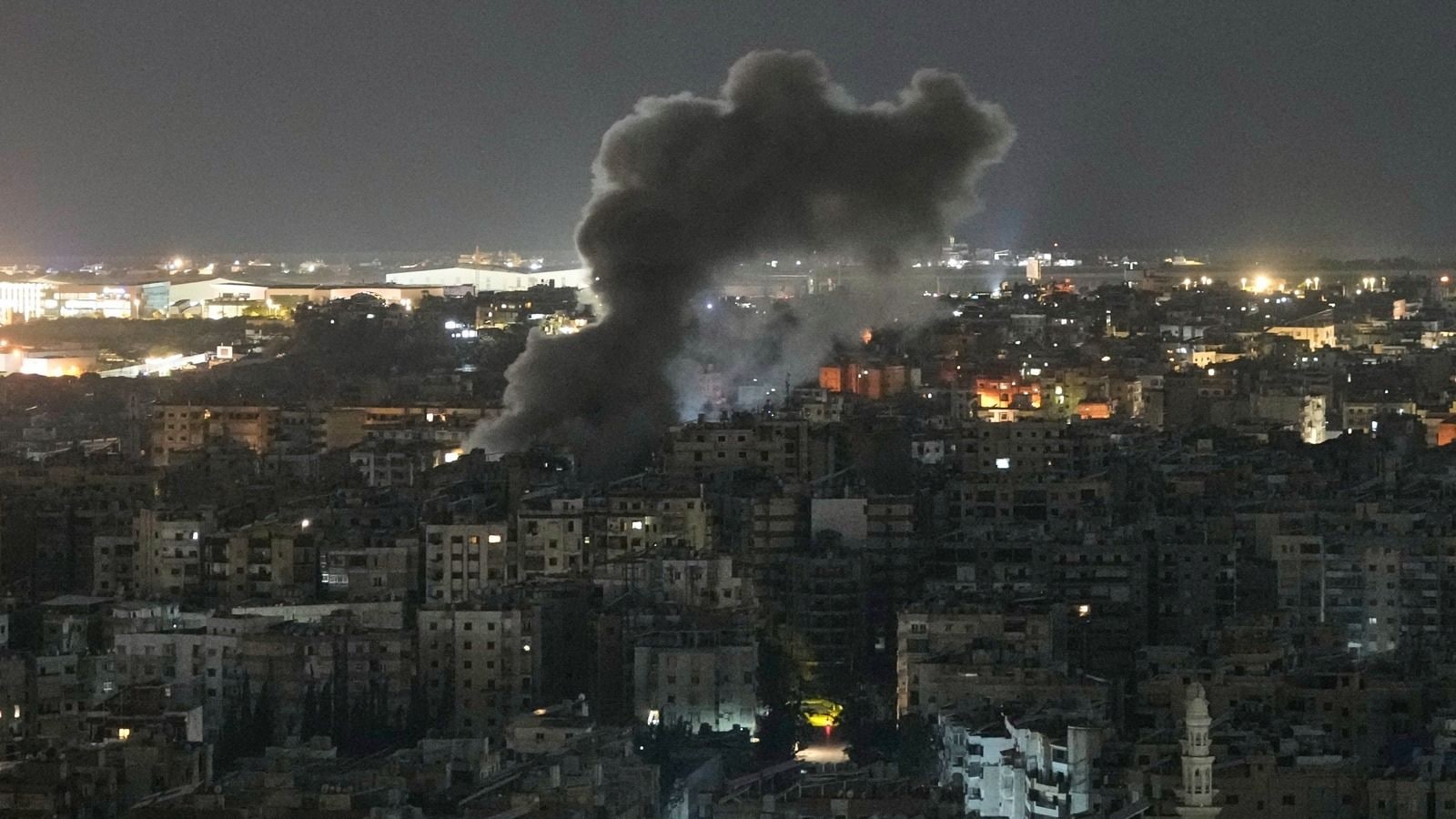
In southern Lebanon, Israeli military activity is steadily expanding amid the ongoing war in Iran. Currently framed as a temporary security tactic, Israel’s move risks hardening into a sustained presence, a security buffer zone that pushes the boundary towards the Litani River or in the worst case, a renewed Israeli occupation. This is not without precedent. Israel’s presence in southern Lebanon between 1982 and 2000 also began as a security measure. It evolved into a long-term condition that reshaped local politics and entrenched cycles of resistance. Lebanon’s own trajectory makes the present moment more fragile. From the French mandate to the 15-year civil war, the country has experienced repeated phases of external intervention, violence and internal fragmentation. Weak state control, particularly in the peripheral regions, created the conditions in which non-state armed actors could emerge and consolidate power. Hezbollah, backed by Iran, emerged in southern Lebanon in 1982, following the Israeli invasion. It led a sustained resistance against Israeli forces and was widely credited with contributing to Israel’s eventual withdrawal in 2000.
Israel’s actions today are framed around the need to neutralise Hezbollah. While the security concern for Israel is real, treating Hezbollah solely as a military target risks ignoring the structural conditions that produced it. If those conditions — fragile governance, contested sovereignty and limited state presence — remain, then removing one armed actor won’t necessarily produce stability. Power vacuums in conflict-affected regions are filled quickly, often by less accountable, more extreme actors, as seen in Iran. Hezbollah is embedded within a wider network of allied actors as a central member and key proxy for Iran. Any large-scale escalation against it could activate these networks, expanding the conflict beyond Lebanon, potentially further into Syria.

The fundamental issue here is sovereignty. Lebanon is a sovereign state and therefore its southern territory cannot be subject to prolonged military control by another state under an open-ended security justification. While international law allows for self-defence, it does not legitimise indefinite occupation. Allowing such a condition to emerge without response risks normalising a dangerous precedent, one where territorial control becomes acceptable if introduced incrementally and framed as security. Since the escalation of hostilities on March 2, more than 1 million people have been newly displaced across Lebanon. Over 350,000 are children.
When one geopolitical crisis dominates, others evolve with less scrutiny. The international response to Lebanon risks falling into this pattern. Watching developments in Iran cannot come at the cost of overlooking Lebanon. If anything, the possibility of regional spillover makes it more urgent to prevent new flashpoints from consolidating in West Asia. Lebanon has already endured decades of intervention, occupation, and resistance. What is required is not only sustained diplomatic engagement but a message from the world to Israel that any occupation of southern Lebanon is unacceptable.
The writer teaches International Relations at University of Edinburgh

