



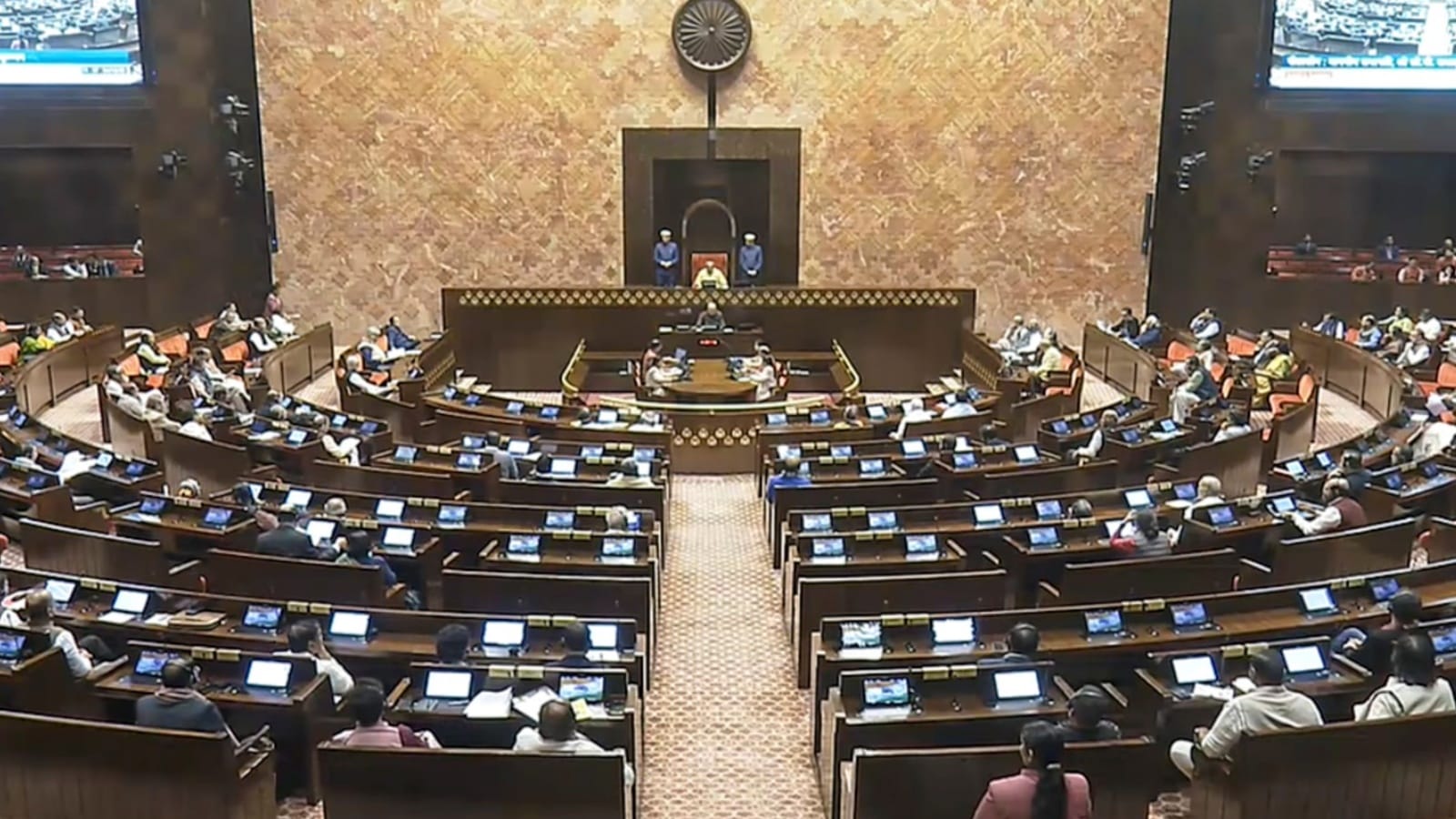
The government’s decision, reported in the media, to convene additional sittings of Parliament to debate amendments to the Women’s Reservation Act, 2023, is a welcome and significant step. It signals that a historic reform has now entered the difficult phase of implementation.
Prime Minister Narendra Modi deserves full credit for accomplishing what had eluded Parliament for nearly three decades. The passage of the Constitution (106th Amendment) Act, 2023, providing one-third reservation for women in the Lok Sabha and state assemblies, was a landmark step. For 26 years, the proposal remained stalled. Its enactment demonstrated political will.

But every reform must answer one question: How will it be implemented?
Current discussions suggest that the strength of the Lok Sabha may be increased from 543 to about 816 seats — an addition of 273 seats. If this entire block of additional seats is reserved for women, it would immediately ensure that one-third of the enlarged House is composed of women, without displacing existing members.
Yet one basic issue remains unaddressed: Where will women contest from?
New seats require constituencies. Constituencies can only be created through delimitation. And delimitation, by law, can only follow a Census. The next Census is expected after 2026. Even if everything moves quickly, the publication of data, the constitution of a Delimitation Commission, and the completion of its work will take several years. Past experience suggests that delimitation cannot be completed before 2032 or 2033.
This creates a simple difficulty. If constituencies do not exist, elections cannot be held. Without delimitation, there is no electoral map within which reservation can operate.
There is also another constitutional issue. The Constitution itself freezes the allocation of seats among states until after the first Census conducted after 2026. Any attempt to change this arrangement earlier would require another constitutional amendment and may reopen the sensitive question of representation between the northern and southern states.
The Home Minister has tried to address this concern by saying that the balance between the northern and southern states will be maintained, and that any increase in seats will be proportional across states. In the absence of a better formula, this approach appears most reasonable. Yet it must be recognised that proportionality preserves ratios, not influence. Larger states will still gain more seats in absolute numbers. Parliament votes by numbers, not by proportions. Even so, since no alternative has yet been suggested, this may be the most acceptable compromise for now.
But even if this issue is set aside, the central question remains: How will women contest elections without constituencies?
There is a way forward.
We need not assume that every Member of Parliament must come from a territorial constituency. Many democracies combine constituency-based elections with proportional representation. In such systems, some members are elected from constituencies, while others are chosen on the basis of vote share of political parties. This is the PR model. India can adopt a limited version of this model as a temporary arrangement.
The existing 543 constituencies can remain unchanged. Elections to these seats can continue as they are. Alongside, an additional block of seats can be created exclusively for women. These seats need not be linked to constituencies. Instead, they can be allocated to political parties or alliances in proportion to their vote share.
If one applies the broad pattern of the last general election, the ruling alliance would receive the largest share of these seats, followed by the principal opposition alliance, with the rest going to other parties. Within each alliance, seats can then be distributed among constituent parties.
This ensures that representation reflects the mandate of the electorate, while also maintaining political stability. No party or alliance is unfairly disadvantaged.
After the election, each party’s or alliance’s vote share would determine its share of these additional seats. Parties would nominate women from pre-declared lists. This would ensure fairness, transparency, and predictability.
This approach solves the main problem. Women’s reservation can be implemented without waiting for delimitation. No constituency needs to be created.
It has other advantages. It reflects the will of voters more accurately, since it is based on vote share. It lowers the barriers that women candidates face in costly elections. In effect, it is an election with zero additional cost.
It is important to clarify that reservation is a minimum guarantee, not a ceiling. Women will continue to contest and win from general constituencies; the additional seats are over and above this number.
The new Parliament building, designed to accommodate a much larger House of up to 888 members, offers an opportunity that did not exist earlier. Whether or not this was envisaged at the time, the infrastructure and capacity are now in place. With both political will and institutional readiness available, there is little reason to defer implementation for another decade.
If this approach is accepted, women’s reservation can be implemented as early as the 2029 general election without waiting for delimitation. Indeed, there is no constitutional principle that requires us to wait even that long. Once Parliament accepts proportional allocation, additional seats for women can be created and filled on the basis of the most recent electoral mandate. A constitutional promise need not wait for the next election cycle to be honoured.
In fact, the logic of the proposal permits an even earlier step. The additional seats could be introduced in the current Lok Sabha itself, through a constitutional amendment, using the vote shares of the most recent general election. This would immediately enhance women’s representation without disturbing the existing mandate. What is required is not another election, but a decision. This may sound radical or revolutionary but it is doable.
All it requires is a constitutional amendment. Parliament has already shown that it can act. The Constitution has already been amended to recognise women’s right to representation; it can be amended again to ensure that this right is not delayed.
This arrangement need not be permanent. It can operate for one or two elections. Once delimitation is completed, constituencies can be redrawn and seats can be reserved within the normal electoral system, should that be the choice.
What is at stake is not a technical detail; it is the credibility of a constitutional promise.The House has already been built. The question is whether we are ready to fill it.
Quraishi is former chief election commissioner of India and author of Democracy’s Heartland: Inside the Battle for Power in South Asia

