




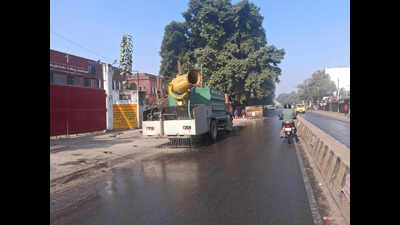
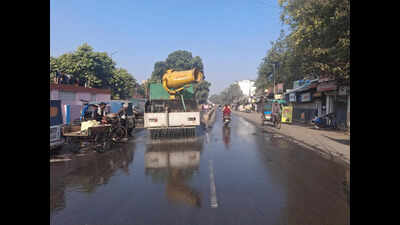

Lucknow: A recent international study that found air pollution levels to be high in Lucknow has left people perplexed.The study conducted by Swiss air quality agency IQAir ranked Lucknow as the 58th most polluted place in the world in 2025. The report analysed air quality in cities/towns across 143 countries. Within India, Lucknow stands at 34th out of 259 that were part of the study.People also pointed out that on many occasions they have found that the mobile phone applications show air pollution levels to be “poor” and “severe”, particularly during winter months.However, they added, the data released by Central Pollution Control Board (CPCB) mostly shows Lucknow’s Air Quality Index as satisfactory or moderately polluted.Experts explained that the air pollution levels in the international study are high because it used strict measures prescribed by the World Health Organization (WHO).The ranking is based on the city’s annual average PM2.5 level of 54.2 µg/m3 (micrograms per cubic metre). This is nearly 10 times higher than the safe annual average limit of 5 µg/m3 set by the WHO.In contrast, the Central Pollution Control Board (CPCB) of India prescribes a safe annual average limit of 40 µg/m³ of air – eight times more than the WHO safe limit, they said.A TOI reality check also found that three out of six air pollution monitoring stations, which provide data to the CPCB, have been installed in Kukrail forest and Babasaheb Bhimrao Ambedkar University (BBAU) campus on Rae Bareli Road, where pollution levels are comparatively low.The three other places where monitoring stations have been established are Tal Katora industrial area, Lucknow Municipal Corporation (LMC) at Lalbagh, and UP Pollution Control Board (UPPCB) campus in Vibhuti Khand, Gomti Nagar.Here, air pollution levels are a bit high, but the LMC has deployed vehicles to sprinkle water on two sites – Tal Katora and Lalbagh – on a regular basis to prevent the dust particles from spreading in the air.Some experts said that mobile AQI readings are often based on satellite data or voluntary monitoring and should not be treated as the sole indicator of pollution exposure.However, according to CPCB guidelines, air pollution monitoring devices should be installed in locations that accurately represent the air quality of a specific area, covering high traffic, industrial, residential, and rural environments.Prof Shailendra Kumar Yadav, faculty at the environmental science department, Babasaheb Bhimrao Ambedkar University, also said that the govt agencies should set up their monitoring stations at places with high traffic, construction zones, and heavily populated areas to get an exact picture of air pollution affecting the general public.Sanjeev Pradhan, LMC environmental engineer, said, “We are conducting regular water sprinkling at pollution hotspots and carrying out large-scale plantation drives. Electric vehicles are being used for garbage collection and automated machines for road cleaning.”TOI tried to contact UPPCB officials several times on phone and through text messages for response, but none were available for comments.

