



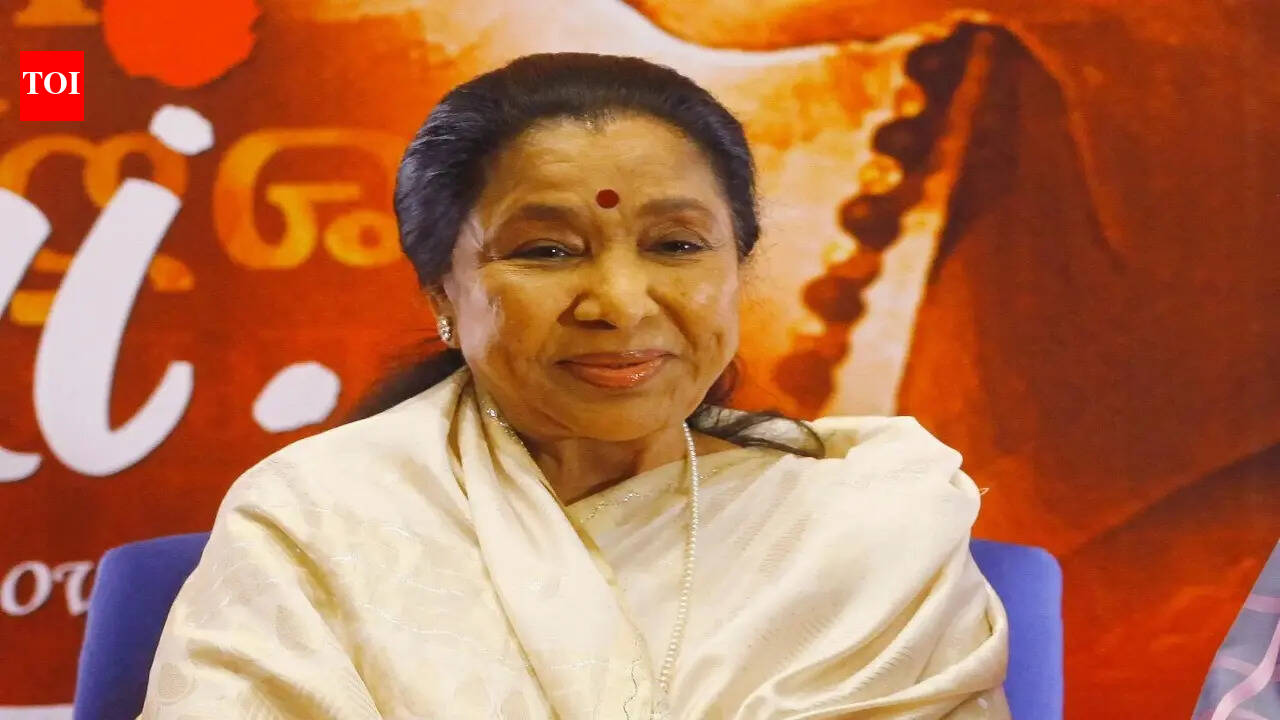

Asha Bhosle, whose voice foregrounded the rebellious notes of desire and abandon in Hindi film music at a time when such attributes were frowned upon in cinema and society, who overcame the looming shadow of her peerless sister Lata Mangeshkar to become the empress of a versatile music universe, and whose voice is sub-consciously part of every Indian’s emotional archive, passed away on Sunday. She was 92. Asha tai, as she was fondly called, was admitted to a Mumbai hospital on Saturday following exhaustion and chest infection. A Dadasaheb Phalke recipient, her career spanned nearly eight decades and more than 11,000 songs; her best rendered under the baton of OP Nayyar and RD Burman. Rollicking duets (especially with Kishore Kumar), bhajans, ghazals, qawwalis, discos, Indi-pop, Bhosle didn’t just sing for every possible genre, she owned them all, enthralling Gen Now and Gen Nehru alike. “All singers are actors. We just act with our voices,” she once said. Her voice was an ideological antonym of her sister’s. At its core, Lata’s voice personified decorum and goodness, attributes tailor-made for decent leading ladies in the 1950s and 60s while Asha’s embodied dissent created space for celluloid social outsiders such as cabaret dancers and gangster’s girls. Nobody also adapted better to the changing trends. And nobody defied age like her. It’s scarcely believable that even in 2026, she collaborated with Gorillaz, a virtual British band. An era has ended. But Asha Bhosle is forever. Avijit Ghosh Asha Bhosle, whose voice foregrounded the rebellious notes of desire and abandon in Hindi film music at a time when such attributes were frowned upon in cinema and society, who overcame the looming shadow of her peerless sister Lata Mangeshkar to become the empress of a versatile music universe, and whose voice is sub-consciously part of every Indian’s emotional archive, passed away on Sunday. She was 92. Asha tai, as she was fondly called, was admitted to a Mumbai hospital on Saturday following exhaustion and chest infection. A Dadasaheb Phalke recipient, her career spanned nearly eight decades and more than 11,000 songs; her best rendered under the baton of OP Nayyar and RD Burman. Rollicking duets (especially with Kishore Kumar), bhajans, ghazals, qawwalis, discos, Indi-pop, Bhosle didn’t just sing for every possible genre, she owned them all, enthralling Gen Now and Gen Nehru alike. “All singers are actors. We just act with our voices,” she once said. Her voice was an ideological antonym of her sister’s. At its core, Lata’s voice personified decorum and goodness, attributes tailor-made for decent leading ladies in the 1950s and 60s while Asha’s embodied dissent created space for celluloid social outsiders such as cabaret dancers and gangster’s girls. Nobody also adapted better to the changing trends. And nobody defied age like her. It’s scarcely believable that even in 2026, she collaborated with Gorillaz, a virtual British band. An era has ended. But Asha Bhosle is forever.

