



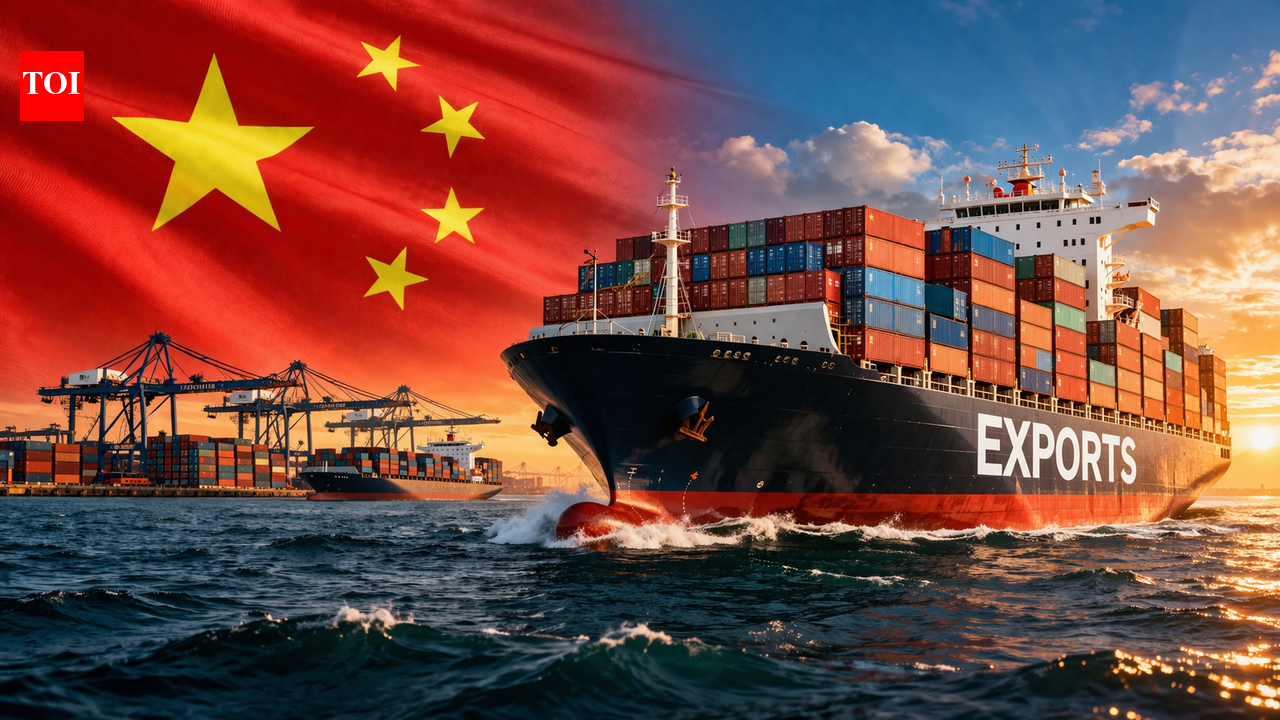
China’s export growth slowed sharply in March, with a year-on-year rise of just 2.5% as the Middle East war continues to cast a shadow over global demand and energy markets. The latest customs figures not only fell below expectations but also marked a sharp slowdown from the 21.8% growth seen in the first two months of the year. Analysts had predicted Chinese outflows to grow by 8.6%, during the month. With these figures, March marked the weakest growth in six months, in US dollar terms. The slowdown comes as manufacturers contend with rising commodity and energy costs following supply disruptions due to the Middle East conflict. Imports, meanwhile, posted a strong rebound, making a rise of a whopping 27.8% year-on-year, significantly higher than the forecasts of 11.2% gain. The increase was also higher than the 19.8% growth seen in the first two months of 2026 and registered the fastest rise in more than four years.Shipments to the United States, China’s largest trading partner by country, declined 26.5% compared with a year ago, reflecting continued strain from elevated tariffs imposed by US President Donald Trump and ongoing tensions between Washington and Beijing. In response, China has stepped up exports to other markets, including Europe, Southeast Asia and Latin America, according to CNBC.Meanwhile, earlier in the year, exports were supported by strong performance in technology-related sectors, particularly semiconductors, driven by the global artificial intelligence boom. However, economists say the extended Iran war could weigh on demand going forward.“China’s exports have decelerated as the Iran war starts to affect global demand and supply chains,” said Gary Ng, a senior economist for Asia Pacific at French bank Natixis.A recent research note by Bank of America economists led by Helen Qiao also pointed to potential risks ahead, warning that demand could weaken further. The risks will “arise from a persistent global slowdown in overall demand if the conflict lasts longer than currently expected,” they wrote.China releases combined trade data for January and February due to fluctuations caused by the Lunar New Year holiday, making March’s figures a clearer indicator of current trends.However, even amid ongoing geopolitical uncertainty, trade continues to play a crucial role in China’s economy. Last year, net exports accounted for roughly a third of the economy, throwing light on the country’s reliance on external demand.For the year 2026, Beijing has set a growth target of 4.5% to 5%, the lowest since 1991. The economy achieved its “around 5%” goal in 2025, supported by strong export activity and a record $1.2 trillion trade surplus. Analysts expect exports to remain a key driver this year as a prolonged slump in the property sector continues to weigh on domestic demand and investment.Meanwhile, attention is also on upcoming diplomatic engagements, with Donald Trump expected to visit Beijing in May for talks with Chinese leader Xi Jinping after a delay due to the Iran war.
