



4 min readApr 22, 2026 06:30 PM IST
First published on: Apr 22, 2026 at 06:30 PM IST
By Torunika Roy
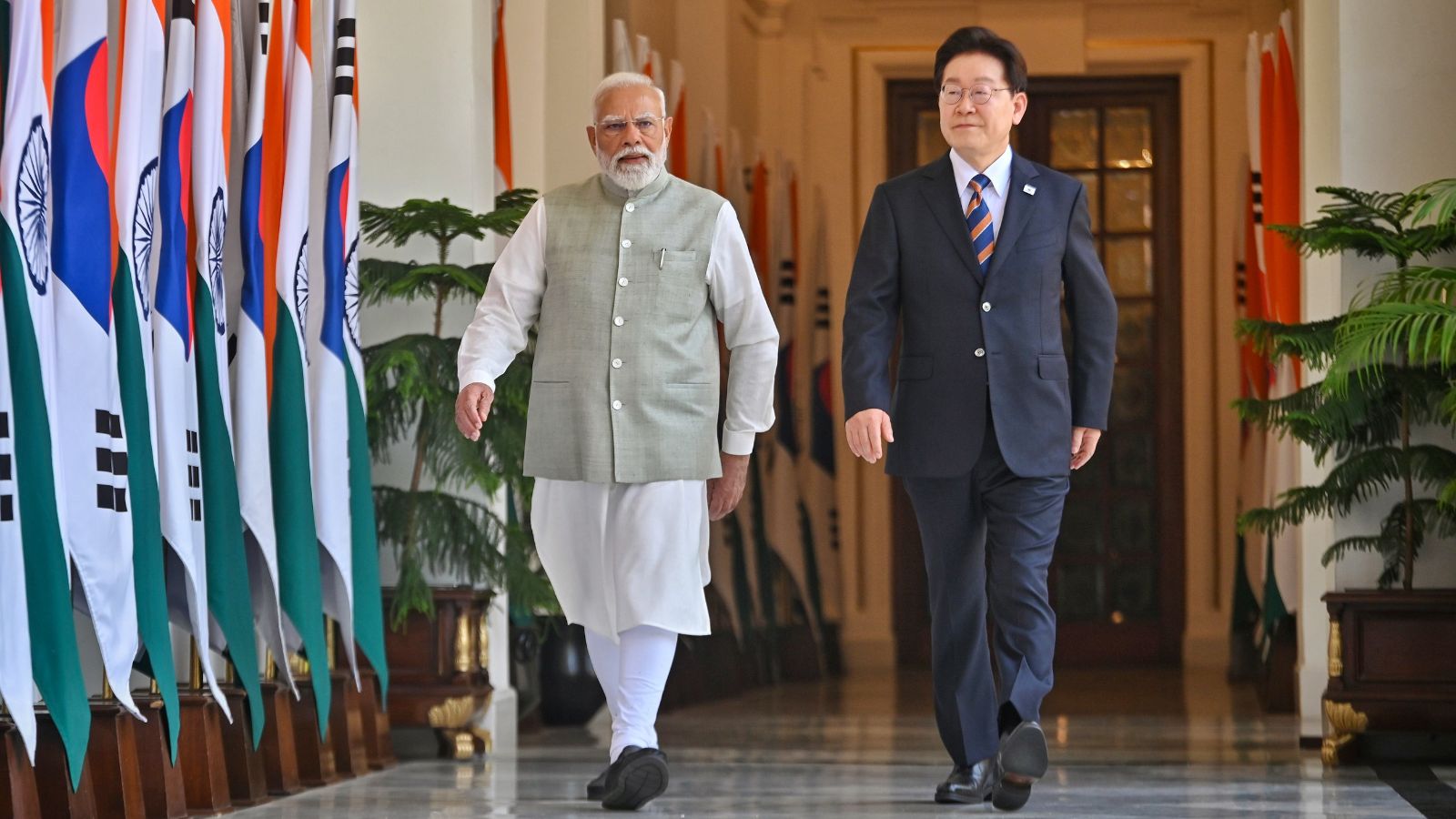
Prime Minister Narendra Modi’s talks with South Korean President Lee Jae Myung this week produced 15 outcomes, including in strategic sectors like AI, fintech, shipbuilding, and energy. The two sides also agreed to resume negotiations to upgrade the Comprehensive Economic Partnership Agreement (CEPA). Additional agreements included climate cooperation, cultural exchange, creative industries, and sports. There has been a broad array of MOUs, agreements, and announcements under the Special Strategic Partnership between India and South Korea (signed in 2015). However, through these agreements, the two countries are catching up on earlier missed opportunities. Lee’s visit is timely and important, given the rising economic uncertainty and supply chain disruptions, but it has occurred after a gap of eight years. From the Indian side, the push has been missing since Modi’s last visit to Seoul in 2019.

There is no animosity between the two countries, though there have been some hiccups due to the Russia-Ukraine War. They have a positive relationship that has struggled to sustain its momentum. This has led to sluggish negotiations on upgrading the CEPA, a growing trade imbalance, and stalled cooperation in emerging technologies. Political will has been relatively weak.
Historically, ideological divergence prevented Delhi and Seoul from getting closer. The contrasting worldviews of South Korea’s first president, Syngman Rhee, and PM Jawaharlal Nehru were hurdles to cooperation. Due to India’s neutral position in the Korean War and affinity with the USSR, Rhee, a hardcore pro-US anti-communist, perceived India as a communist nation. This delayed the establishment of diplomatic ties until 1973. When South Korea was seeking foreign markets for exports in the 1960s, India’s socialist economic framework was not an attractive option. In the early 1990s, India’s Look East policy spurred some momentum in ties. Today, Indian stakeholders complain that South Korea perceives India merely as a market, focusing on only short-term goals, while Korean counterparts criticise India for strict regulations and a weak intellectual property rights regime.
In this context, the recently announced MOUs and framework reset the relationship as a strategic partnership. The Distinguished Visitors Programme (DVP) will invite Korean lawmakers and eminent personalities for familiarisation with India. A dialogue was launched between the two foreign ministers on global themes. Instead of short-term goals, the agreements focus on futuristic engagement between the two countries. Lee invited Modi to visit Seoul in 2027.
To mitigate trade asymmetry, the two countries have decided to upgrade the CEPA within the next year and prioritise strategic and high-impact sectors, with MOUs in shipbuilding, ports, steel supply chain, maritime logistics, and defence. Delhi and Seoul also expanded cooperation in multilateral platforms on global issues such as climate change, the Arctic, clean energy, and maritime security. Lastly, there is a focus on people-to-people connections, including education, research, and tourism.
Overpromising to compensate for the lack of sustained momentum is not a new trend. The real success of this visit will lie in plan-based implementation, not optics. The MOUs must be converted into time-bound deliverables. Furthermore, the CEPA must be upgraded before expanding trade goals to reach $50 billion by 2030. India also needs to work on strengthening its intellectual property rights regime and providing a grievance mechanism for Korean investors. Academic exchanges can also serve as a meaningful bridge between the two countries.
The writer is a research associate to the Korea Chair at CSDR, New Delhi
