



5 min readApr 25, 2026 01:28 PM IST
First published on: Apr 25, 2026 at 01:28 PM IST
One of the most original sitcoms of our times, The Good Place (2016-2020), made a strong case for why it is difficult to lead a truly moral life. The show, set almost exclusively in the afterlife, dealt with several thorny questions, including the big one about how mortality gives us meaning. However, the one that resonates the most in the here and now has to do with the near-impossibility of “being good” in a complex world. What may seem like an unambiguously ethical decision in one moment — let’s say, switching to EVs in order to do one’s bit against climate change — often ends up being entangled with consequences neither intended nor fully comprehended. In this deeply interconnected age, a decision about mobility in one part of the world could well mean something as dire as the greater use of slave labour or environmental devastation elsewhere.
To try to be good in such a world is often to confront one’s own limits — to recognise that purity is a fiction, that every choice carries a residue of harm. Over time, this awareness can dull moral ambition, and it becomes easier to settle into ambiguity than to strain toward conviction. Worse, this ambiguity can harden into a kind of defeatism: If I can’t actually do anything to end the exploitation of children in cobalt mines, the argument might go, then why even worry about where the raw material for the battery of my EV and smartphone is coming from? Principles, unfortunately, always come up against hard decisions.

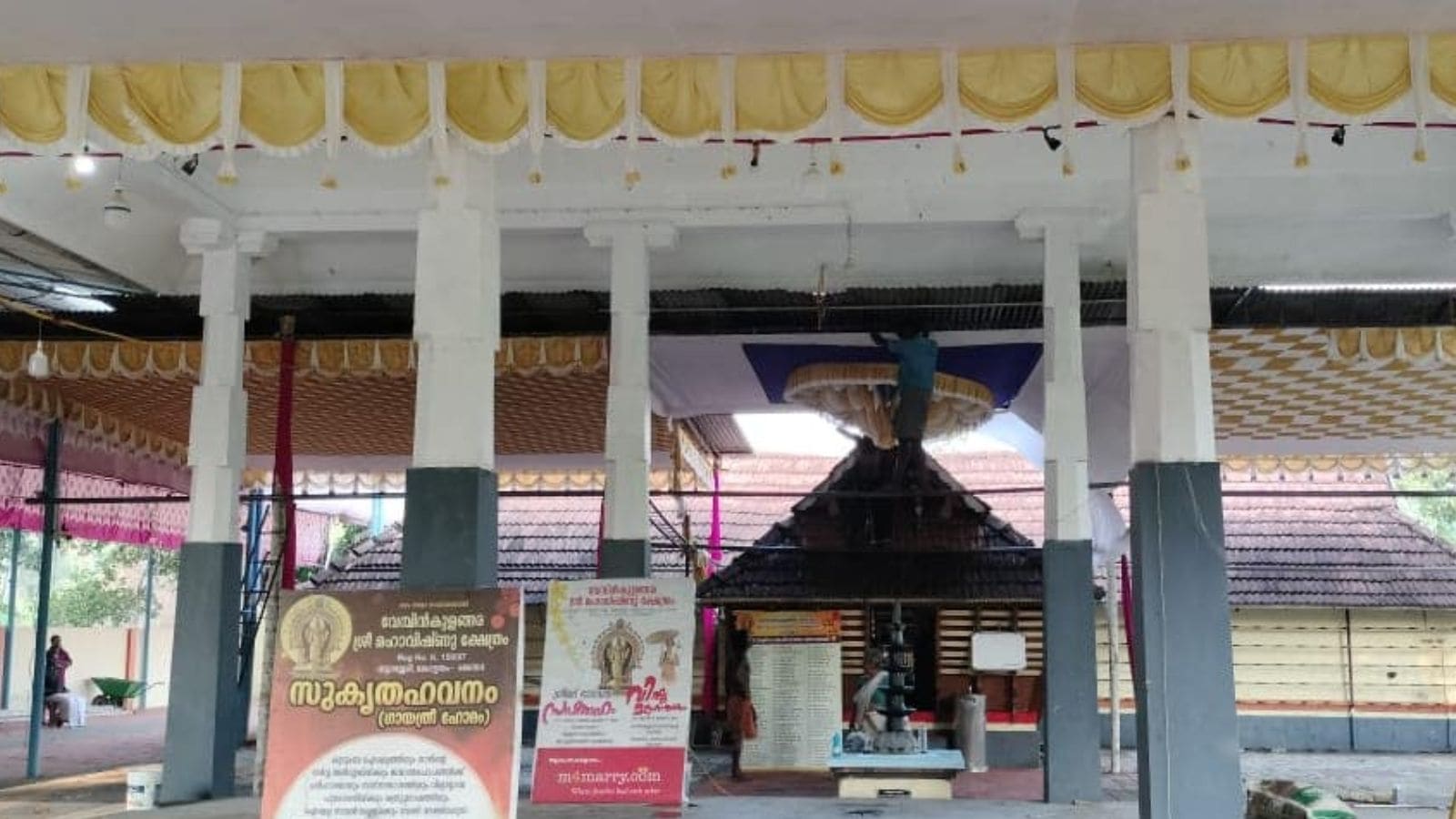
Which is why the defiance of a bhajan group in Kerala, which has been heavily criticised for singing a Christian hymn inside a Hindu temple, is so moving. The “inciting incident” was simple enough: Nandagovindam Bhajans performed the popular Christian devotional song ‘Ee paradevanaho’ at the Sri Mahavishnu temple in Kottayam’s Vembinkulangara after lead singer Naveen Mohan spoke about how the local church had helped with the “arrangements” for the event. It was an act of gratitude and grace that was, as is not unusual these days, received in bad faith by the usual quarters. R V Babu, state president of the Kerala Hindu Aikya Vedi, said that the “cooperation of other communities” was no ground for performing the prayers of other religions on a temple’s premises. Temples, he said, are not “places for fostering secularism and making communal harmony.” Another leader of the group, K P Sasikala equated Nandagovindam Bhajans’ act with adding “chicken masala” to payasam.
The bhajan group did not retreat into apology, neither did it escalate the matter into a spectacle of righteousness. It would have been the easier choice to do either. Indeed, given how ugly such rows can get today, caving would have been the more painless option. Just a year ago, for example, those involved with the Malayalam film L2: Empuraan, including star Mohanlal, apologised for causing “mental distress” after several organisations accused the film of “maligning Hindutva”. The team even made “voluntary cuts” to the film rather than letting the project — and the huge financial commitment involved — be held hostage by the “hurt sentiments” brigade.
Nandagovindam Bhajans, on the other hand, simply refused the very terms of the engagement. “We didn’t cross a line. We just didn’t see one. This is our land where bhakti flows beyond names,” went the Instagram post in response to the outrage.
In this refusal to acknowledge the very boundary that it was accused of violating is a very particular kind of moral courage — one that inhabits a principle so fully that it stops being just a stance. Nandagovindam Bhajans did not need to perform a Christian hymn to express thanks to the local Christian community. That they did so, in this climate of increasingly hardened identities, is not just an assertion of pluralism. It is a glimpse of what pluralism looks like when it isn’t constantly under threat, even as it exposes the fragility of the lines that others are so eager to defend.
Will Nandagovindam Bhajans always uphold the principle of secularism and communal harmony with the same dignity and poise? One can only hope. This particular incident doesn’t settle any of the more challenging questions about the deepening communal fault lines in Kerala, the weaponisation of the “love jihad” narrative and attempts to impose cultural uniformity in a chaotic, stubbornly plural land. It also doesn’t resolve the larger dilemmas of moral life. The problem of how to be good remains as vexing as ever. The Good Place offers no real solution to this either, except to argue that attempting to be good, kind and generous, even — especially — when the world makes it hard, is its own reward.
What Nandagovindam Bhajans has done with its small act of moral clarity shows that this may be the only, and perhaps the most enduring, gift we can give ourselves.
The writer is senior assistant editor, The Indian Express. pooja.pillai@expresindia.com
