



India has deregulated petrol and diesel prices in name, but not fully in practice. The system still operates in the grey zone between market pricing and government control. As global crude oil prices rise and the rupee weakens, this hybrid system is coming under stress. The result is opacity, windfall gains during good times, and sudden losses during bad times. India needs a clear, rule-based framework to determine pump prices.
Before 2010, India followed the Administered Pricing Mechanism, under which the government fixed fuel prices. These prices had little connection with global crude oil markets. State-owned firms such as Indian Oil, Bharat Petroleum, and Hindustan Petroleum sold fuel at controlled prices, often below cost. The government later compensated them through subsidies, upstream support, and oil bonds. While this system protected consumers, it distorted price signals and burdened public finances.

Reforms began on June 25, 2010, following the Kirit Parikh Committee’s recommendations. Petrol prices were deregulated. Diesel followed in 2014, and daily price revisions were introduced in 2017. On paper, India shifted to market-based pricing.
But in reality, India never fully let go of the controls. Today’s system is best described as managed deregulation. Prices are linked to global prices and exchange rates, but government policy — especially taxes — determines the outcome. When crude prices fall, taxes rise, and oil companies retain higher margins, while consumers continue to pay the same high price. When crude prices rise, oil companies absorb losses as they delay price increases under government pressure.
The data tells a clear story. Between 2022 and 2025, crude oil prices dropped from $99 to $68 per barrel. Yet instead of falling, combined tax collections of central and state governments from petrol and diesel increased from Rs 5.24 lakh crore to Rs 6.31 lakh crore. At the same time, oil marketing company profits surged — Rs 83,000 crore in 2024 and Rs 50,000 crore in 2025. Consumers saw no benefit, as pump prices remained broadly unchanged.
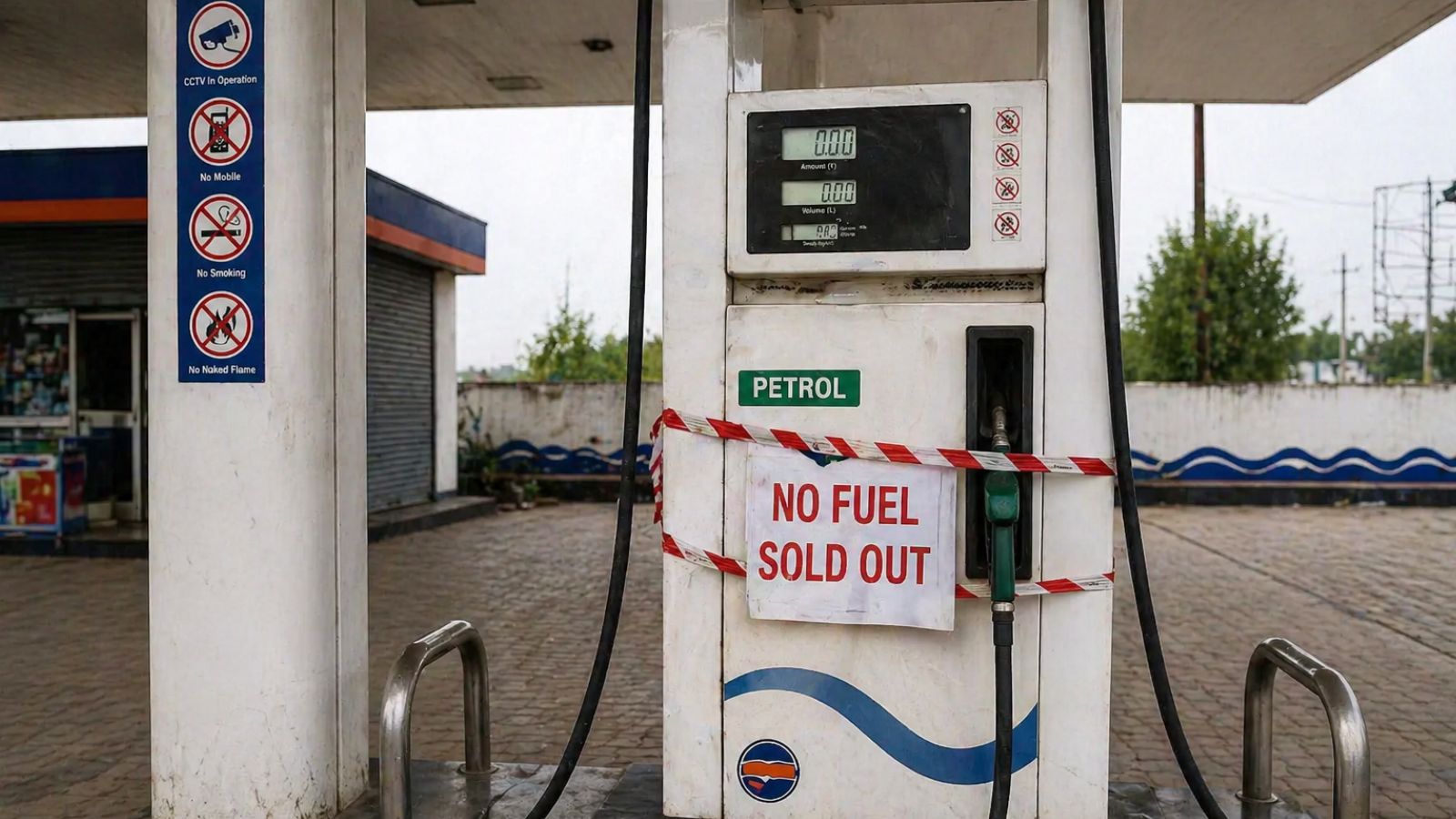
Now the cycle is reversing. With crude prices rising amid the Strait of Hormuz crisis and other geopolitical tensions, OMCs are reporting losses — around Rs 20 per litre on petrol and up to Rs 100 per litre on diesel. Retail petrol prices, however, remain around Rs 95 per litre in Delhi. The same system that captured gains silently during low crude prices is now struggling to absorb losses during high prices, setting the stage for an eventual price hike. This is not sustainable.
India should adopt a Fuel Price Transparency Framework (FPTF). Pump prices should be linked directly to oil prices and exchange rates. Oil companies should get a defined margin. Governments should operate within a clear tax band. Prices should be revised regularly. Consumers must be able to see the logic behind prices and trust the system.
Here is how the FPTF would calculate the pump price for petrol in a few steps.
Start with oil prices. If crude is at $100 per barrel and the exchange rate is Rs 93 per dollar, one barrel costs Rs 9,300. Since one barrel contains 159 litres, the base cost works out to about Rs 58.5 per litre. While only about 40–45 per cent of crude becomes petrol, refineries recover the total cost from all products — diesel, LPG, ATF, and others. In value terms, the full crude cost is distributed across the product basket, allowing us to estimate petrol cost effectively at this level. In value terms, this allows us to treat one barrel of crude as equivalent to one barrel of petrol for pricing purposes — because the full cost is recovered across the product basket.
Next comes ethanol blending. Petrol in India is blended with about 20 per cent ethanol. With petrol at Rs 58.5 per litre and ethanol at Rs 60 per litre, the blended cost comes to around Rs 58.8 per litre. Add about 15 per cent to cover refining, blending, transport, marketing, dealer commissions, and company margins. This brings the cost to roughly Rs 67.6 per litre.
Finally, add taxes. With combined central and state taxes currently around Rs 28.9 per litre, the final pump price comes to about Rs 96.5 per litre — very close to prevailing prices.
This FPTF makes pricing transparent. Crude cost, exchange rate impact, company margin, and taxes are all clearly visible. There are no hidden buffers or arbitrary adjustments. More importantly, it gives the government a ready-to-use tool to handle rising crude prices.
Now, the government may soon announce a hike in pump prices. Let us use the FPTF to estimate how petrol prices would change under different global oil price and rupee-dollar assumptions.
If crude oil is at $100 per barrel and the exchange rate is Rs 93 per dollar, petrol price comes to about Rs 95–96 per litre. This is close to current Delhi prices, so no pricing change is needed. If crude rises to $120 and the rupee weakens to Rs 95, petrol can go up to Rs 108 per litre if taxes stay the same. But if the government cuts taxes by 10 per cent (from ₹28.9 per litre), the price increase is smaller, and petrol comes to about Rs 106. If crude is slightly lower at $115 and taxes are cut by 15 per cent, petrol can be kept around Rs 102.
If crude rises further to $130, the impact would be greater. Without a tax cut, petrol could reach Rs 114 per litre. A 20 per cent tax cut reduces it to around Rs 109, and a 30 per cent cut can keep it near Rs 106. In simple terms, when crude prices rise, petrol prices also rise — but how much they rise depends on how much tax the government reduces. A rule-based system like FPTF improves efficiency by aligning prices with market signals, encourages fair outcomes by preventing asymmetric gains, and protects oil firms from sustained losses.
Overall, India needs a three-part energy security strategy. First, it should adopt a fuel-pricing framework like FPTF, which links pump prices to crude costs, exchange rates, company margins, and taxes. Second, it should secure long-term crude contracts with Russia and other reliable suppliers, without allowing US pressure to decide where India buys oil. Third, it should invest aggressively in exploring domestic sedimentary basins.
For a country that imports nearly 90 per cent of its crude, low-cost oil, diversified supplies and transparent pricing are no longer optional. They are essential for India’s macroeconomic stability.
The writer is founder, GTRI
