



4 min readApr 30, 2026 01:59 PM IST
First published on: Apr 30, 2026 at 01:59 PM IST
Written by Nikhil Sanjay-Rekha Adsule
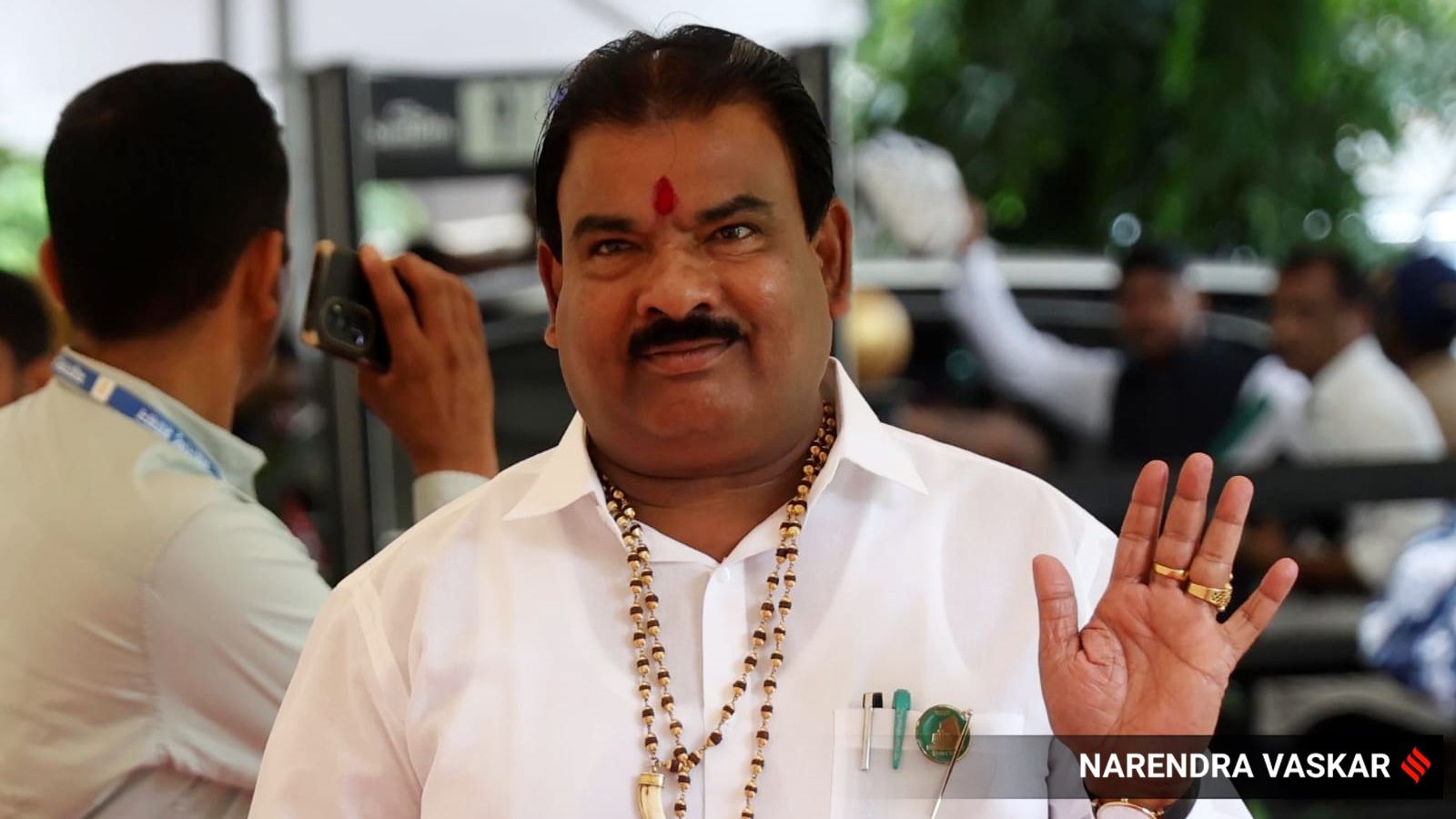
The 2015 assassination of rationalist Govind Pansare has found an alarming recall in the recent actions of Shiv Sena MLA Sanjay Gaikwad. His attempts to intimidate a publisher and suppress readers of Pansare’s work, Shivaji Kon Hota?, in Buldhana, illustrate a dangerous move towards a new form of intellectual restriction in Maharashtra.
Gaikwad threatened the Kolhapur-based publisher, Prashant Ambi, over the book. He objected to the use of the name “Shivaji” without honorifics such as “Chhatrapati.” In a viral audio clip, Gaikwad warned that he would “chop off his tongue” and that Ambi would “meet Pansare,” referring to the latter’s assassination. This is a proxy war in which the title “Chhatrapati” is used as a semantic cage to imprison the 17th-century king. His true, secular, and peasant-centric legacy remains far too destabilising for the monochromatic narratives of the present.

In referring to the king merely as “Shivaji”, Pansare foregrounded him as a human agent of change. But the MLA’s rage and attempt to deify the king are a fear of the king’s humanity. Marathi thinker and scholar Narahar Kurundkar, in his treatise Yugapravartak Chhatrapati (2025), noted that the deification of the king was a strategy pursued by brahmanical forces since the 19th century. Pansare’s view of the “rational Shivaji” was built on the edifice of the Marathi Renaissance, whose legacy can be traced in the works of Mahatma Jyotiba Phule, Dr B R Ambedkar, Anna Bhau Sathe, and Prabodhankar Thackeray. The present deification of the king puts him on a pedestal, making him unquestionable and unreachable.
Pansare’s text is a threat to those who seek to paint Shivaji as “Hindu Hruday Samrat”, defining him solely by the enemies he defeated. He thus becomes an instrument to fuel communal passions. Pansare’s Shivaji was the people’s sovereign, “Kulwadi Bhushan” (the king of ryots/peasants), in stark contrast to the deified brahmanical version, “Go Brahman Pratipalak” (the defender of cows and brahmins). Pansare establishes the king as a materialist revolutionary, one who protects his people regardless of their faith and dismantles the extractive watandari system.
The king meticulously built a system in which merit outweighed a person’s identity. Pansare’s rational version foregrounds a historical reality that relies on historiography rather than hagiography. It disrupts the current political agenda, which uses the instrument of the king to transform the rational public sphere of Maharashtra from shastranth (intellectual debate) to shastra (the weapon). Thus, it is a part of the “deintellectualisation” of Maharashtra, a region that was once the laboratory and exporter of rational modernity to the rest of India.
King Shivaji’s vision of swarajya and its Maharashtra dharma never rested on the fragility of sentiment. Swarajya was more than just a territory; it embodied “people’s rule” (Ryot-mukhya) based on law and ethics. It was designed to protect the vulnerable. Maharashtra dharma was the moral foundation of the region, rooted in the teachings of saints like Tukaram and Namdev. It valued character over ceremony and justice over jargon.
Claiming that this legacy is damaged by the name “Shivaji” used without the honorific “Chhatrapati” disregards the resilience and maturity of the Maratha state. Both swarajya and Maharashtra dharma are characterised by a tradition of dissent, starting with the legacy of saints like Chakradhar Swami. From Phule to Pansare, Maharashtra’s soil has always preferred the “seeker” over the “silencer”.
We need to take back our history from those who want to use it as a weapon for their parochial politics.
The writer is a Senior Research Scholar at IIT-Delhi

