



On 24 August 2016, Dana Majhi walked out of a government hospital in Kalahandi, Odisha, carrying his wife Amang Dei’s body on his shoulders. She had died of tuberculosis. The hospital had refused an ambulance. His twelve-year-old daughter walked beside him. They walked 10 km before a television crew found them. There was outrage, there were inquiries, and there were promises. Odisha already had a programme, the Mahaprayan scheme, that was supposed to transport bodies of the deceased to their homes free of charge. It had simply not been used for Dana Majhi, because no one had bothered. That was a decade ago.
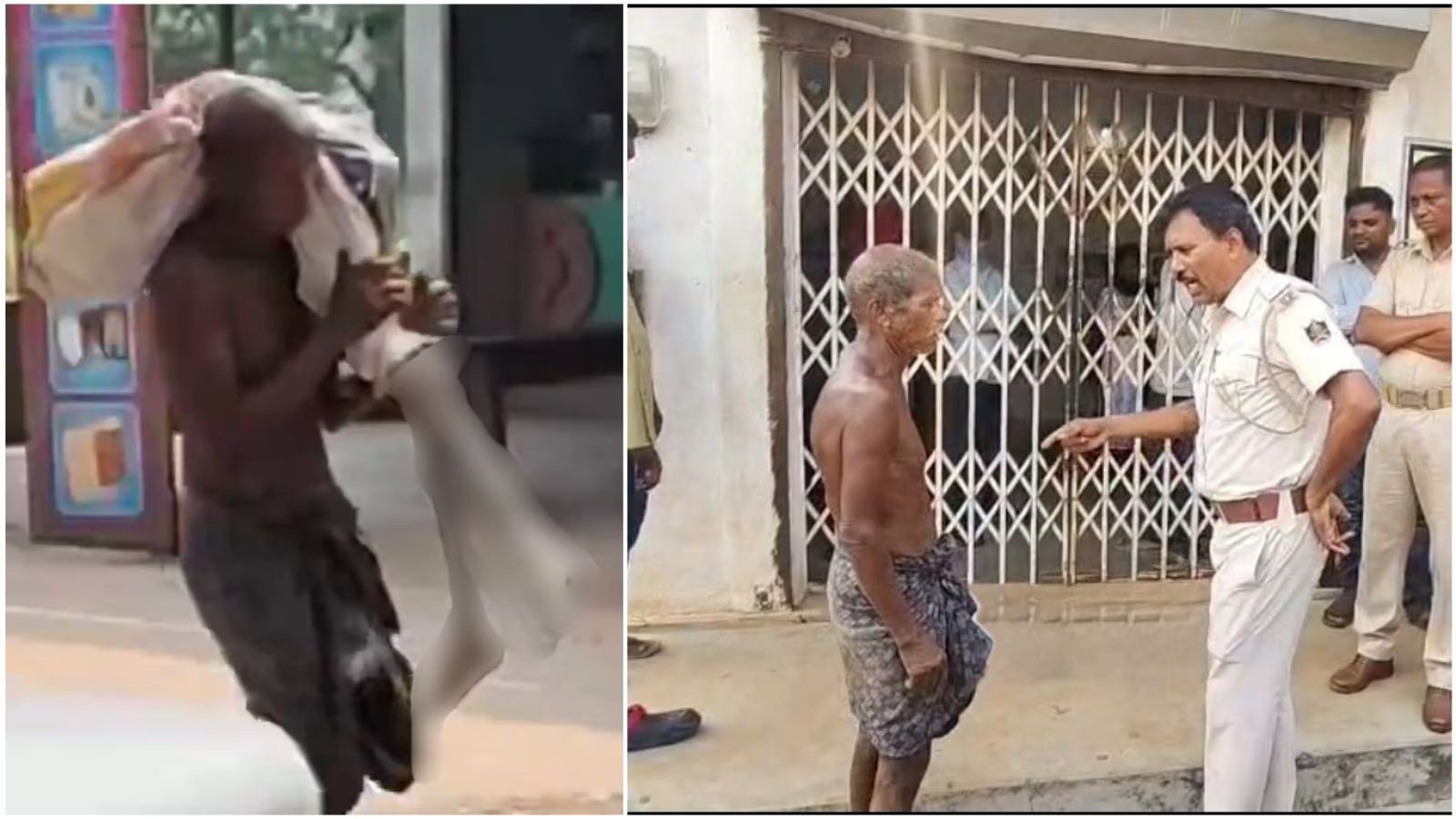
This week, in Keonjhar district, Jitu Munda went to his sister Kalara’s grave. She had died two months earlier. He exhumed her skeletal remains, carried them to the Malliposi branch of Odisha Grameen Bank, and placed the bones outside the building. He had visited the bank many times to withdraw Rs 19,300 from her account. Each time he was turned away: The account holder, he was told, must be physically present. So he made her physically present.

The symmetry with Dana Majhi is not a coincidence. It is a structure. In both cases, a tribal man sought something he was legally entitled to. In both cases, an institution with an existing mechanism to help him chose not to use it. In both cases, the dead body of a woman became the only proof the state would accept.
The aftermath has been swift and, in its own way, telling. After nationwide outrage, the district administration facilitated the death certificate and legal heir documents, and Rs 19,402 (including interest) was handed over to Jitu Munda at his village. Chief Minister Mohan Charan Majhi, who represents the Keonjhar assembly constituency and governs a district where Jitu Munda lives, expressed sorrow and ordered an Revenue Divisional Commissioner (RDC) level inquiry. A sum of Rs 30,000 was disbursed from the District Red Cross Fund. The machine that could not find 10 minutes for a grieving man found everything it needed within 24 hours once the cameras arrived.
The bank’s response deserves particular attention. Its association claimed, in a formal statement, that Jitu was “in an inebriated state” and that the incident arose from his “unwillingness to accept the procedures explained by the branch manager.” This is a familiar reflex. When the poor embarrass the powerful, the poor are blamed for the embarrassment. The statement does not explain why, across multiple visits over two months, no official thought to assist an illiterate tribal man in obtaining the required documents. It does not address why the system waited for national outrage before treating this as a problem worth solving.
The RBI has long-established guidelines for deceased depositor claims. The process requires a death certificate and a legal heir certificate, not the physical resurrection of the dead. That Jitu Munda was turned away repeatedly tells us one of two things: Either the branch staff did not know these guidelines, or they knew them and decided that this particular man’s problem was not worth the effort. Both conclusions are damning.
CM Majhi is himself from a Scheduled Tribe community — he is the first tribal CM of Odisha. His elevation was rightly recognised as historic. But symbolic representation at the apex of government means little if the institutions that government oversees continue to treat tribal citizens as people whose word is insufficient, whose grief is inconvenient, and whose rights activate only under the pressure of a viral news cycle. In recent weeks, the CM’s district, recipient of thousands of crores in infrastructure announcements, could not produce one official willing to guide an illiterate man through a standard banking form.
The money has been returned. The RDC inquiry has begun. These are not solutions. They are the minimum a state owes a man it failed. The real question, the one neither the inquiry nor the Red Cross cheque will answer, is why it took a skeleton to make anyone care. Dana Majhi asked Odisha that question in 2016. Jitu Munda is asking it again. The state still does not have an answer.
Jena teaches at the Indian Institute of Technology Mandi and is a Charles Wallace India Trust Fellow at King’s College London. Bunkar is a researcher specialising in caste and cinema

