



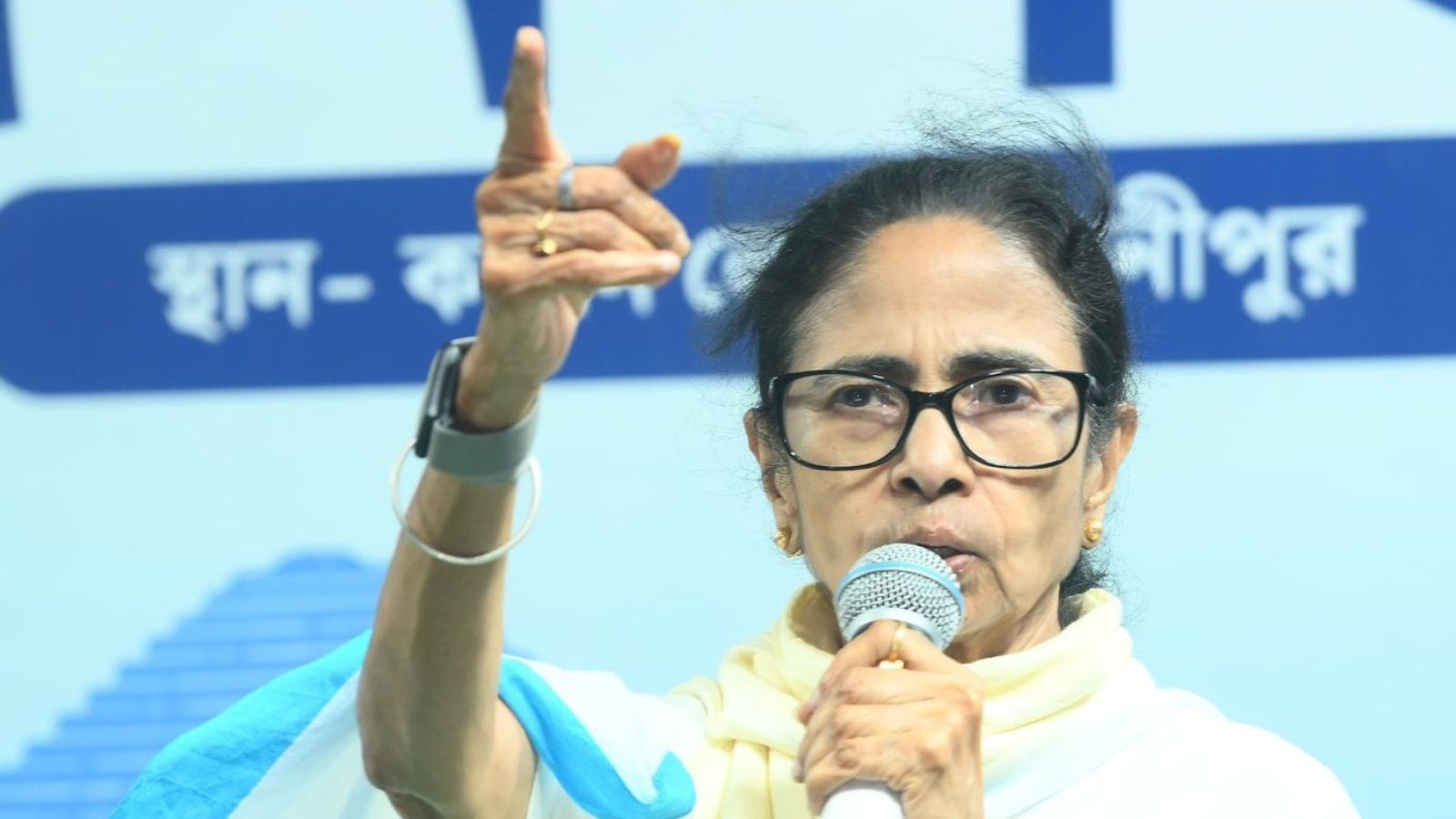
In the annals of Indian electoral history, the West Bengal elections will stand out for two particular reasons. One, the massive disenfranchisement that resulted from the Special Intensive Revision (SIR) of electoral rolls and second, the fact that the elections were held in the shadow of a massive central force mobilisation, ostensibly to ensure a violence-free election.
The way the elections were conducted may end up having a bearing on the election outcome on May 4, and no matter who wins, the implications are likely to be long-lasting for not just Bengal but the republic. A BJP win or a victory for the Mamata Banerjee-led Trinamool Congress (TMC) — both possibilities contain within them the anxieties and tensions that have animated national and state politics for decades and have cast a shadow over what is to come.

Implications of a BJP win
First, the prospect of a BJP victory. For the ruling party in the Centre, winning Bengal will mark a major milestone in its history: The conquest of one of its final frontiers (Tamil Nadu and Kerala being the other two). A win will undoubtedly come on the back of a pan-Hindu mobilisation, showing that the BJP’s Hindi heartland variety of Hindutva has taken hold of the Bengali Hindu imagination, which till now has been defined by more syncretic streams of Hinduism.
A BJP win will thus be a shot in the arm for the centralising impulse of the Hindu nationalist project and place a massive strain on our federal polity at a time when, as political scientist Yogendra Yadav has written, there is a need to renegotiate our federal compact. As last month’s Parliament session showed, the BJP’s attempt to redraw India’s electoral map to its advantage could be stopped only because the opposition parties could rally together over the lack of a federal consensus. To many, it has been clear for quite some time now that the counterbalance to the BJP — amid its push for a unitary state and cultural homogeneity (notwithstanding the copious amounts of fish BJP leaders ate in front of cameras during the poll campaign to assuage Bengalis that their food practices won’t face attacks under their government) — can only come from political parties wedded to the idea of a federal nationhood. And if Bengal falls to the BJP, that project will suffer a serious setback.
Then, there is the question of citizenship. While the Election Commission (EC) has emphasised that the SIR exercise was not a test of citizenship, the political rhetoric from the BJP in Bengal may worry those whose fates hang in the balance in the tribunals. While campaigning in the border district of Cooch Behar last month, Union Home Minister Amit Shah said that while the EC had removed the “names of infiltrators from the electoral rolls”, the party would “remove them from the soil of Bengal”. This raises troubling questions about the implications of a BJP win for the lakhs of people whose applications are pending before tribunals after what has undeniably been a deeply flawed exercise to clean up the electoral rolls.
A BJP win, which may herald the entry of big-ticket industrial and other economic projects to the state and the loosening of the Centre’s purse strings, will also likely throw the Trinamool Congress (TMC) into an immediate existential crisis. In the absence of many of the ideological trappings of the Left, the question will be whether the party, depleted electorally, can survive without power and the accompanying depletion in funds and resources. In the years between the Singur and Nandigram movements and the Left’s eventual loss in 2011, the muscle power at the grassroots shifted from the Left to the TMC. While it has not been visible to that extent this time around, the question remains whether a TMC loss will result in a similar exodus to the BJP and what impact it may have on the party and the internal faultlines.
Implications of TMC victory
Conversely, victory will catapult Mamata Banerjee into a rarefied position of being the only opposition leader to have consistently stopped the BJP juggernaut in a state where the party is a strong political force, unlike, say, in Tamil Nadu, where it is dependent on other alliance partners. And if the Congress somehow fails to win Kerala, it may even bring into question the future of the INDIA bloc and whether the party should be seen as leading the opposition alliance when the big victories are being delivered by the regional parties.
After winning Bengal in 2021, Banerjee’s attempt at justifying the “All India” in her party’s name (All India Trinamool Congress) had been short-lived as the TMC failed to take off in Goa and some of the northeastern states. This time, she has again underlined her intent to “capture Delhi” after winning Bengal. But how much of that is empty rhetoric and how much of it translates into viable political action remains undetermined.
While a loss will force the senior BJP leadership to return to the drawing board and analyse where it fell short despite an unprecedented mobilisation of the machinery at its disposal, the test for the TMC in the event of a victory will be to avoid the post-election hubris that had affected the Left after its sweep in 2006, as exemplified by Buddhadeb Bhattacharjee’s now infamous remark: “Amra 235, ora 35 (We are 235, they are at 35).”
West Bengal faces multiple challenges, from a lack of jobs that forces millions to migrate and crumbling infrastructure to a financial crisis exacerbated by frequent run-ins with the Centre, which, it alleges, has used the situation as leverage. As the aspirations of the women voters, its core constituency, rise, Mamata may find that her government’s cash transfer schemes, despite their transformative impact and potential, have diminishing returns and that she will need to address the core concerns of the electorate on jobs, education, and civic infrastructure.
The mandate, no matter how sweeping and for which party, will have to be read with caveats.
The writer is assistant editor, The Indian Express. sattwick.barman@expressindia.com
