



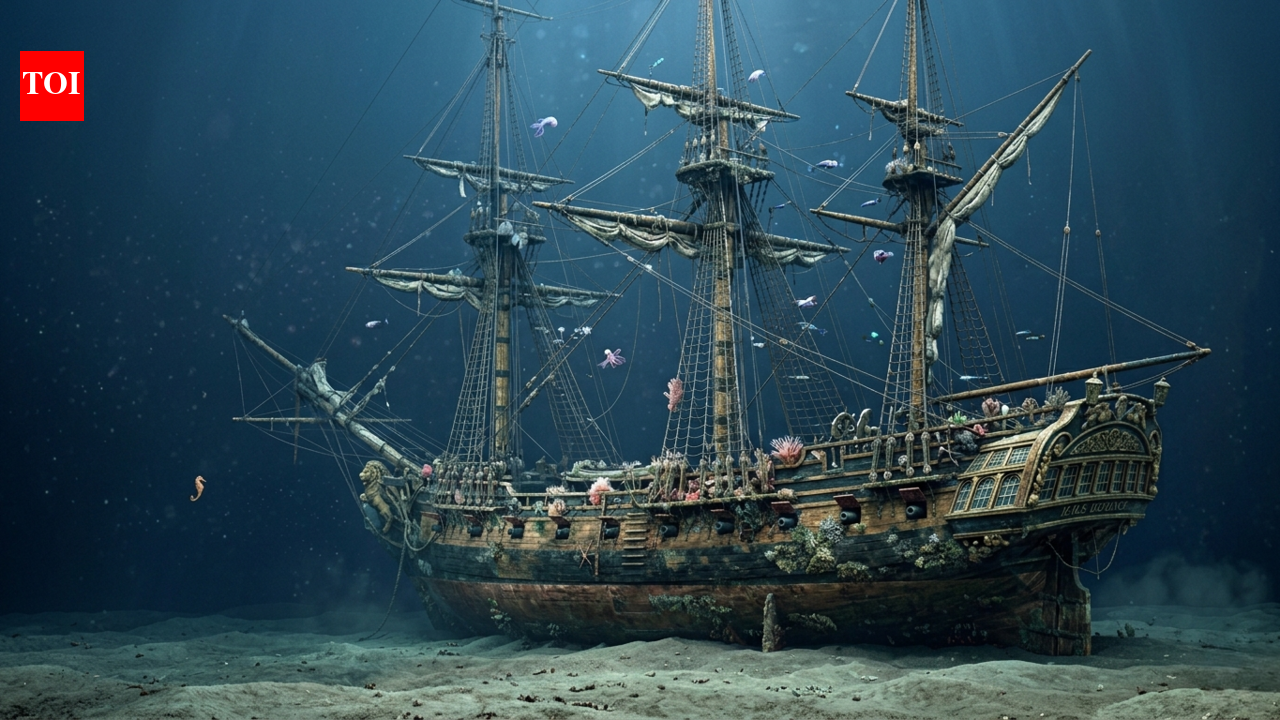
It started with a blip on a screen.In 2017, a fibre-optic cable survey team working in Lake Ontario spotted something strange: a large, unexplained shape sitting on the lakebed between Buffalo and Toronto. Nobody made much of a fuss at first, but when divers finally went down to investigate, they were shocked at what they found. A perfectly preserved 19th-century sailing ship sitting upright in the blackness, its masts still pointing to the surface as if it had just sunk.If you grew up thinking the Great Lakes were lakes, this one’s going to make you rethink everything.It was not just a lucky accidentWhat makes this discovery different from the standard ‘they found a shipwreck’ headline is that no one stumbled upon it by accident. The anomaly was found during a commercial survey, but it took years, trained divers, specialised equipment and the expertise of archaeologist James Conolly of Trent University to confirm what was actually down there.According to NOAA’s Lake Ontario sanctuary planning documents, targeted survey operations are critical precisely because historical records miss entire chapters of what’s actually on the lakebed. Sites can lie completely undiscovered for generations, not because they’ve been destroyed but because no one has looked with the right tools. That’s exactly what happened here. Without that cable survey to get the shape, this ship might have stayed hidden for another century.So what’s actually down there?The wreck lies some 300 feet below the surface, so deep that it has been utterly insulated from recreational divers, boat anchors and most human interference. That isolation is precisely why it survived.All masts of the ship were still standing. The cabin of the deck was whole. There were railings. It was a pristine wreck, all in one piece.The vessel was believed to be the Rapid City, a two-masted schooner built in 1884 that sank in a storm near Toronto in 1917, but the divers soon discovered they were seeing something much older. The rigging is made of rope, not metal cable, and metal cable didn’t come into common use until after the 1850s. The vessel also lacks a centreboard winch and a stern wheel, both of which became common only in the second half of the 19th century. Best estimate? This ship probably dates from sometime between 1800 and 1850.Its identity is currently unknown.
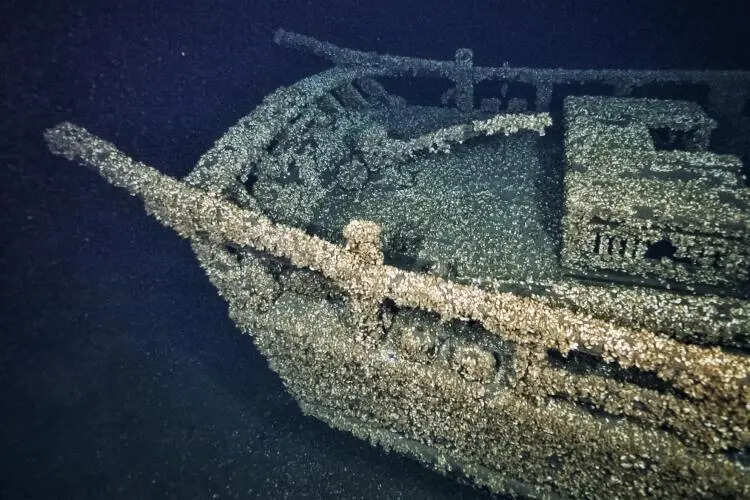
The unidentified ghost ship of Lake Ontario has been frozen in time since the early 1800s.Image Credits: NOAA Office of National Marine Sanctuaries
Why the Great Lakes are basically a giant time capsuleIf you’ve ever wondered why so many historic ships survive in the Great Lakes while similar wrecks in the ocean have long since disappeared, the answer is in the chemistry and temperature. Salt water speeds up decay. It is slowed dramatically by cold freshwater, especially in the deep, low-oxygen environment well below the surface.According to NOAA’s Great Lakes preservation records, Lake Ontario alone contains nearly 70 known historic shipwrecks, each a tangible record of trade routes, migration patterns, and the brutal dangers of sailing these waters before the advent of GPS and weather satellites. These aren’t just artefacts; they are data points about how early America and Canada actually functioned as an economy.The Lake Ontario wreck fits neatly into that picture, except that it is rarer than most. A ship this old? This intact? Both masts still standing? That kind of combination hardly ever makes it.What this means beyond the cool factorIt’s easy to share a photo of a sunken ship with its masts still standing and leave it at that. Maritime archaeologists, however, are quick to point out how much is at stake.A surviving hull from the early 1800s can teach researchers things no document ever could: how ships of that time were actually built, what tools were used, how cargo was loaded and secured, and perhaps even clues about the ship’s final moments before it went down. The older the vessel, the thinner the historical record, so a physical find like this is truly irreplaceable.However, there is one pressing concern. Now the wreck is covered in quagga mussels, an invasive species that has spread throughout the Great Lakes and is slowly consuming the ship’s wooden details. A wreck that may have remained intact for centuries could now have only decades before biological damage is irreversible. Now, plans are underway for a more comprehensive dive in the 2026 season, including 3D imaging and wood sampling for dating.The bigger picture for US watersThe Great Lakes are shared by eight US states and are among the largest systems of freshwater on the planet. They also happen to sit atop what amounts to one of the most important underwater archaeological archives in North America, and we’re only just beginning to understand what’s actually down there.This discovery is more than a cool tale about a ship no one knew existed. It is a reminder that some of history’s most important finds are not hidden away in distant oceans or exotic locations. They rest quietly in waters where millions of Americans live, waiting for someone with the right equipment to take a look.
