



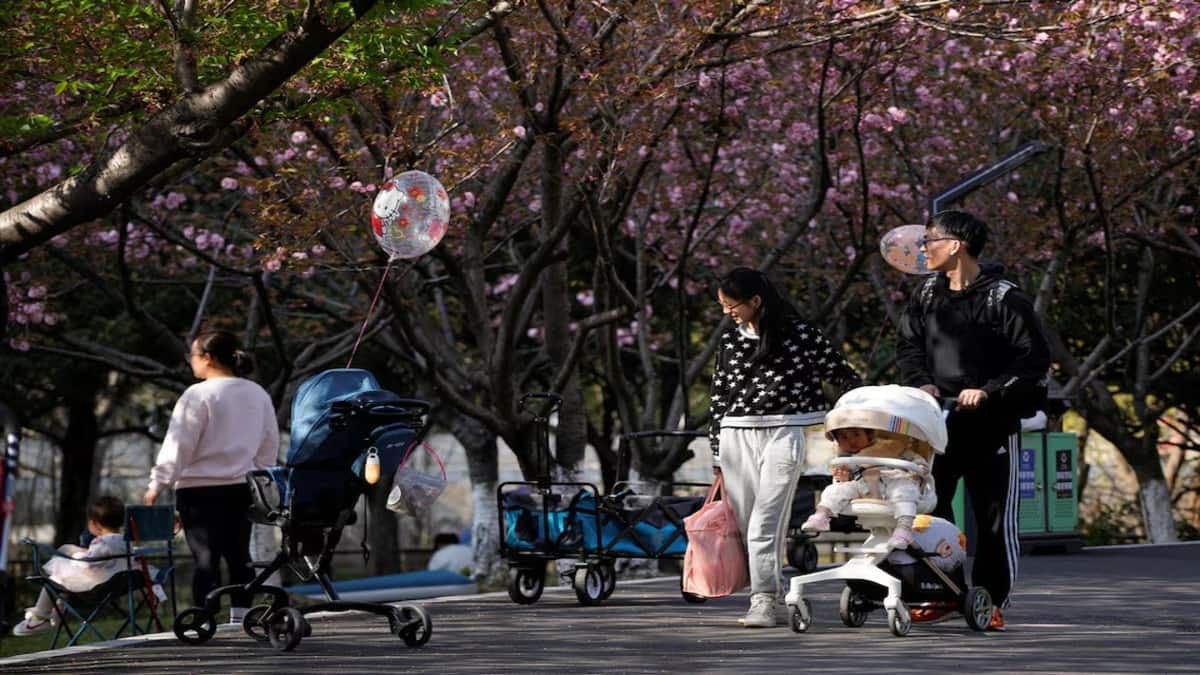
In 2016, China welcomed 17.86 million babies. By 2025, that number had plummeted to 7.92 million: a decline of more than half in less than a decade, all during a period of peace, with no war or disaster. This freefall is not just a statistic; it is a social earthquake. Schools are closing, paediatric wards are shuttered or merged, labour shortages threaten factories, and urban infrastructures built for a larger population risk becoming white elephants. China’s demographic implosion is unprecedented in modern history, and its lessons for India are profound.
China’s strict one-child policy, implemented in the 1970s and enforced through fines, job penalties, and social coercion, achieved its immediate goal of slowing population growth. But the cost was enormous. Families were forced to make impossible choices. Women’s reproductive rights were subordinated to state goals, and an entire generation of only children grew up without siblings, reshaping family dynamics in ways that continue to reverberate today. The policy also produced a skewed sex ratio: millions of men cannot find partners, fuelling social anxiety, skyrocketing marriage costs, and psychological distress.
Even after China relaxed the rules, first allowing two children in 2016, then three in 2021, and offering financial incentives—birth rates continued to fall. In 2024, a minor uptick to 9.54 million births occurred, largely attributed to the symbolic Dragon Year effect, when many couples hoped to have a “lucky” child. But that rebound was fleeting. By 2025, births plunged below 8 million, underscoring a brutal reality: coercive population control leaves a long tail of consequences that no policy tweak can easily undo. India, on the contrary, saw the birth of almost 17 million beautiful babies—more than twice the number of Chinese babies in the same year.
China’s demographic collapse is not only the result of policy. Rising housing costs, high education and healthcare expenses, and inequitable access to urban services create formidable economic barriers to childbearing. A young couple in Beijing or Shanghai faces not just astronomical property prices but also the hidden costs of education, healthcare, and eldercare. Raising children has become a financial gamble, with no guarantee of stability. Meanwhile, the rigid hukou system divides citizens into urban residents with full rights and rural migrants treated as expendable labour, preventing millions of children from accessing quality education or social security. The result: families hesitate, defer, or abandon plans to have children altogether.
Beyond economics, China’s low fertility is a consequence of social evolution. Over the past decades, Chinese women have become highly educated and increasingly participate in the workforce. Education empowers women to calculate opportunity costs: childbearing now comes with career interruptions, social status risks, and lost opportunities. The “freedom to choose” has collided with coercion: the state cannot manufacture fertility. The current decline is, in many ways, a silent but powerful statement by women exercising autonomy—a choice denied for decades by rigid policy.
India, in contrast, presents a strikingly different picture. Our two-child policy, implemented without penalties, respects individual choice while encouraging family planning. Families plan according to circumstances; women retain autonomy; and the social, economic, and cultural fabric remains largely intact. India’s population remains young and robust, positioning us for a demographic dividend that can fuel economic growth for decades. While both nations face urbanisation, rising living costs, and social change, India avoids the distortions caused by coercion, fines, and punitive measures.
China’s experience illustrates the long-term consequences for social structure and economy. With declining birth rates, China faces a rising dependency ratio: fewer young people supporting a growing elderly population. Schools and hospitals shrink; urban infrastructure, built for a larger population, becomes underutilised yet costly to maintain; and labour-intensive industries struggle to find workers. In economic terms, a falling population does not simply double per capita resources—it reduces both consumption and production capacity, triggering a feedback loop of stagnation, inflation, and social strain.
The psychological impact is equally profound. Only children grow up accustomed to concentrated family attention and socialised in competitive environments, only to inherit the full burden of caring for ageing parents. The “4-2-1” family structure—four grandparents, two parents, and one child—has become emblematic of China’s demographic strain, a time bomb created by policy. This structural fragility contributes to stress, declining marriage rates, and the erosion of social cohesion.
India’s choice to avoid coercion and respect women’s reproductive freedom not only preserves social stability but also leverages the natural benefits of an educated population. Globally, fertility declines wherever women gain education and workforce participation. High birth rates persist mainly in societies where women are denied education and autonomy. The modern demographic challenge is therefore not restricting births—it is creating conditions where having children is compatible with opportunity, freedom, and economic security.
India’s policy path—moderate, choice-based, and flexible—positions us advantageously. We retain a young labour force, avoid the social distortions of enforced family planning, and preserve women’s contributions to the economy and society. China’s example shows what happens when the state coerces reproductive decisions: short-term population targets may be met, but long-term societal, economic, and cultural consequences are severe and often irreversible.
China’s crisis also demonstrates that population is more than numbers; it is a measure of trust in society and confidence in the future. In a society where the young fear unemployment, housing inaccessibility, or eldercare burdens, reproduction becomes a calculated risk. Low birth rates are, in many ways, a vote of no confidence in the state’s ability to provide security. India, with its more flexible approach, avoids this trap. Supporting family choice, providing social safety nets, and enabling women’s economic participation can maintain both fertility and social resilience.
Data snapshots tell the story: in 2023, China closed 14,800 kindergartens, and the number of children enrolled fell by 5.35 million. In 2024 and 2025, these trends accelerated into primary schools. Meanwhile, the number of women in Chinese universities now exceeds men, reflecting a profound shift in education and social expectations. In India, the young population continues to grow, with over 65 per cent under the age of 35, providing a robust labour force for the coming decades.
As a Chinese proverb goes, “授人以鱼不如授人以渔 (shòu rén yǐ yú bù rú shòu rén yǐ yú)”—teach a person to fish, and you feed them for a lifetime. India’s approach teaches choice and opportunity rather than coercion, and that may prove its greatest advantage. A Hindi saying echoes this truth: “बूंद-बूंद से सागर बनता है”—small, voluntary, consistent actions create lasting impact. India’s demographic policies are a demonstration of this principle, respecting autonomy while enabling growth.
China’s demographic collapse is a warning for the world. India, now the most populous nation, has a unique opportunity to benefit from its young population while avoiding the human and societal costs of coercion. Population policies are more than statistics—they shape societies, economies, and generations. Incentives, education, and freedom of choice are far more effective than fines, penalties, or mandates.
In the end, the strength of a nation lies not in the number of people it coerces into being born, but in the dignity, freedom, and opportunities it provides to those who choose to live, learn, work, and raise families. India’s demographic advantage is not accidental: it is the result of respecting choice over coercion, education over control, and freedom over fear. China’s decline is a cautionary tale; India’s path, if preserved, offers hope, growth, and sustainability for generations to come.
(The author is a University of Bath-based sinologist and the first Asian deputy mayor of the city of Bath, UK. The views expressed in the above piece are personal and solely those of the author. They do not necessarily reflect the views of Firstpost.)
End of Article
