



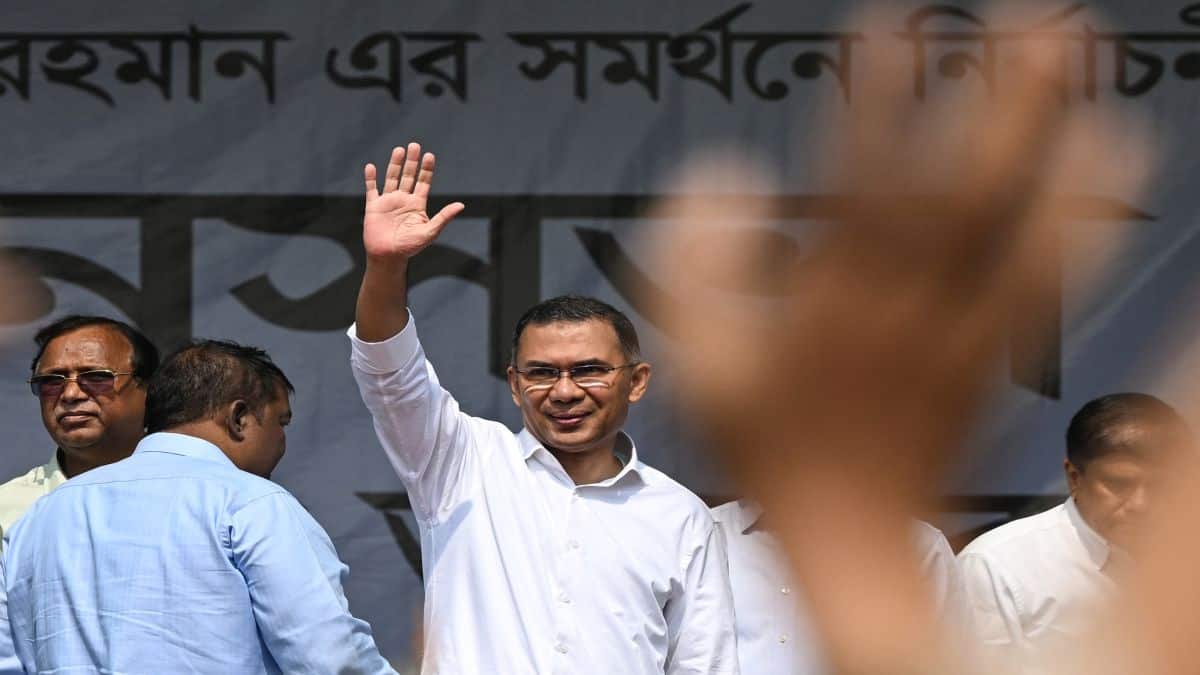
Bangladesh has delivered a decisive electoral verdict. The two-thirds majority secured by the Bangladesh Nationalist Party (BNP) is not merely a change of government; it is a structural moment in the country’s post-Hasina transition. In effect, this election has operated less as a routine parliamentary exercise and more as a national referendum on instability, radical drift and governance uncertainty.
After months of turbulence following Sheikh Hasina’s removal from power, the electorate has opted for consolidation over fragmentation. That choice matters. It restores a degree of political coherence at a time when Bangladesh risked sliding into prolonged flux.
One immediate positive is evident. The underperformance of Jamaat-e-Islami signals that while ideological rhetoric may resonate, voters are cautious about entrusting executive power to radical formations, just like in many other parts of South Asia. There is a difference between mobilising sentiment and managing a state. The electorate appears to recognise that distinction.
Yet it would be a strategic error to conclude that Jamaat’s influence has disappeared. Electoral defeat does not dismantle ideological infrastructure. Social networks, religious institutions, local influence structures and mobilisation capacity remain intact. What has been diluted is Jamaat’s legitimacy as a governing force, not its ideological footprint. That distinction is critical.
The BNP now carries full responsibility. A two-thirds majority eliminates the excuse of coalition vulnerability. It reduces dependence on radical partners and lowers the immediate risk of policy paralysis. But it also concentrates accountability. Tariq Rahman’s leadership must demonstrate that political consolidation will translate into institutional recovery and economic revival, core issues for Bangladesh.
The uprising that set this transition in motion was driven less by doctrinal ideology than by aspiration. Young Bangladeshis demanded dignity, accountability and opportunity. Their expectations were socio-economic before they were religious or partisan. The durability of the BNP’s mandate will therefore depend not on rhetoric but on delivery — restoring administrative efficiency, stabilising investor confidence, protecting minorities and re-establishing growth momentum.
Bangladesh’s economic trajectory over the past decade was not accidental. It rested on policy continuity, export discipline, infrastructure integration and internal security stability. Those pillars were weakened during the turbulence. Rebuilding them requires pragmatism, not confrontation. Politics, for now, needs to be shed.
The question of the Awami League cannot be indefinitely postponed. Permanent exclusion of a major political force distorts democratic balance. While immediate reversal of the ban may not be politically feasible, a pathway toward eventual normalisation should remain open. Political closure breeds underground resentment and polarisation. Bangladesh’s political history suggests that cycles do turn — but the manner of that turn will depend on whether space is left for reintegration. It would be Tariq Rehman’s greatest contribution if magnanimity in this sphere is practiced progressively.
Sheikh Hasina’s presence in India will remain a background variable. However, individual legal or political issues must not be permitted to dominate the bilateral agenda. The future of India-Bangladesh relations cannot revolve around the fate of one individual. Nor can Dhaka’s domestic politics be allowed to use that question as a permanent mobilising device. The wiser course on both sides would be to de-personalise the relationship and refocus on structural interests.
A broader ideological question now confronts Bangladesh. South Asia offers sobering lessons about the long-term costs of weaponising religion and identity in governance. Radical mobilisation can produce short-term consolidation but often undermines economic resilience, minority protection and institutional credibility. Pakistan’s trajectory stands as a cautionary tale about how ideological hardening complicates internal security and external relations alike.
Bangladesh is not Pakistan. Its political culture, social composition and economic orientation differ significantly. But ideological drift, once normalised, is difficult to reverse. The electorate’s moderation of Jamaat’s electoral weight suggests a recognition of that risk. The responsibility now lies with the BNP leadership to prevent ideological capture from outside the government.
It is in this context that the Bangladesh Army’s role deserves acknowledgement. During a period of volatility, it remained largely professional and institutional. That steadiness contributed to preventing systemic breakdown. Democratic consolidation depends not only on electoral arithmetic but also on disciplined institutions that resist politicisation.
For India, the outcome offers cautious reassurance but not complacency. A strong BNP majority reduces immediate instability risk. It lowers the probability of overt radical participation in governance. It creates space for structured engagement.
New Delhi’s conduct during Bangladesh’s turbulent phase has been notable for restraint. There has been no rhetorical escalation, no public lecturing and no reactive positioning. That approach has preserved diplomatic space and prevented psychological polarisation. This must continue.
The temptation after such an election might be to rush into overt signalling. That would be unwise. Resetting relations should be steady. Quiet high-level engagement, calibrated diplomatic outreach and sustained economic cooperation are more durable instruments than public grand gestures.
Economic interdependence remains the strongest anchor in bilateral ties. Connectivity, power trade, supply chains, healthcare access and people-to-people flows form an ecosystem that neither side can easily replicate elsewhere. Bangladesh’s economic recovery will depend on regional integration. India benefits directly from stability on its eastern flank. This mutuality should guide the next phase.
There is also a geopolitical dimension. A stabilised Bangladesh reduces space for external manipulation. An unstable one invites it. The months of flux created openings for outside actors to test influence. A decisive mandate narrows that space, but only if governance consolidates quickly.
It is worth noting that sections of the international community may have underestimated the risks inherent in abrupt political disruption. The assumption that disorder automatically yields liberal consolidation has not always held true in comparable contexts. Bangladesh’s electorate has now indicated a preference for order with accountability rather than turbulence in the name of reform.
The verdict, therefore, is not a triumph of one party alone. It is a collective signal that governance matters more than agitation, and that radical rhetoric does not substitute for administrative competence.
The test begins now. Elections confer legitimacy; they do not guarantee performance. The BNP’s majority provides the authority to govern without dependence on ideological extremes. Whether it uses that authority to rebuild institutions, protect pluralism and restore economic confidence will determine Bangladesh’s trajectory.
For India, the strategic imperative is clear: maintain restraint, avoid provocation, deepen quiet engagement and let economics drive stabilisation. In a region prone to emotional escalation, India’s display of disciplined statecraft remains a most reliable instrument. Bangladesh has chosen consolidation. The region will watch how that choice is translated into governance.
(The writer is the former Commander of India’s Srinagar-based Chinar Corps. Currently he is the Chancellor of the Central University of Kashmir and a member of the National Disaster Management Authority. Views expressed in the above piece are personal and solely those of the author. They do not necessarily reflect Firstpost’s views.)
End of Article
