



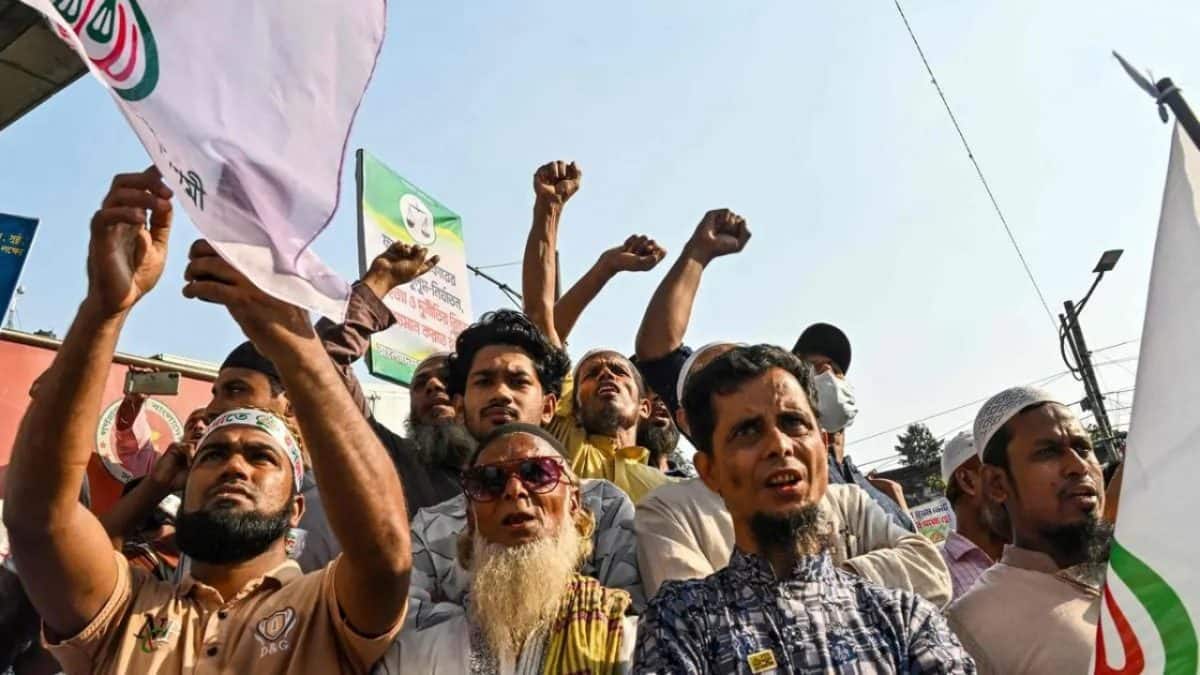
For decades, the calculus of Bangladesh’s electoral politics was a simple binary equation. The country faces quite a different picture with the 13th general election on February 12, 2026. The Bangladesh Jamaat-e-Islami (BJI) is no longer playing fiddle in a convenience coalition but has stepped out of the shadow of the Bangladesh Nationalist Party (BNP) in its bid to present itself as a primary alternative to the old two-party system and as a vanguard of a new national identity. Amidst the ongoing election conundrum, it is necessary to understand where the BJI exactly stands in the country’s electoral landscape as of now and its prospects of success in the elections.
The BJI leads an 11-party alliance, formalised in late 2025, that represents a strategic “big tent” approach by bringing together traditional Islamist forces like Bangladesh Khelafat Majlis and Nezame-e-Islam, as well as an apparently secular force in the form of the National Citizen Party (NCP). Through a strategic alignment with the NCP, the BJI seeks a revolutionary legitimacy that would effectively blunt historical criticisms regarding its infamous role in 1971.
The 11-party alliance’s seat-sharing agreement, finalised in mid-January, underscores BJI’s dominance: as per the latest reports, the BJI is contesting 224 constituencies, while its partners are contesting the remaining seats across the 300-seat parliament.
In terms of numbers, the BNP remains in the lead, while the Islamist party is entering the 2026 election with its strongest prospects so far. It is positioned as the second most consequential political force and has leveraged a series of tactical advantages to fill the organisational and electoral vacuum left by the Awami League (AL). This has enabled the BJI to mobilise rapidly at a national scale, something the BNP, despite its larger footprint, has struggled to replicate.
Electoral Pragmatism without Ideological Change
The BJI knows it cannot survive on its traditional theological rhetoric to win elections, which explains the welfare-state agenda it is advancing, in contrast to the BNP’s liberal democratic restoration narrative. BJI’s rhetorical transition mimics a “Turkish-style” (AKP) model of political Islam, where the party seeks legitimacy through administrative efficiency and economic modernisation. This was evident during the recently organised “Policy Summit-2026”, where the party announced its economic targets, such as earning USD 50 billion from ICT exports and creating 1.5 million freelancers by 2040.
By focusing on tangible daily-life issues like “Qard-e-Hasana” (interest-free graduate loans) and a zero-tolerance policy against extortion and market syndicates, the BJI is attempting to broaden its appeal beyond its religious base to “Gen Z” revolutionaries and the aspirational middle class. Ameer (party leader) Shafiqur Rahman has rebranded the party as a governance alternative, frequently using rallies to promise modernised healthcare, including specialised hospitals across the country.
However, the BJI’s shift towards prioritising governance cannot be taken at face value. Though the BJI has stated that the country would be run on existing laws, the underlying social theology of the party appears as static as before. The BJI’s decision to field zero female candidates for the 300 directly elected parliamentary seats stands in stark contrast to the party’s rhetoric of “inclusive” development.
In a recent interview, Shafiqur Rahman explicitly stated that women are biologically unfit to lead the party, citing roles such as childbirth and breastfeeding as inherent limitations on political leadership. Ironically, this comes in a country that, for a substantial part of its existence, has been led by women. While the BJI has promised to respect existing secular laws, its party charter still prioritises a state structure based on Islamic principles. Under these circumstances, BJI’s development-first agenda appears to be a means of gaining electoral legitimacy while keeping its fundamental goal of social and legal Islamisation entirely intact.
Electoral Fragmentation and Competitive Deadlock
The 13th national election’s electoral landscape is currently defined by a high-stakes confrontation between the BNP and the 11-party alliance led by the BJI. The absence of the Awami League (AL) has left a significant share of the electorate politically orphaned, in a contest involving nearly 127 million eligible voters and a record 1,981 candidates. This has contributed to a fragmented electoral field.
As the BNP and the BJI-led alliance battle it out in key constituencies, it will be increasingly difficult for either bloc to secure the 151 seats required for a unilateral majority, which would likely lead to a hung parliament. It is precisely this fragmentation that enhances the strategic significance of the BNP-BJI split. The election risks turning into a war of attrition, in which the BJI’s disciplined and organisationally stable cadre base—particularly when contrasted with the BNP’s recent internal factionalism—offers a distinct advantage in narrow, multi-candidate contests.
This dynamic is likely to play out in constituencies such as Satkhira, Rajshahi, Chittagong’s Satkania and Lohagara, and Cox’s Bazar-2. BJI Ameer Shafiqur Rahman’s public openness to a “Unity Government” appears to be a calculated move in this context, likely aimed at softening the BNP’s resistance while positioning the party for post-election bargaining.
Why India Remains Indispensable
A government that includes the BJI is expected to show a strategic inclination towards Beijing and Islamabad. However, the geo-economic reality of South Asia makes sidelining New Delhi nearly impossible. Bangladesh relies heavily on India for critical commodities such as rice, yarn, and diesel. Any attempt to ignore India would risk immediate domestic inflation and a supply chain crisis, particularly since India serves as a primary source of raw materials for Bangladesh’s readymade garment sector.
Bangladesh also imports substantial electricity from the Indian grid. Infrastructure projects such as the India–Bangladesh Friendship Pipeline and the Maitree Super Thermal Power Plant create physical linkages that foster energy interdependence, regardless of which party rules.
The 1996 Ganga Water Sharing Treaty is set to expire in December 2026, and the government in Dhaka will have to engage New Delhi within months of the election to renew this critical agreement. Sidelining India would mean risking a water crisis in the country’s agricultural heartland—a risk that a “development-first” BJI cannot afford. This reality has been reflected in BJI’s diplomatic outreach to New Delhi on several occasions since the July 2024 uprisings, most recently on 16 January 2026.
The February 12 polls will serve as a stress test for the post-cataclysmic identity of Bangladesh. Amid the BNP and BJI-led 11-party alliance’s push towards a hung parliament, the real winner may ultimately be the party that proves more adept at coalition-building while maintaining an indispensable connection with New Delhi. Whether the BJI can genuinely transform itself from a religious vanguard into a pragmatic governing partner—or whether it remains a strategic opportunist—remains the central question.
(The writer is a PhD scholar at the School of International Studies, Jawaharlal Nehru University, New Delhi. Views expressed in the above piece are personal and solely those of the author. They do not necessarily reflect Firstpost’s views.)
End of Article
