



What should I really study? Will the degree I am pursuing matter in five years? Ten years? These questions on the careers best suited for students today are being asked in classrooms, families, and counselling sessions. They are not new. But they are pressing harder.
The unease is one of pressure, of too much changing at once. AI deepens that unease, but the question underneath is older. It is about education itself, and what students need to carry into a working life none of us can fully predict.

AI is now a fact of daily life, including at the workplace. Job roles are being reorganised, tasks and workflows redistributed among teams and tools. Turnaround times are getting shorter, and expectations of productivity rising.
This is showing up across different kinds of work. In design, for example, a field once thought to be the exclusive domain of human intuition, generative tools are already improving output quality and freeing time for higher-order creativity (Figma, 2026). Similarly, in financial services, there is increasing focus on the responsible deployment of AI and its institutional integration (Cambridge Centre for Alternative Finance, 2026).
Used actively and with intention, AI is more than a functional productivity tool. It advances what a single person can take on: A young professional fluent in digital tools for research, analysis, and execution can now do work that once needed a team.
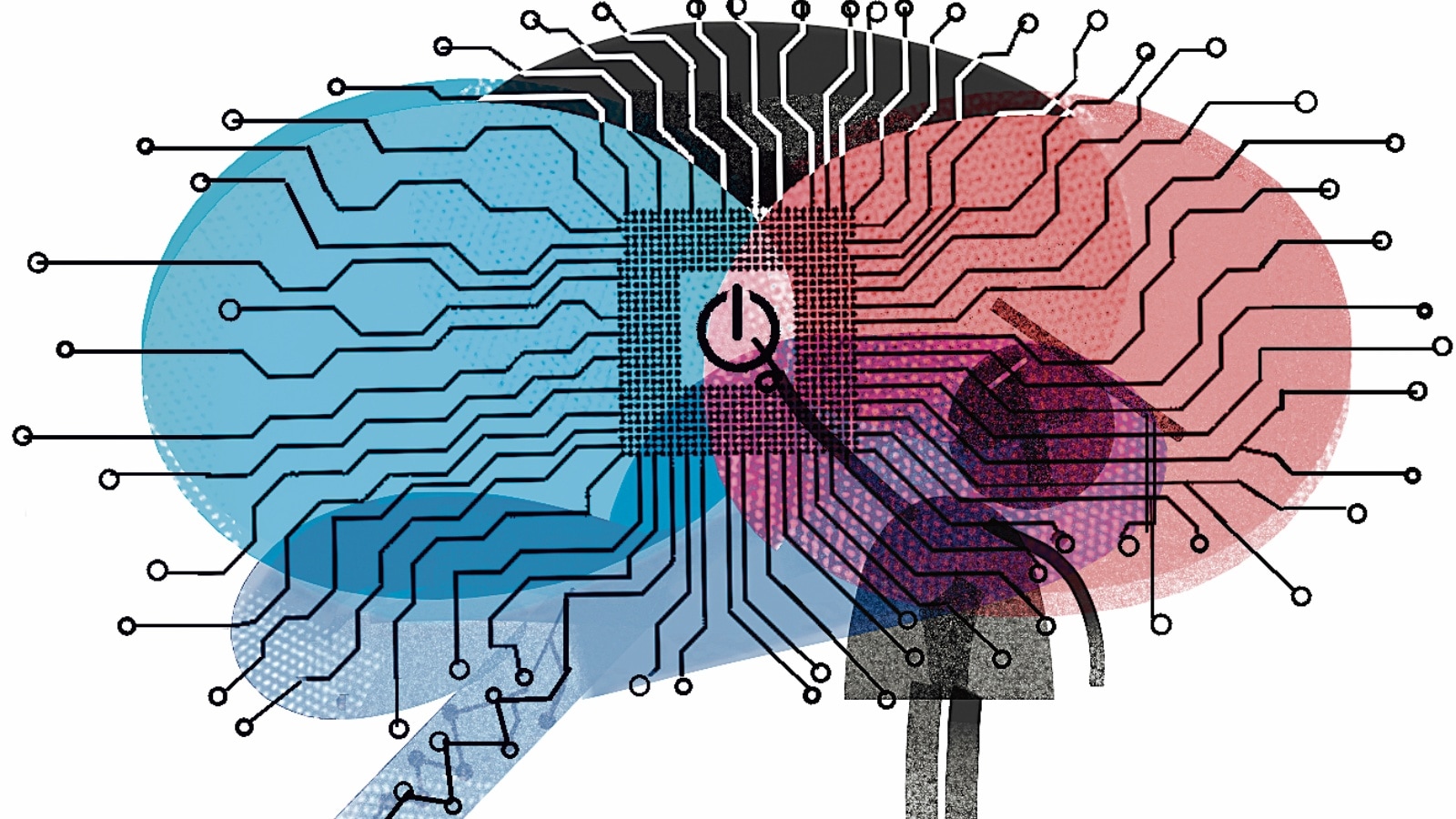
Think of AI as a huge, tireless brain holding answers to almost any question. But what to ask, within which constraints, and what to look for in the answer, is the part only the human can direct. Framing the right problem requires giving AI the right history and concerns. The quality of the answer is, in the end, governed by the quality of asking. For curious minds, that is an ever-present opportunity: To expand learning, go deeper across topics, and follow an idea further than was ever possible before.
While AI is increasingly an always-available collaborator for defined activities, the centre of the work lies elsewhere: In why what we do matters, and to what end.
The mission of the work we do is of an altogether different order. A healthcare company helps people be well. A school teaches a child to think. An agri-tech firm enables a farmer to earn more from the same patch of land. These are inquiries into the world and the human beings who live in it. They demand command over context and a real stake in the outcome.
Global tech leaders developing AI are saying this too. It can support that work. It can generate options, surface patterns, and accelerate decisions. But choices in the real world carry real consequences. That accountability remains human.
The questions a student today should be asking are not simplistic or even easy. What change do I want to see in my community, my city, my country? How do I want to contribute? And why? These shape the interests and passions of our young people, who, motivated by the mission they want to be part of, will go on to build India and its future.
This is what great universities have always made possible. The transition from school to college is a transition into a more complex, heterogeneous world. A student leaves home, lives among peers from different states and backgrounds, and steps into a place where ideas are debated openly and pushed back against. That is formative in a way no tool can substitute. AI is at its best when it is helpful and obliging; college is where you learn to be tested. When digital tools today can produce comprehensive answers in just a click, the patience, discipline, and sometimes discomfort, of working out an answer for yourself becomes more valuable, not less.
Employers agree. In entry-level hires, beyond AI fluency, they continue to look for timeless human capacities for a faster world: Structured problem-solving, data literacy, a credible point of view, intellectual humility, and clear communication.
As student outcomes have always mattered, parents, too, are beginning to ask critical questions: About real-world exposure, how technology is being integrated into their child’s learning, whether their child will be ready for a dynamic workplace they themselves in their own routine lives are still learning to navigate.
The adjustment Indian universities now need to make is in how they teach, what they assess, and how they prepare students for a market that will keep changing. Treating AI as one more elective is not the answer. Nor is narrowing education to what seems immediately rewarding. Rebuilding the education experience around holistic learning, critical reasoning, and breadth is. Breadth here does not mean dilution. It means awareness across domains, the instinct to connect ideas, and the ability to think and write clearly.
The market itself reinforces this. People today change roles and industries far more often than earlier generations did, and what stays with them is a way of being and doing: With remarkable judgement, clarity, and the readiness to keep learning and skilling.
India today has one of the largest and youngest workforces in the world. That is a unique advantage if our students can collaborate with technology to meaningful effect, while continuing to relentlessly enhance their fundamental human thinking: Seeing which problems are worth solving, holding the line on quality, bringing other people along, and the vision to grow.
A good education has always asked exactly this of its students. AI does not change that ambition. It raises the stakes of meeting it.
The writers are founders of Ashoka University, Delhi-NCR. Views expressed are personal
