



Headlines may hide more than they reveal; but straws in the wind often warn us about the storm ahead.
The expiry of a key bilateral nuclear arms control pact between the US and Russia on Wednesday almost went unnoticed.
Why? Is there more to it than meets the eye?
See how, after 18 years of on-and-off negotiations, India and the European Union (EU) quickly signed the “Mother of All Trade Deals” on January 27, 2026. Within a week, US President Donald Trump also rediscovered his “friend” in Prime Minister Narendra Modi, piped down his high-tariff horse, and announced a bilateral trade agreement (BTA) with the same India he had mocked as a “dead economy” in July 2025.
And, three days before the nuclear arms control treaty between the US and Russia lapsed on February 4, India hiked its defence budget for 2026-27 by over 15% of GDP. While funding for nuclear warheads is not explicitly detailed, the overall defence budget increased to Rs 7.85 lakh crore ($85.6 billion) to support modernisation and self-reliance in military hardware.
India also heavily prioritised nuclear energy, aiming for 100 GW by 2047, and allocated Rs 20,000 crore for a Nuclear Energy Mission focusing on Small Modular Reactors (SMRs), and amending the Atomic Energy Act to enable private-sector partnerships. Canada and India are racing to sign a $3 billion uranium deal in the coming weeks.
Soon, we can expect tariff-happy President Trump travelling to India and reinforcing the Quadrilateral Security Dialogue (Quad), which China denounced as an “Asian NATO”. Of course, Japan also rejoined the arms race—against China.
What drove these countries against China, subtly or openly? Can these rather ‘unrelated’ facts fall into place to sketch a larger picture? How are countries checking and balancing each other?
China’s Day Out
Responding to the Trump tariffs, and citing national security interests as a reason, China introduced two waves of export controls for critical minerals and rare earth elements (REEs) in April and October 2025 respectively. The second wave was suspended until November 2026. The EU was badly affected by the controls on REEs, indispensable for its digital, green and defence industries. China’s move highlighted major vulnerabilities in EU supply chains.
Beijing’s bans altered geopolitics to an extent few realised then. Nations suddenly woke up to discover how technologically vulnerable they were to China’s remote control, even without a physical war. In May 2025, even Pakistan discovered the ‘worth’ of Chinese defence equipment during Operation Sindoor.
In 2024, China accounted for over 60 per cent of the world’s total rare-earth production and processed nearly 90 per cent of the global supply. In one stroke, Beijing warned the world how it could impact its rivals’ defence preparedness and security regimes.
That was when the West started carefully recalibrating its multilateral policies to factor in China’s controls on natural resources. The US quickly ‘acquired’ Venezuela, zeroed in on Greenland, wooed Pakistan for Baluchistan’s minerals… and more.
The New World Order
The new nuclear world order, if any, is part of this larger picture.
Post-1945, the US-led West’s sole enemy was the Soviet Union; in 2025, Beijing replaced Moscow, despite the ongoing Ukraine war.
The pattern is interesting. Wait for the formidable dictator to grow old and bow out. As Malcolm Gladwell revealed in The Tipping Point, a key reason that freed Chicago from its mafias in the early 2000s was the old age of godfathers.
After the death of Josef Stalin in 1953, for example, the West patiently softened the powerful Kremlin onions. Democracies can elect or reject their leaders; dictatorships have to wait until they drag themselves into their graves. The dictators of the Soviet Union, which had a global footprint until 1991, gradually shrank its size; Russia is now essentially a Eurasian player, not a global superpower.
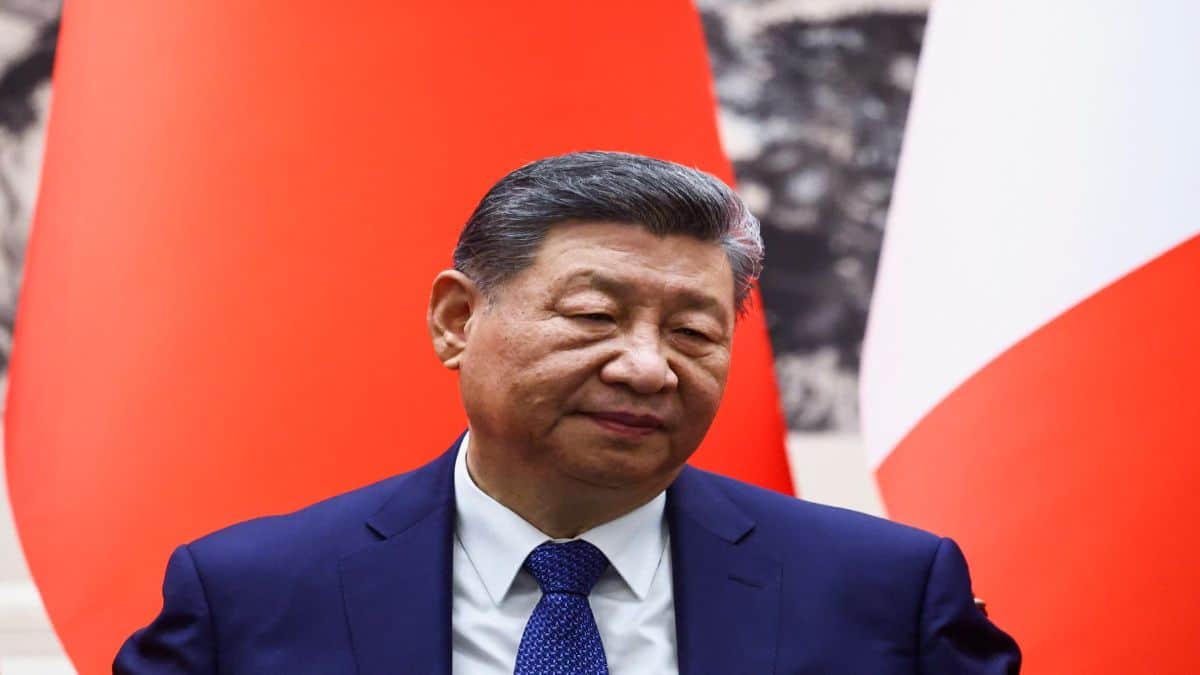
Likewise, the West is adopting a power-erosion strategy to encircle and cut China to size. All other geodynamical manipulations in our time appear subplots in this fascinating saga as ‘America First’ restructures its domain and waits for the 73-year-old Xi Jinping’s successor(s). Of course, Europe is waiting for Putin’s successor as well.
It is in this context that the emergence of multiple nuclear powers, and a rather uneventful lapse of the US–Russia nuclear deal on February 4, can be seen.
Why aren’t Russia and the US interested in another nuclear arms control deal?
Of the nine known nuclear powers—the US, Russia, China, the UK, France, Israel, India, Pakistan, and North Korea (not including Iran)—only the first two have, since the Second World War, inked arms control pacts. Pakistan claimed it had developed an “Islamic bomb”; all other wannabes developed nuclear energy chiefly for “peaceful purposes”.
Since the fall of the Soviet Union in 1991, nuclear energy—for war or peace—became a multi-horse race. Directly or indirectly, the US ‘controls’ nuclear buttons of the UK, France, Israel, and even Pakistan. India has followed a no-first-use policy. The US has, therefore, been wary of the remainders—China, Iran, and North Korea; despite rhetoric, it is unlikely to spark the fire and will just keep them all in check for now, and wait out for their dictators to die.
Since 1991, geopolitical bargaining chips have also changed. The West’s nuclear power has been replaced by China’s critical minerals and REEs.
For over seven decades, it was easier to manage a two-horse nuclear race between the US and the USSR; now it’s a racecourse studded with multiple ‘rogue’ horses.
After the 1991 USSR collapse, US President Barack Obama and his Russian counterpart Dmitry Medvedev signed the New Strategic Arms Reduction Treaty (New START), effective 2011; it was extended for another five years and lapsed on February 4, 2026. Medvedev, now a key ally of President Vladimir Putin, is the Deputy Chairman of the Security Council of Russia since 2020.
The treaty capped US and Russian strategic nuclear arsenals and established an important on-site inspection and monitoring regime. It was the latest in a string of treaties that facilitated reductions in the global nuclear warhead stockpile from a high of 70,000 in the mid-1980s to roughly 12,000 today.
The US-Russia treaty set limits on strategic nuclear weapons and capped the number of deployed strategic warheads at 1,550 on each side, with up to 700 deployed ground- or submarine-launched missiles and bomber planes, and 800 launchers. It also included a system of short-notice, on-site inspections, enabling each side to satisfy itself that the other was complying.
On February 24, 2022, Russia invaded Ukraine. The next year, President Putin suspended Moscow’s participation in the treaty because of US support for Ukraine. That brought a halt to inspections—already suspended during the Covid-19 pandemic—and forced each side to rely on its own intelligence assessments of what the other was doing.
However, neither side accused the other of breaching the warhead limits, which remained in force. With Donald Trump back in the White House in January 2025, support for Ukraine waned—and increased correspondingly for Russia. Meanwhile, China became the chief adversary.
In the larger geopolitical context, the US considers Russia a lesser evil and a ‘regional power’, vis-à-vis China, a far stronger global challenger.
Enter the Dragon(s)
China went nuclear in 1964, India in 1974, Pakistan in 1998, and North Korea in 2006, thus turning the essentially two-horse race into a horse polo.
While the USSR did not proliferate nuclear arms, China supported ‘rogue states’ like Pakistan, North Korea (and, maybe, Iran) in the nuclear race. No nuclear power without a substantial industrial base and economy can survive in the long run; that was why some of the pro-China rogue states have gone bankrupt. China, with no nuclear deal with any country, used these extremist states as proxies, mainly against Israel, India, and the US. Their nuclear blackmail pushed democracies into suffering varieties of terrorism for decades.
There is a difference, though. The US and Russia often viewed China with suspicion; but each of them also remained wary of a potential alliance of the other two. Besides, even if the US and Russia thrash out a fresh START-type deal, what about the seven other nuclear players around, chief among them being China itself?
That’s why the US has potentially weaned Pakistan away from China. To use a political metaphor attributed to US President Lyndon B. Johnson (regarding his FBI Director J. Edgar Hoover), Washington may have decided to keep Pakistan in its tent so it can piss outside, rather than keeping it outside and making it piss in!
It also explains why, despite high-pitched rhetoric and deployments, the US has been trying to rein in Iran rather than push it into the waiting arms of China. Even during the 12-day direct confrontation in June 2015, for example, the US “could not” do much damage to Iran’s nuclear facilities.
China is the second-largest economy, even if undemocratic. Its People’s Liberation Army (PLA) is viewed as all-powerful. Behind this façade, however, we also have to do a reality check; in 2020, India found the PLA had feet of clay.
The rot within China is appalling. Its Communist government, packed with Xi Jinping acolytes, sacked hundreds of thousands of “corrupt” employees at all levels. In January 2026, Xi purged even his long-time associate and deputy in the Central Military Commission (CMC), General Zhang Youxia, on charges including the alleged leak of nuclear weapons data to the US.
According to some media reports in 2024, corruption was so widespread that entire fields of silos in a Xinjiang missile field in western China were found fitted with lids that prevented missiles from launching effectively because the missiles had been filled with water instead of fuel. That is, the dragon could not fly.
“(We) must take strong and forceful measures to crack down on corrupt practices that undermine the building of combat abilities, and thoroughly investigate and root out those ‘big rats’ who tamper with military spending,” the South China Morning Post (SCMP) reported on February 1, 2026, citing a PLA Daily article.
No wonder China, infested by ‘big rats’, has been purging them since Xi Jinping came to power in 2013.
He has a precedent to learn from.
In 1962, Chairman Mao Zedong had also purged Xi Jinping’s father, Xi Zhongxun, on charges of corruption, supporting a subversive novel, “anti-party” activities, and forming a clique; it led to his imprisonment and torture, which forced a teenage Xi Jinping into rural exile and isolation.
Nothing corrects us like corruption.
(The author is a senior journalist. Views expressed in the above piece are personal and solely those of the author. They do not necessarily reflect Firstpost’s views.)
End of Article

