



Of late, Israel has been occupying a disproportionate amount of my mind space. It isn’t just this illegal, pointless aggression on Iran that will long be remembered as Netanyahu’s War and Trump’s Folly. It is also the barely concealed ambition of a Greater Israel, a project that is very much a work in progress when you look at Israel’s occupation of the Golan Heights in Syria, a chunk of southern Lebanon, over half of Gaza and the ever-spreading cancer of illegal settlements in the Occupied West Bank. There are days when my disappointment with Israel is deeply personal, tinged almost with a sense of betrayal.
Israel was the country that captured my imagination as a teenager growing up in Amritsar in the mid-1970s. The historical novel Mila 18 by Leon Uris was probably the first one to leave a profound imprint. I was enchanted by the tales of heroism from the Warsaw Ghetto Uprising of 1943 as the Jewish community resisted deportation to the Nazi concentration camps in Treblinka. Exodus, by the same author, came next. I soaked in the story of Ari Ben Cannan bringing 300 Jewish children to Palestine in 1947, along with the accompanying narrative about the establishment of the State of Israel against all odds in 1948. James Michener’s The Source came next to provide a deep dive into the history of Judaism and its resilience over centuries of war, invasion and persecution. I was enamoured with the prodigious intellect of a small community that produced Einstein and Marx, Freud and Spinoza, Proust and Bohr, Kafka and Spielberg. My hunger was insatiable, but there wasn’t very much else available in Amritsar’s humble bookstores.

So I went a step further. As a 16-year-old, I wrote to the Israeli consulate in Mumbai, and they responded promptly, sending me reams of material – books, pamphlets, slick brochures, elegant maps. About the great victories of 1948, the brilliant pre-emptive strikes in the Six-Day War of 1967, the Yom Kippur attack in 1973, the case for “secure borders”. I admired the idealism of the Zionists building a nation from their kibbutzim, of the visionary leaders building an oasis of liberal democracy.
The infatuation lasted for over a year, dissolving gradually into the compulsions of college and university life. Fast-forward to early 1984. I’ve joined the Indian Foreign Service, completed training in Mussoorie and am being asked to select a foreign language from half a dozen options, including French, Mandarin, Russian, Spanish and Japanese. A voice calls from the subconscious to remind me of my fling with Israel. I chose Arabic and ended up doing my first two overseas assignments in Cairo and Damascus. I recall my disappointment when I saw that my first diplomatic passport had a stamp proclaiming “Not Valid for Israel and South Africa”. I made it a point to visit Rafah and Taba in Sinai, Allenby Bridge in Jordan and Quneitra in Syria’s Golan Heights and saw the Star of David fluttering in the distance, unable to set foot in the forbidden land.
Meanwhile, conversations with Egyptian and Syrian friends in Cairo and with a range of Palestinians in Cairo and Damascus gave me the other side of the story. Learning Arabic provided access to local media and started to change my perspective, as did the still visible evidence of Israel’s destructive and eventually disastrous invasion of Lebanon in 1982. Admiration of Israel’s many strengths was now tinged with a concern over its growing belligerence, its oppression of Palestinians, and its desire to dominate its Arab neighbours.
But nothing had prepared me for the revulsion with which I watched the unfolding genocide in Gaza. Of course, Israel had the right to respond to the brutal terrorist attack by Hamas on October 7, 2023. But how much retribution is to be extracted before you say ENOUGH? 72,000 dead Palestinians, over half of them women and children? The unconscionable attacks on schools and universities, the targeting of hospitals and ambulances, the razing of entire streets and neighbourhoods? How do you unsee the images from brave films like Doctors Under Attack and The Voice of Hind Rajab? How do you ignore the ongoing crimes of the IDF in Lebanon?
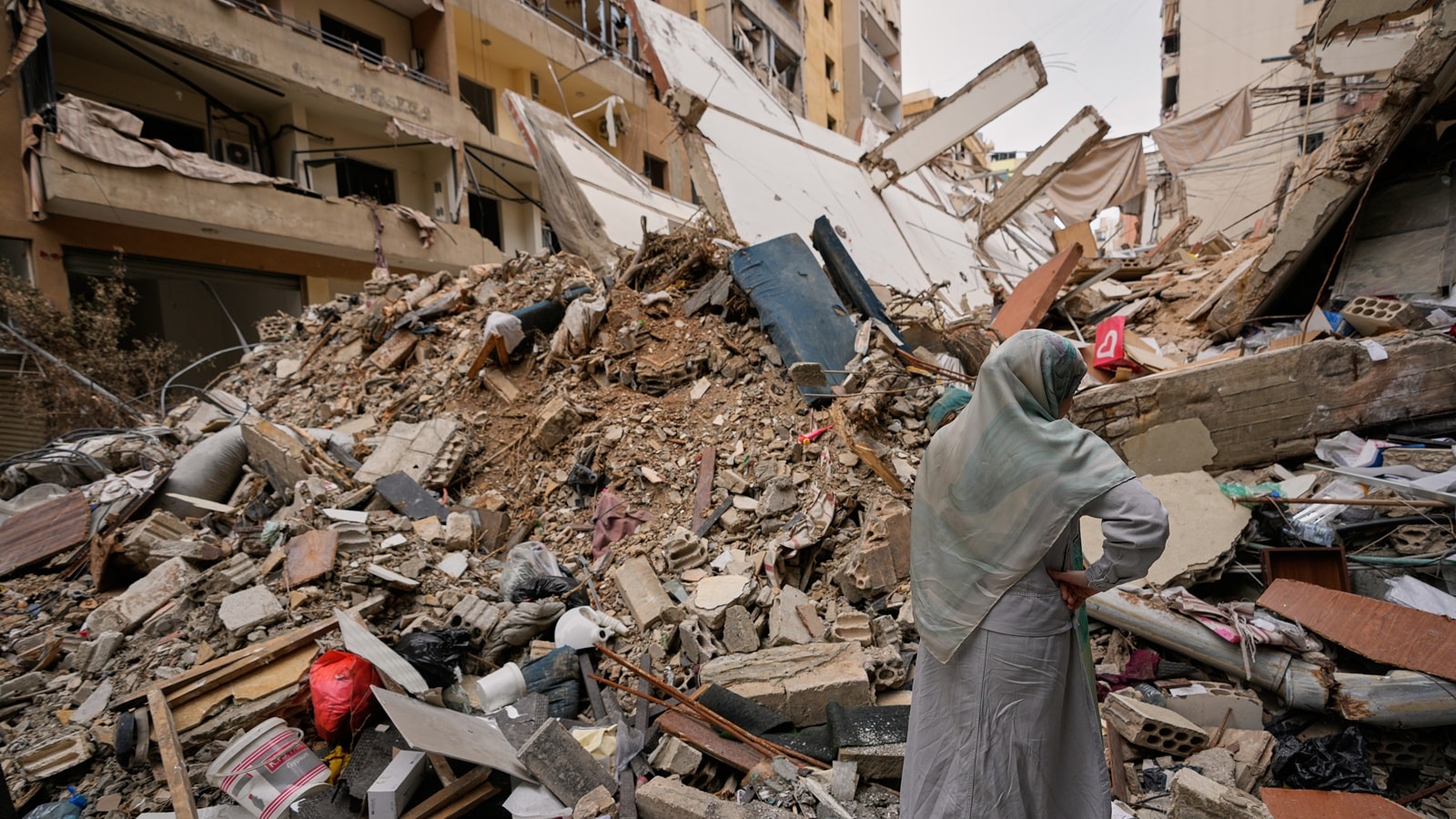
Just when we thought that our senses had become inured to extreme violence in Gaza and the horror stories from the Occupied West Bank, we are seeing Israel deploy the same playbook in southern Lebanon. Yes, I know it is complicated. Hezbollah started this round by firing some rockets to display its anger over the assassination of Ayatollah Khamenei and to affirm its allegiance to Iran. They did cause some damage to property and added to the sense of insecurity experienced by residents of northern Israel. So Israel launched its unfortunately named Operation Eternal Darkness by dropping bombs on a crowded neighbourhood in the heart of Beirut that left 357 dead in just 10 minutes. The grim visuals keep coming. Of villages razed, solar farms uprooted, ambulances targeted, journalists pursued and killed. The uncomprehending screams of 13-year-old Naya as she captured the collapse of apartment blocks on Snapchat, the stoic courage of Amal Khalil messaging from under the rubble that buried her.
And there is this unanswered question that haunts me. How could a people who have suffered so much pain and persecution over the centuries bring themselves to inflict the same on the hapless Palestinians and the Lebanese? What happened to history, memory, empathy?
I am clearly not the only one agonising over this. Omer Bartov, a Holocaust scholar who was raised in a kibbutz and served four years in the Israeli Defence Forces, poses similar questions in his recent book Israel: What Went Wrong. He outlines Zionism’s shift from a movement for Jewish emancipation to an ideology that is increasingly based around ethno-nationalism, settler colonialism and the exclusion of Palestinians. The signs were always there; we chose not to see them.
The evidence of Israeli war crimes can no longer be brushed under the carpet. Over the course of the last two years, the International Court of Justice ruled in July 2024 that Israel’s occupation of Palestinian territories since 1967 is illegal; the International Criminal Court has issued arrest warrants for Prime Minister Netanyahu and former Defence Minister Yoav Gallant for crimes against humanity in Gaza; eminent Jewish historian Avi Shlaim’s newest book Genocide in Gaza sets out the explicit legal basis for holding Israel to account; Jewish survivors and descendants of survivors of the holocaust have published an open letter condemning the massacre of Palestinians in Gaza.
A reappraisal of Israel is also visible in European nations that have traditionally over-compensated for their guilt over the Holocaust by giving a carte blanche to Israel. Starting with Ireland, Norway, and Spain, most European states are hardening their stance on Israeli transgressions, and there is a growing chorus to suspend the EU-Israel Association Agreement.
But the Europeans, the ICC and ICJ don’t really matter. The elephant in the room is the United States. Israel’s security, for at least the last five decades, has been underwritten by an ironclad, bipartisan, and virtually unconditional support of the US. But a slew of recent polls reveal the speed with which that bipartisan consensus is unravelling. A Pew survey released in April 2026 showed that 60 per cent of US adults now hold an unfavourable view of Israel, including a staggering 80 per cent of Democrat voters. The sight of 40 of 47 Democrat senators voting on April 15 to block specific arms sales to Israel would have been inconceivable a couple of years back. Young voters are particularly clear about their opposition to Israel, and a Gallup poll in February showed that for the first time, more Americans (41 per cent) sympathise with Palestinians than with Israel (36 per cent). Even among Jewish respondents, 63 per cent oppose the military campaign against Iran.
This is a seismic shift taking place before our eyes. Many Democratic candidates for November’s mid-term elections are wary of accepting funds from the once omnipotent AIPAC. Murmurs of discontent are also heard from Trump’s MAGA base. Quite a few want Israel to be treated as a normal state, shorn of the generous financial aid, the subsidised arms packages and the unlimited Congressional support that have allowed it to act with such impunity.
Israel, meanwhile, has its own moment of reckoning during elections later this year. Will it persist with its fanciful project of Greater Israel or advance lasting security through peace with its neighbours? Will it kill any chance of a two-state solution through ever-expanding settlements, or will a new government try to address legitimate Palestinian aspirations? Is there a Yitzhak Rabin or Shimon Peres still waiting to be discovered? One who can translate military strength into enduring peace and security for both Israelis and Palestinians?
Having belatedly opened my eyes to the reality, I am braced for more disappointment.
The writer is a retired diplomat
