



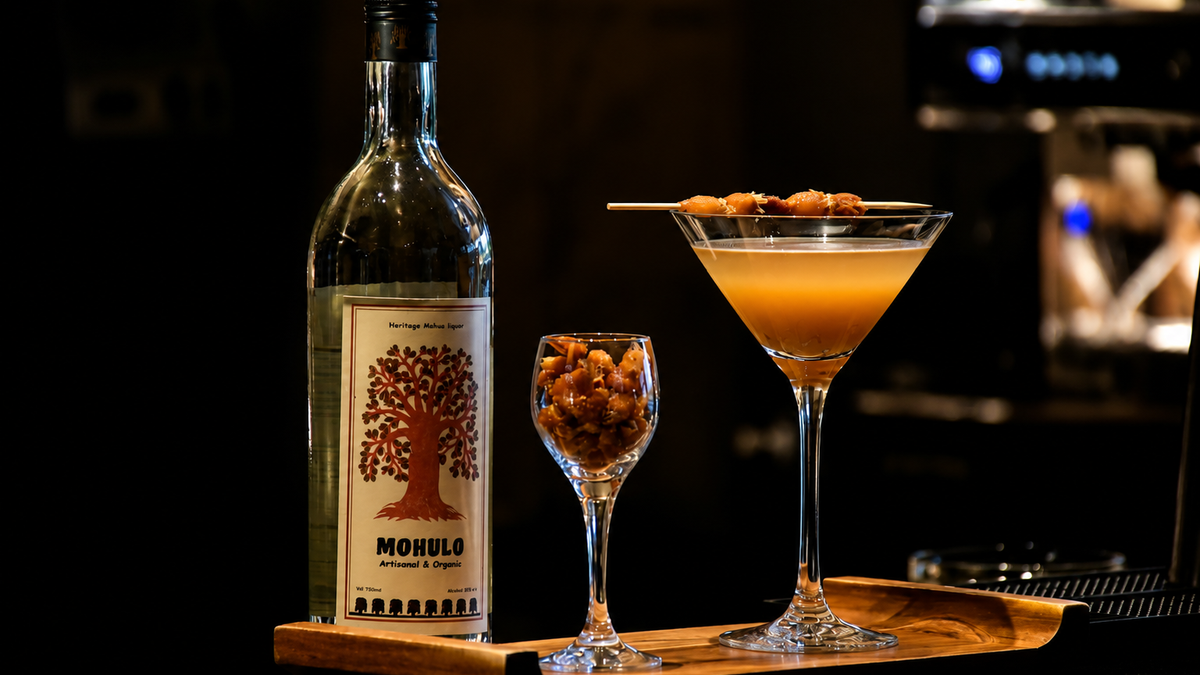
At Bori Safari Lodge — a 12-room wilderness lodge on the edge of the Bori Wildlife Sanctuary in Madhya Pradesh, operated by the boutique conservation-led hospitality brand Jehan Numa Wilderness — evenings settle in slowly. The property sits within the Satpura landscape, one of India’s oldest forest regions and part of the larger Satpura Tiger Reserve, where the mood feels markedly different from the more frenetic tiger circuits elsewhere in the country. The lodge leans into an earthier idea of safari luxury: mud-toned architecture, lantern-lit pathways, forest silhouettes at dusk and long cocktail hours that seem to stretch with the sounds of cicadas, the metallic calls of drongos, the flutter of Indian paradise flycatchers through the canopy and, later into the evening, the distinctive churring of nightjars echoing through the forest.
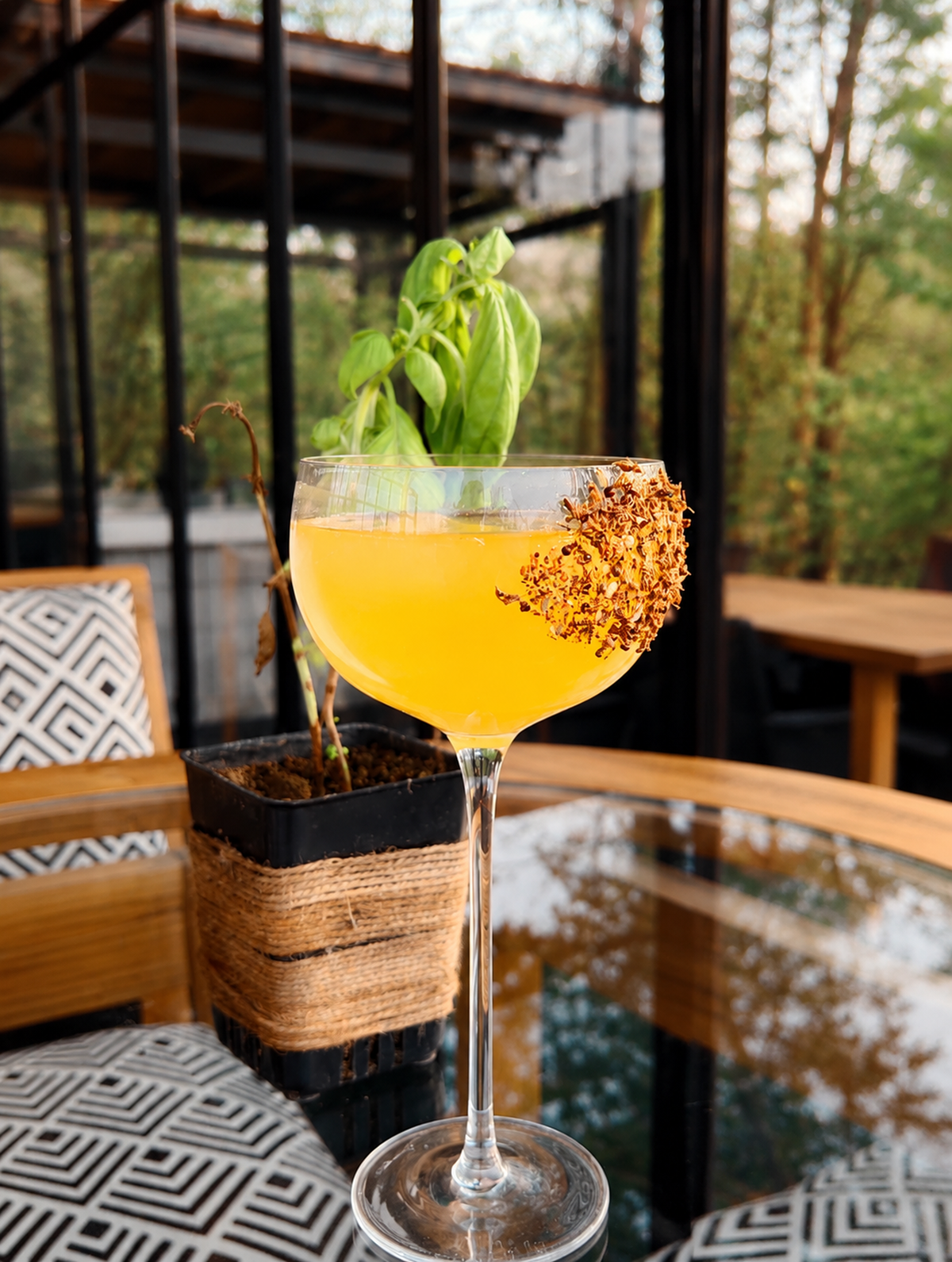
The Chapda Chutney Picante
| Photo Credit:
Special arrangement
One of the standouts on its bar programme is the Chapda Chutney Picante — a smoky, sharp and unexpectedly layered cocktail made with tequila, agave, mango, lime and chapda chutney, the fiery red ant chutney traditionally eaten by tribal communities across parts of Central India. The drink comes with heat, citrus and a lingering umami tang that feels inseparable from the landscape itself.
For the longest time, the Indian safari experience was fairly straightforward. You checked into a lodge, woke up at an ungodly hour for a game drive, spent three hours craning your neck for a tiger sighting, came back dusty and exhausted, ate dinner by a bonfire and called it a night. But somewhere after the pandemic, that started to change. A different kind of traveller began showing up in these forests, one less obsessed with the checklist mentality of spotting the Big Cat and more interested in retreating into the wilderness for a few days. The game drive still matters, obviously, but now it sits alongside slower pleasures: long lunches that bleed into the afternoon, conversations over a drink after sunset, local ingredients, and the feeling of being removed from city life without sacrificing comfort or taste.
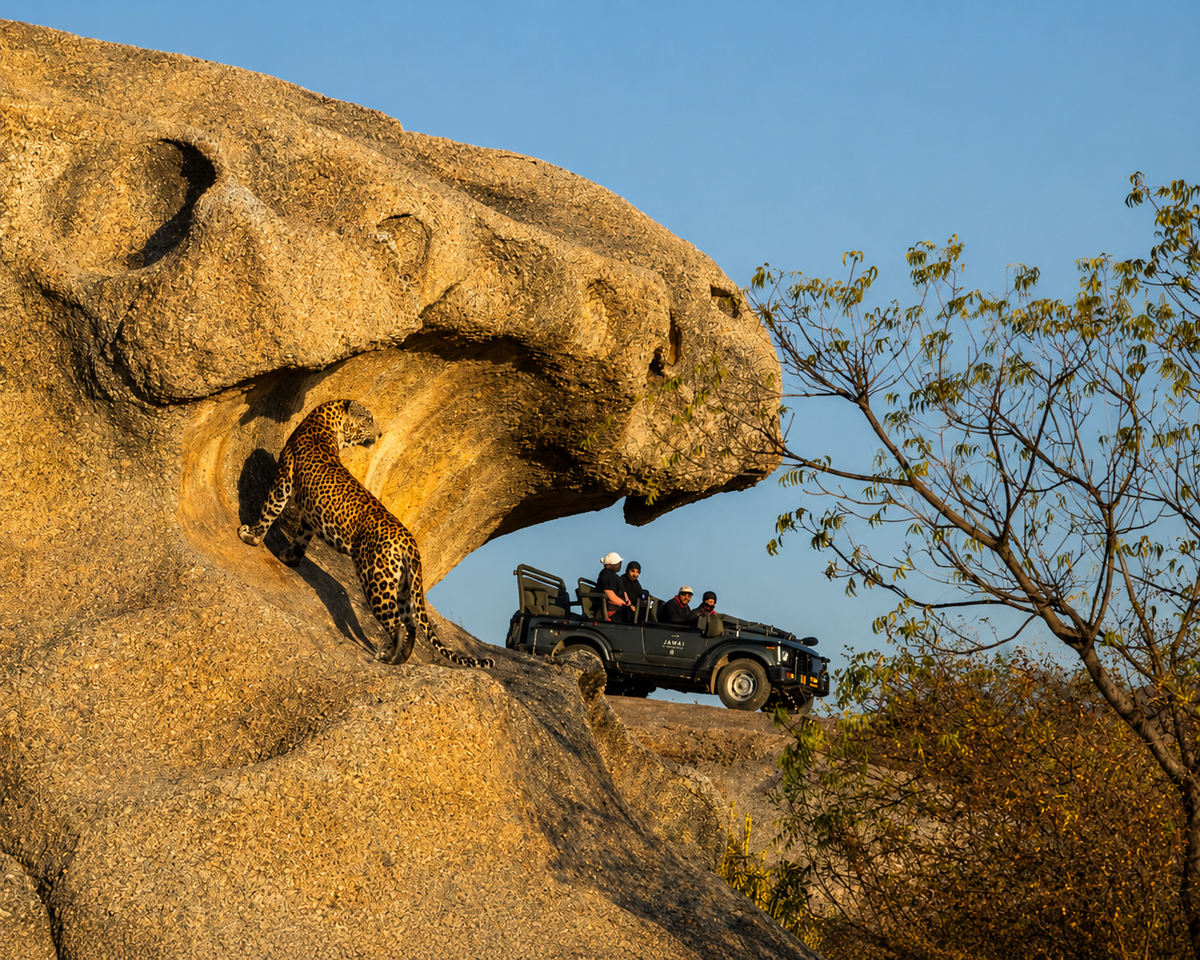
A drive organised by Sujan Jawai
| Photo Credit:
Sujan
If the numbers are anything to go by, it is safe to say that we are in the midst of a luxury safari boom. Studies published on ResearchGate, a professional network and social media platform for scientists and researchers to share and discuss academic work, estimate that more than 4.6 million tourists visit India’s protected areas annually, with roughly 1.4 million visiting tiger reserves specifically, while domestic travellers account for over 80% of this footfall.
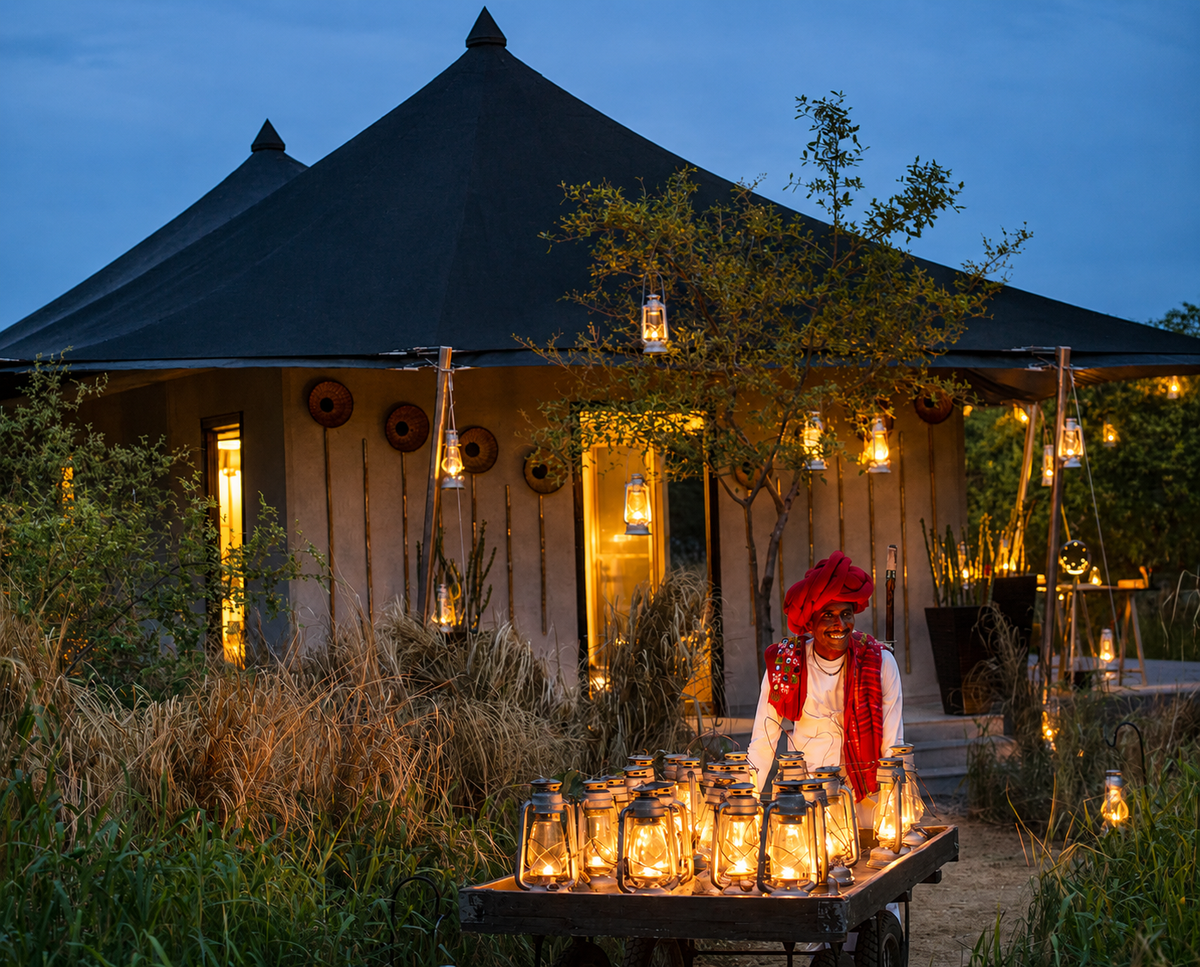
At Sujan Jawai
| Photo Credit:
Special arrangement
Projections by the global market research and consulting company Future Market Insights value India’s safari tourism market at approximately $2.8 billion in 2025 (₹26,749 crore), with expectations that it could nearly double by 2035. On-ground numbers reflect this surge: Ranthambore National Park reportedly crossed seven lakh visitors and generated nearly ₹72 crore in revenue by May 2025, while Karnataka’s Bandipur and Nagarahole reserves together earned around ₹24 crore through safari operations this year, according to reports.
A drink in hand
Mona Vahanvati, co-founder of Bagh Tola, a boutique wildlife jungle lodge located in Madhya Pradesh, specifically on the edge of Bandhavgarh National Park, says “We usually tell guests, ‘Let us make something for you,’ when they come back in the evening after a drive. Our mixologist, Biswajeet, will usually send a cocktail from our side just to get things started because a lot of people don’t naturally associate safaris with cocktails. They’ll default to beer or wine because that’s what they know. But once they try something different, it changes.”
Biswajeet works a lot with local ingredients. For example, there is mahua, which grows in abundance in Madhya Pradesh and in some rural parts of India. Traditionally, villagers make a very basic liquor out of it, but here, he filters it properly, refines it and builds cocktails around it. People have had a really great reaction to that. They’ll try one, then another, and suddenly they’re curious about what else can be done.
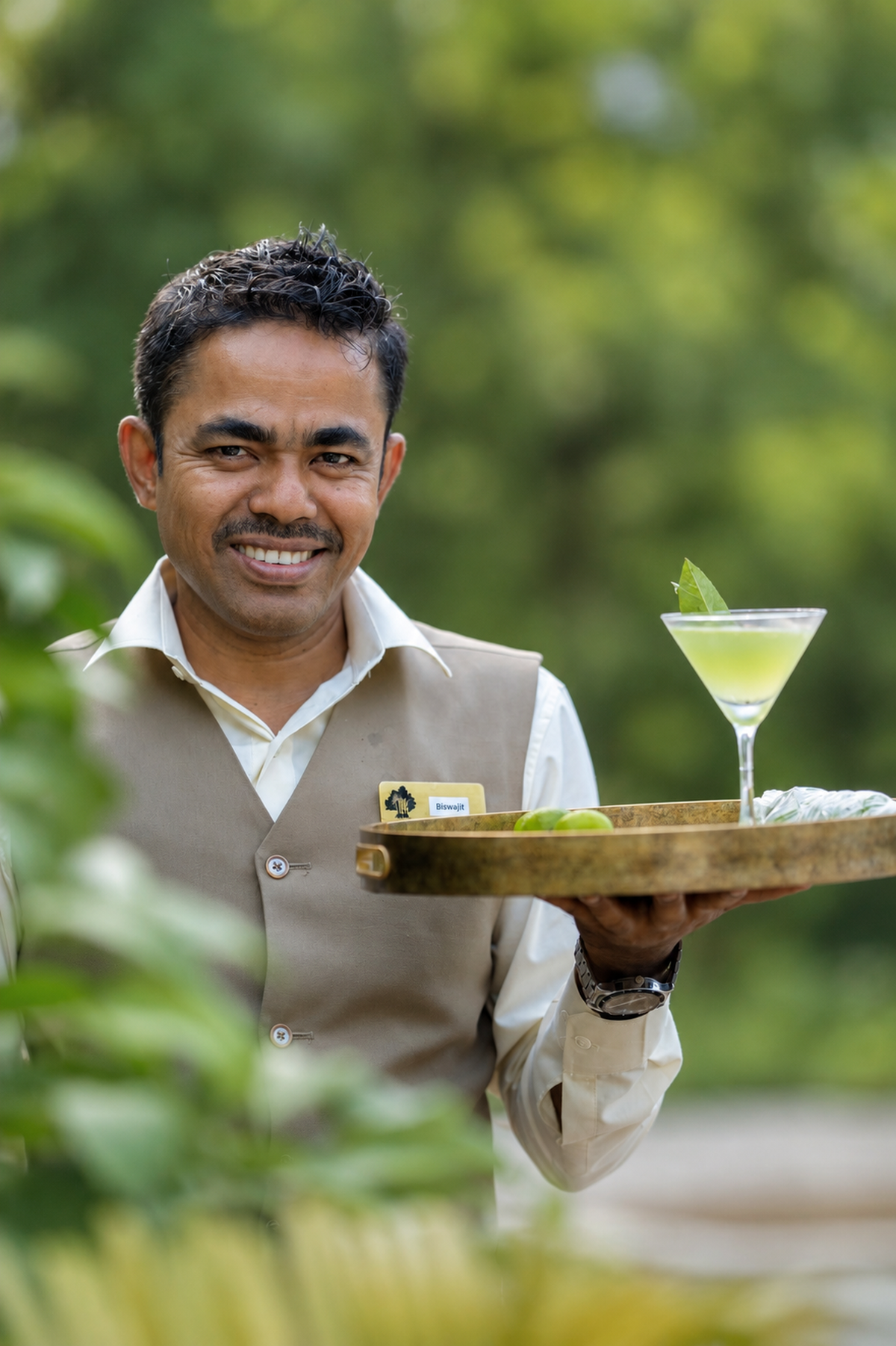
Biswajeet at Bagh Tola
| Photo Credit:
Special arrangement
Tarang Arora, CEO and creative director at Amrapali Jewels, recalls a mahua-based cocktail from a stay at The Bamboo Forest Safari Lodge, a luxury lodge located near the Kolara gate of Tadoba-Andhari Tiger Reserve in Maharashtra. “They made me a customised drink they called Dhonk, named after the dhonk trees that tigers disappear into. It was served in a clay kulhad and made with mahua spirit, tamarind, jaggery, ginger, a little sparkling water and a sprig of dried khus across the rim.”
For Tarang, the drink captured something larger about the changing culture of safari hospitality in India. “Mahua isn’t a polished cocktail ingredient. It’s earthy, a little wild, the way the forest itself is. The tamarind had this sharp sourness to it, and the khus smelled like the ground after the heat breaks. I remember sitting there watching the forest turn amber, still thinking about the tigress we’d spotted that evening, and this drink somehow fit perfectly into that moment.”
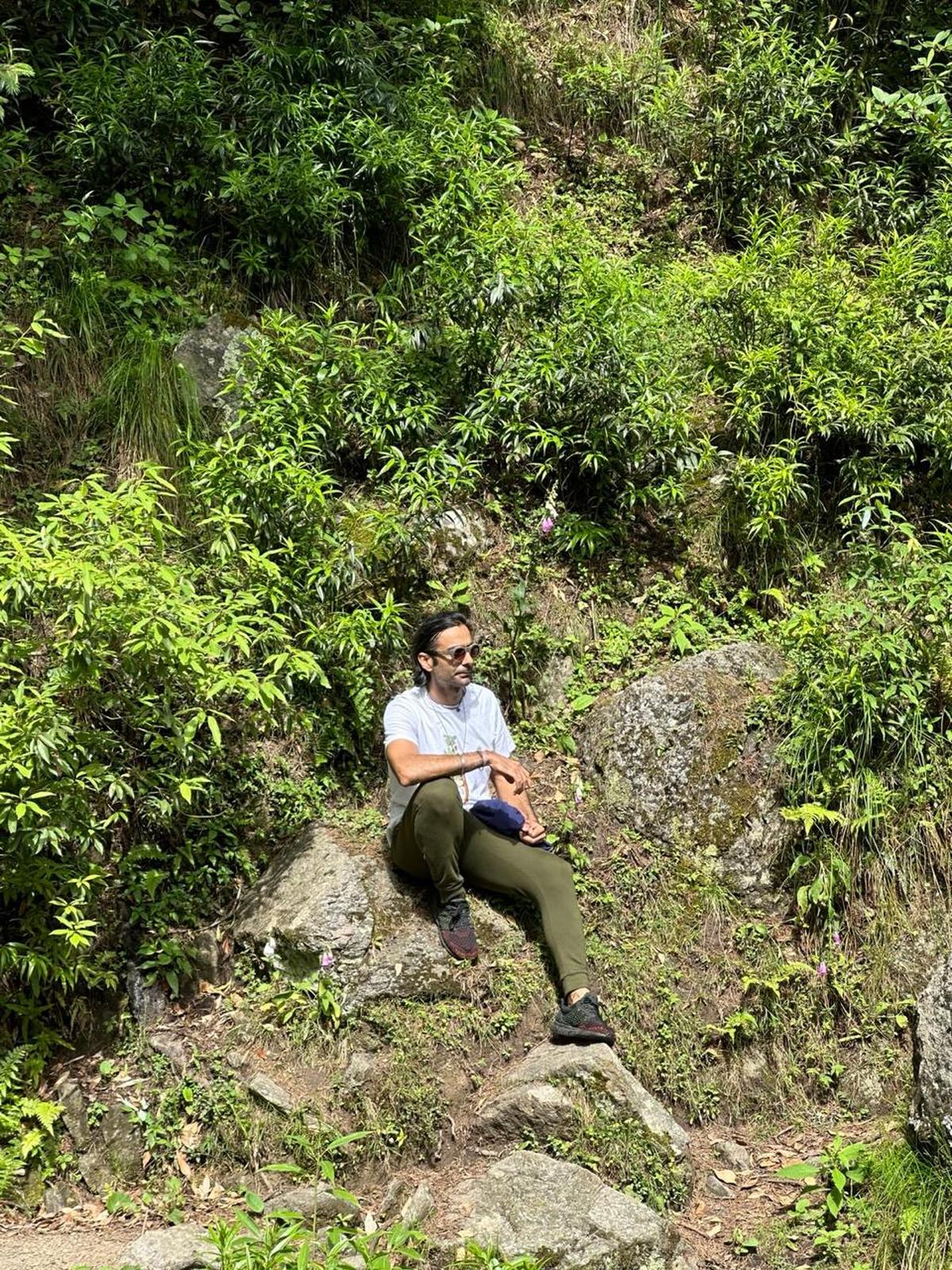
Tarang at The Bamboo Forest Safari Lodge
| Photo Credit:
Special arrangement
Tarang’s experience with mahua in Tadoba finds a parallel in Madhya Pradesh. Gunjan Sharma, advisor and community ambassador (India) at Fora, a New York-founded travel platform recently expanding into India, recalls a memorable mahua cocktail at Taj Mahua Kothi, a jungle resort located near Bandhavgarh National Park in Madhya Pradesh, after an evening game drive. “It was light, floral, gently sweet and deeply rooted in the landscape,” she says. “There’s folklore around elephants eating fallen mahua flowers and becoming intoxicated, which gave the drink a sense of place. Sitting under the open sky with the sounds of the forest around us, it felt like an extension of the safari itself.”
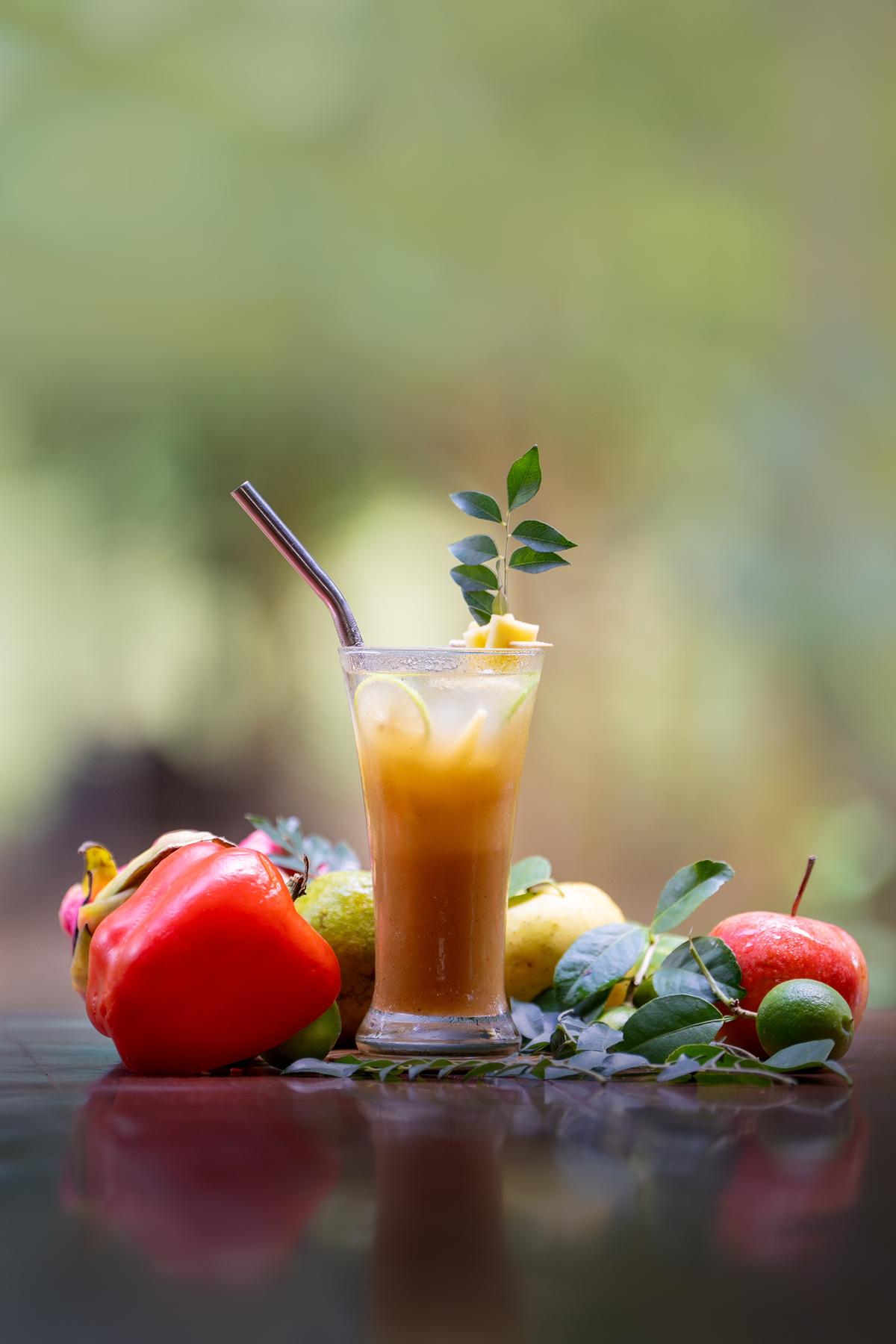
Smoked aam panna at Bagh Tola
| Photo Credit:
Special arrangement
For Prasad Ramamurthy, freelance travel journalist and hospitality consultant, one of the more interesting shifts across India’s safari lodges has been watching bartenders turn the landscape itself into a drinking experience. During stays at The Oberoi Vindhyavilas Wildlife Resort in May 2025 and Sujan Jawai later that August, he found himself drawn to cocktails that went beyond the expected sundowner.
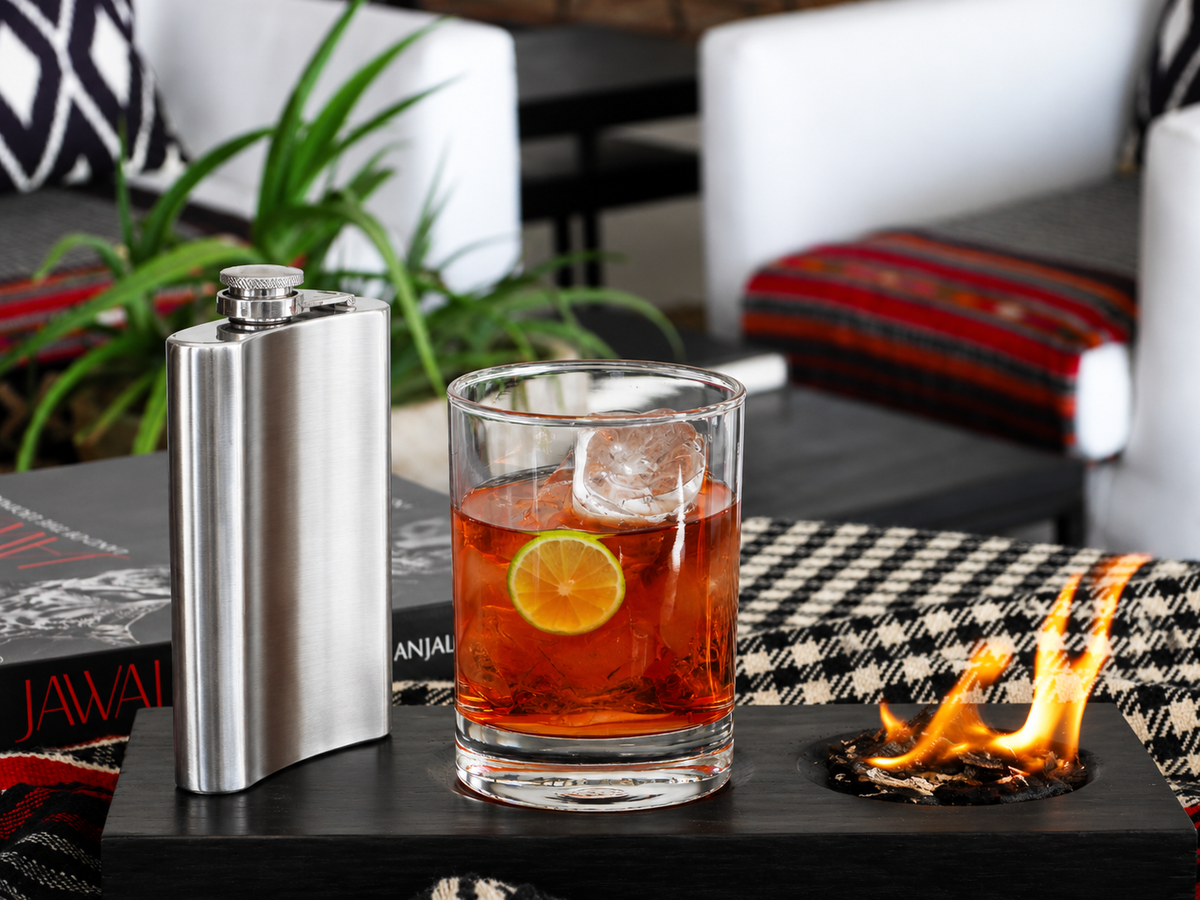
Campfire at Sujan Jawai
| Photo Credit:
Special arrangement
At the Sujan Jawai, a Relais & Châteaux property, a wilderness camp set amid Rajasthan’s granite landscapes and leopard country, Prasad tried the Campfire, a smoky cocktail where acacia woodchips, a flora species endemic to arid regions, are used to build depth alongside Jägermeister, gin, Angostura bitters, lemon juice and simple syrup. At The Oberoi Vindhyavilas near Bandhavgarh National Park in Madhya Pradesh, the standout was the Khargone Margarita, where fiery Nimar chillies, known for their high pungency and vibrant red colour, from the Khargone region are infused into tequila before being balanced with lemon juice, triple sec and homemade agave syrup.
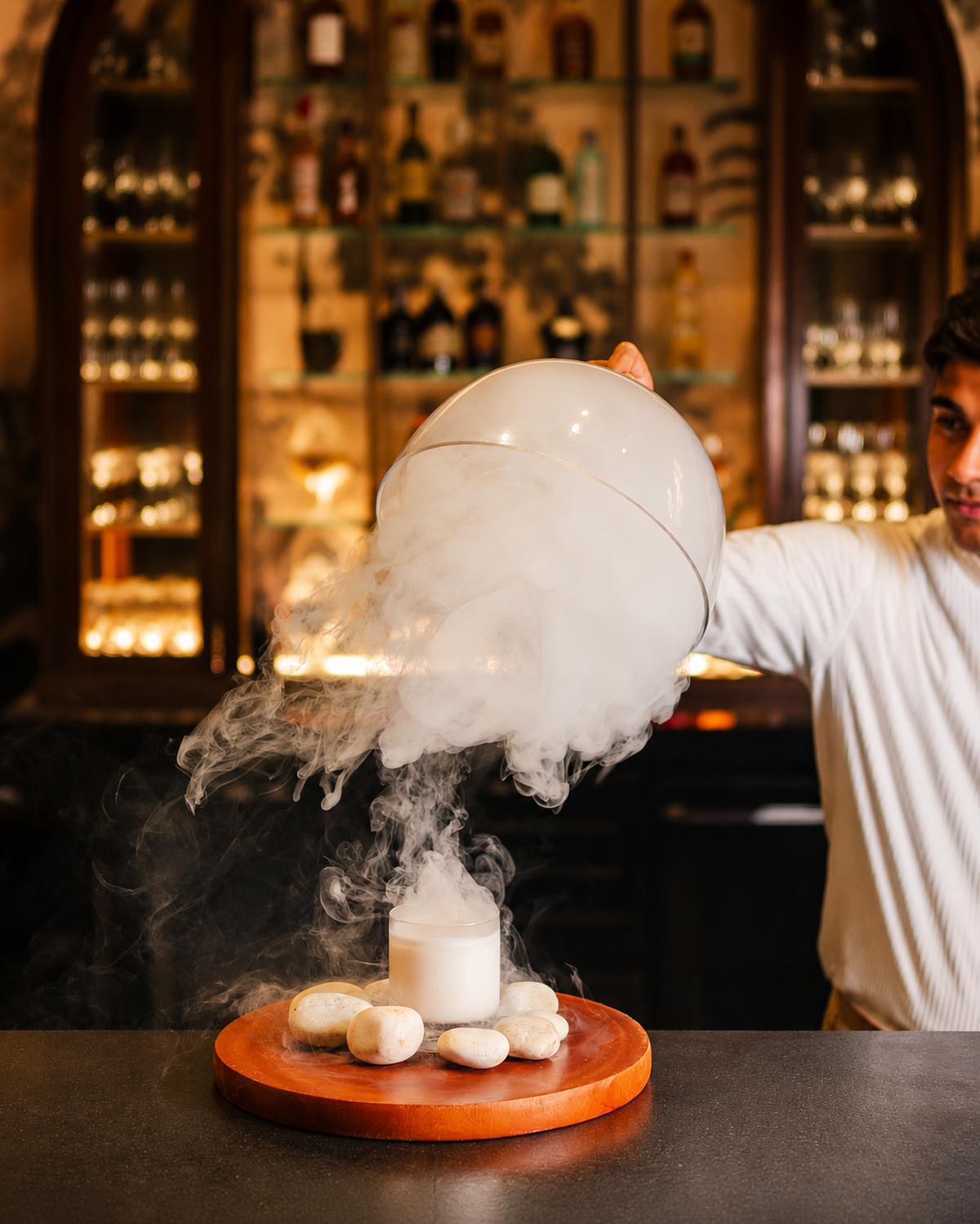
A cocktail at The Oberoi Vindhyavilas
| Photo Credit:
Special arrangement
Set within 1,400 acres of tea plantations in Assam, The Postcard in the Durrung Tea Estate sits within driving distance of Kaziranga National Park, with safari gates reached in anywhere between 40 minutes and 1.5 hours, depending on the route and range. The property approaches its cocktail programme as an extension of the estate itself, drawing heavily from Assam’s tea culture and regional botanicals. “Our cocktails are inspired by the flavours and rhythms of Assam,” says resort manager Tuhin Deb.
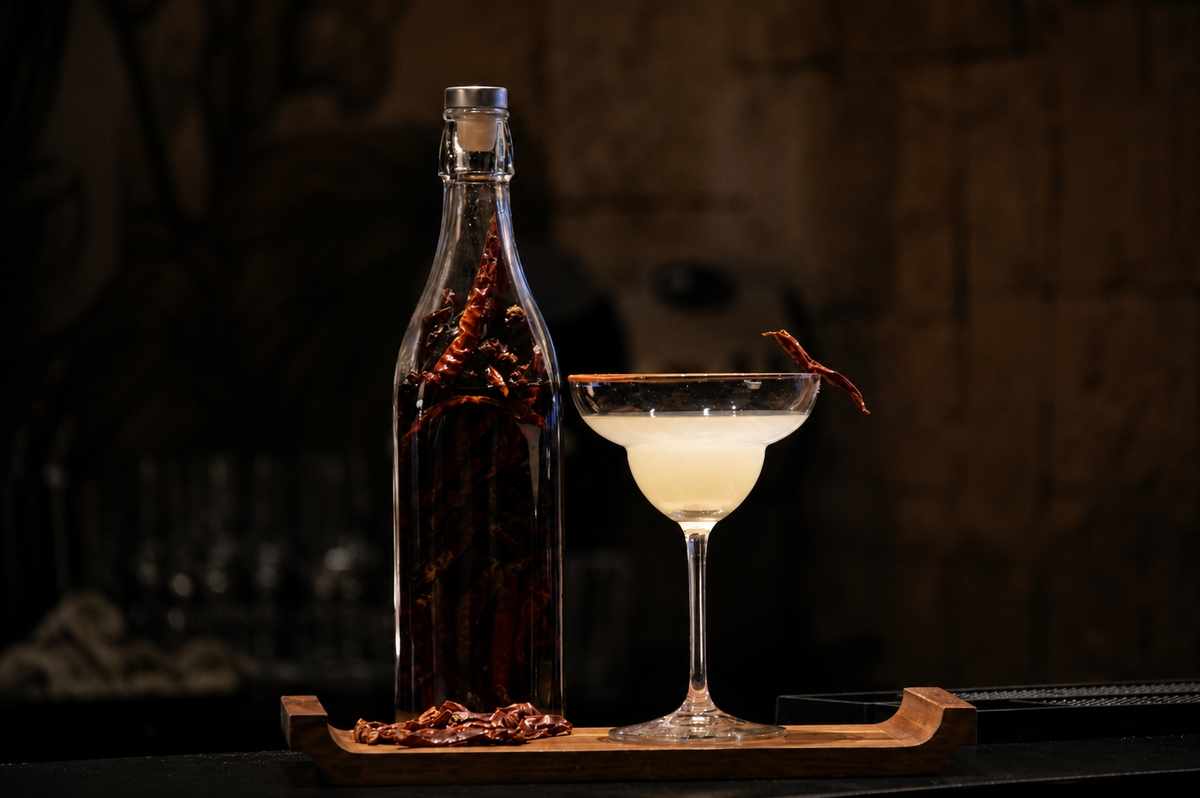
Khargone Margarita
| Photo Credit:
Special arrangement
The signature welcome drink at the property is the Estate Hibiscus Spritz, built around hibiscus flowers that grow abundantly across the estate. The flowers are reduced and brewed into a tea before being mixed with gin, green tea cordial, house bitters, lime and soda. According to Tuhin, the drink has become an introduction to the larger cocktail programme. “Guests arrive after long journeys, and this is usually their first sip of the estate,” he says. “A lot of them end up asking for the same drink later in the evening when they’re unwinding before or after dinner. That naturally opens the conversation around the other cocktails we’re doing.”
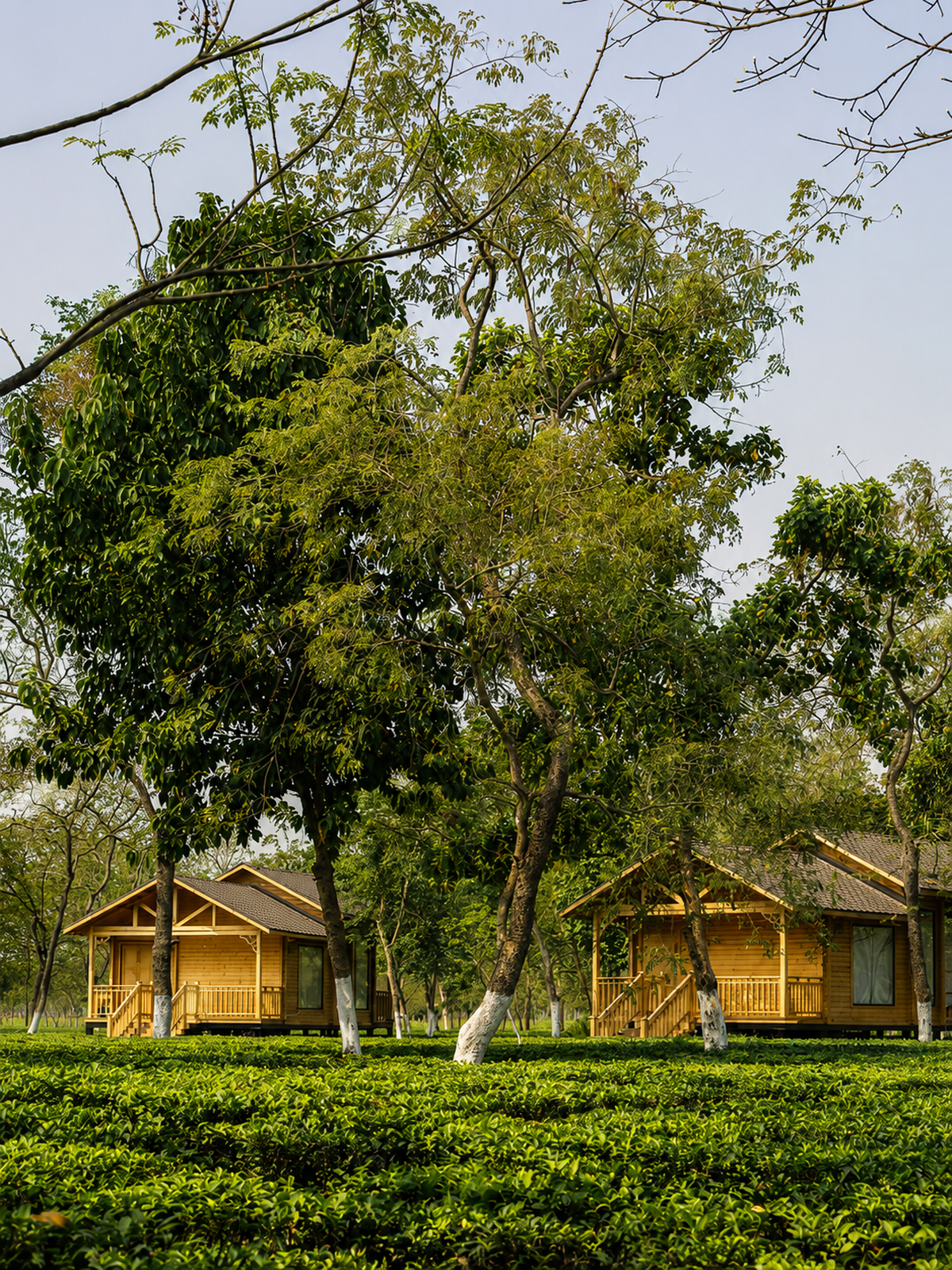
The Postcard in the Durrung Tea Estate
| Photo Credit:
Special arrangement
Tuhin says the drinks often introduce travellers to the landscape itself. “People get curious about ingredients they’ve never heard of before. They ask questions about local herbs, teas, fruits and spices, and that becomes part of the experience. In many ways, it’s also educational because guests begin understanding how local produce and sustenance can be translated into something contemporary and interesting in a glass.”
He points to three drinks that best capture the estate’s identity. The Durrung Highball combines cold brew Assam tea with gin, lemongrass cordial, wild ginger and soda water. The Winter Smoke layers tea-smoked pineapple with dark rum, fermented honey syrup, black pepper tincture, clove and burnt cinnamon bitters, drawing from the smokier spice profiles associated with Assamese winter cooking. Then there’s the Elephant Apple Collins, built around ou tenga, or elephant apple, a tart fruit widely used in Assamese cuisine, mixed with local lime, coriander seed syrup, green tea and soda water. “We reinterpret classic cocktails through the lens of the estate,” says Tuhin. “The idea is for every drink to feel connected to the landscape and flavours around us.”
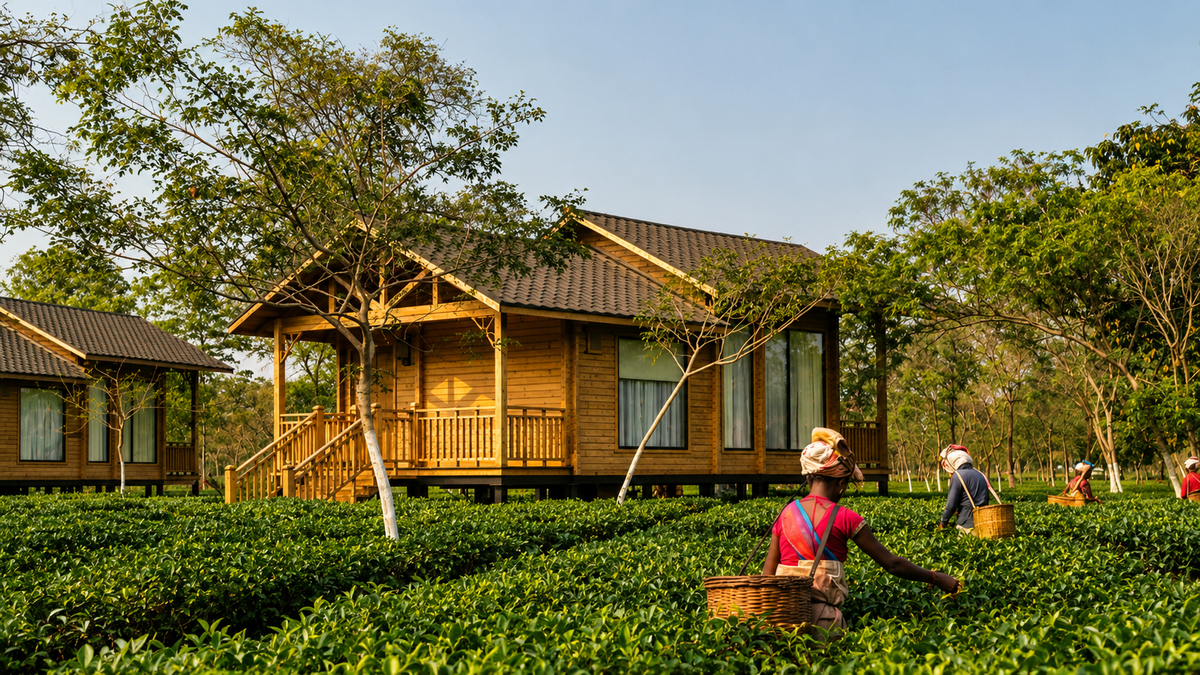
Assam tea plucked from the estate gardens makes its way into cocktails
| Photo Credit:
Special arrangement
Long after the game drive ends, these drinks linger as another form of storytelling, shaped by local ingredients, regional memory and the forests they come from.
