



5 min readMay 13, 2026 04:44 PM IST
First published on: May 13, 2026 at 04:44 PM IST
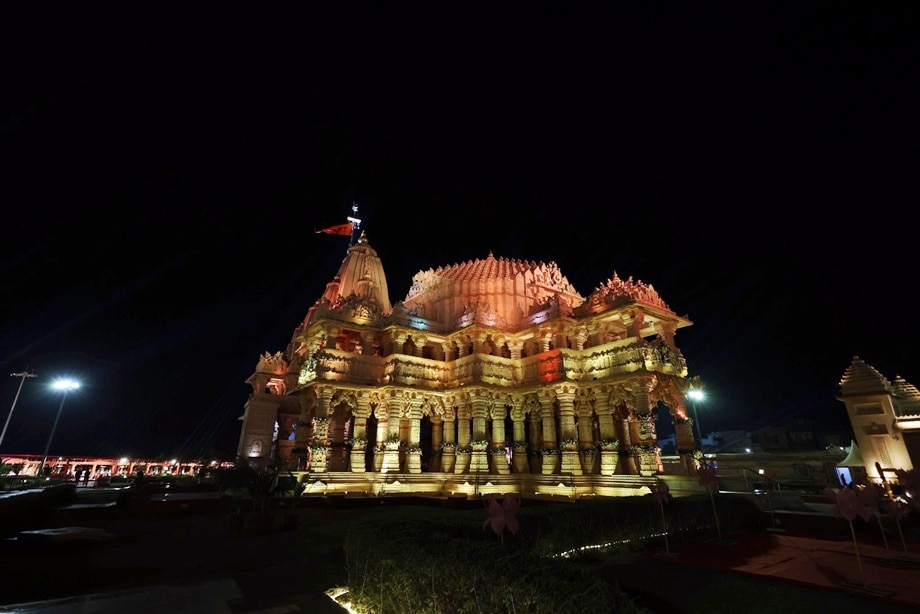
The completion of 75 years of the resurrection of the Somnath Temple — on May 11 — was preceded by the swearing-in of West Bengal’s first BJP. The relation between the two isn’t symbolic. If the West Bengal verdict reflects demographic anxiety, the saga of Somnath’s resurrection serves as its antidote. To understand why demographic change causes anxiety, it is instructive to examine chapters of our history alongside experiments such as multiculturalism in Europe and Diversity-Equity-Inclusion (DEI) in the United States — all these offer cautionary lessons.
In West Bengal, demographic anxiety stems from the growing presence of illegal intruders from across the border and the implications this has for regional and national security. The border is porous, and families in districts along it have longstanding connections on the other side. But under the garb of this contiguity, the Left — for over three decades — and the Trinamool Congress thereafter, facilitated the absorption of illegal intruders. Whenever questions were raised, the issue was framed in communal terms — Hindus versus Muslims. This framing effectively granted a veto to illegal immigrants, who were absorbed as a voter bloc with their co-religionists in border districts. From accepting a truncated Vande Mataram as the National Song to ignoring the constitutional mandate of a Uniform Civil Code, successive Congress governments bowed to this pressure. Overturning the Shah Bano verdict was another expression of this perverse secularism.

The pseudo-secularism mainstreamed by the Congress resonates with the multiculturalism embraced by Europe and the DEI framework advocated in the US — all prescriptions that have failed to address demographic anxiety. British author Kenan Malik has observed that European countries “have enacted either multicultural policies that place communities in constricting boxes or assimilationist ones that distance minorities from the mainstream”, and that Europe must rediscover a progressive sense of universal values that its liberals have largely abandoned. In the Indian context, universal values mean recognising the idea of spiritual democracy — a civilisational tradition in which no ruler ever succeeded in imposing a theocratic state.
DEI, as practised in the US, similarly risks collapsing into tokenism. Consider those old full-page advertisements released by the DAVP on Independence Day or Republic Day, bearing the slogan Hum Sab Ek Hain. They typically featured three young men standing shoulder to shoulder: One supposedly Hindu with a prominent tilak, one Muslim in a traditional cap and beard, one Christian in a suit with a visible cross. The intention was well-meaning, but the approach was reductive: Showcasing diverse dress codes as a shortcut to Unity in Diversity. What those behind such campaigns missed is that the key to India’s social and national integration across millennia has been the understanding that our diversity is the diverse manifestation of an innate unity. We do not need to be reminded of our superficial differences and then asked to unite as though we were not already united. In a society where, at the philosophical level, divinity is recognised in every individual, artificially promoting diversity is detrimental to our original, organically interwoven social fabric.
The same applies to equity and inclusion. All of us live simultaneously with multiple identities. India has largely navigated this through the understanding that smaller identities — of religion, region, and language — need not be crushed, but must eventually merge with a larger national identity. India’s affirmative action stands as an exemplar in the democratic world of how marginalised groups can be included in the mainstream and how social justice programmes can genuinely foster equity. Those transplanting concepts like DEI and multiculturalism would do well to remember one foundational fact: Despite innumerable apparent diversities, our civilisational history is a testimony to the sustaining power of “Ekam sat vipra bahudha vadanti” — the profound maxim from the Rig Veda — which holds that truth is one, though the wise speak of it in many ways. This insight has helped India survive with its foundational values intact.
While inaugurating the reconstructed Somnath Temple, President Rajendra Prasad said it was desirable for all of us to realise the great secret of spiritual faith — to have a glimpse of god or truth, all people don’t need to follow one and only one path. If believers of all faiths in India can truly internalise this, changing demography need never become a cause for anxiety.
The writer is a national executive committee member of the BJP
