



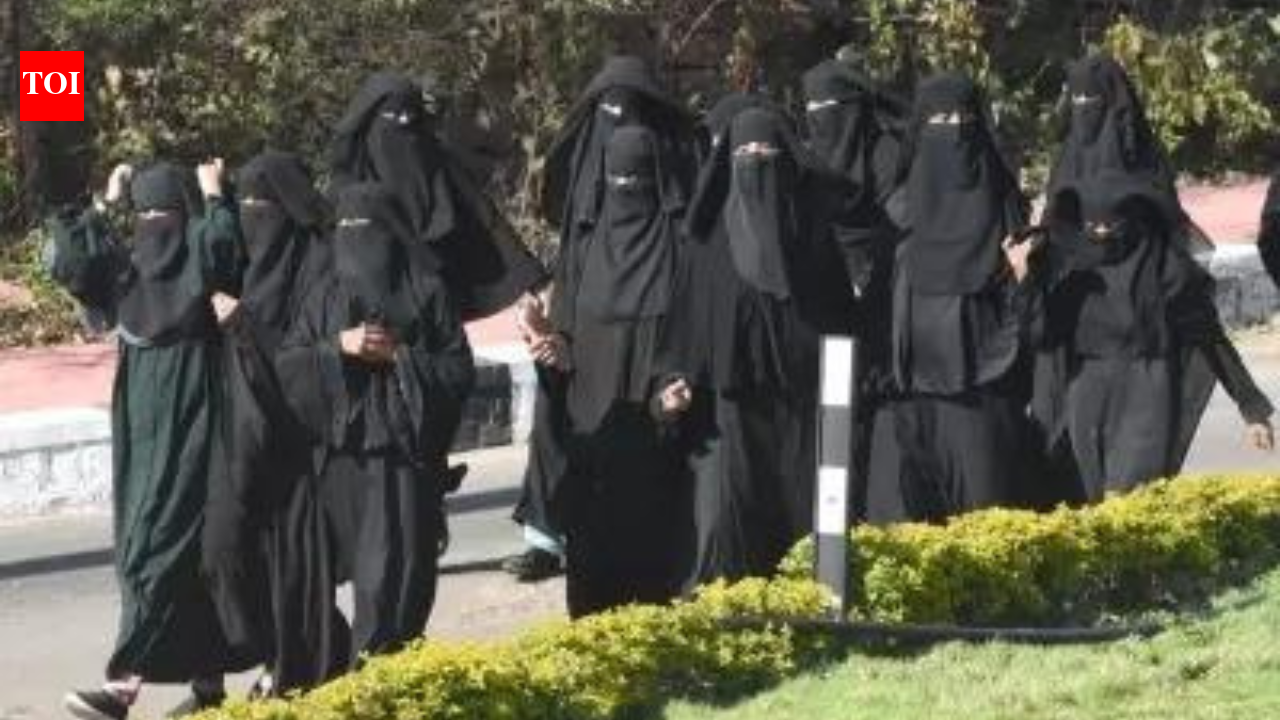
The Karnataka government on Wednesday withdrew the February 5, 2022 order issued by the previous BJP government that had effectively banned the hijab in educational institutions, and released fresh guidelines allowing students to wear “limited traditional and faith-based symbols” along with prescribed uniforms in schools and pre-university colleges across the state.The new order, which came into immediate effect, permits students to wear items such as hijab or headscarf, turban, ‘Janeu’ (sacred thread), Shivadhara and Rudraksha, provided they do not affect discipline, safety, identification or the functioning of educational institutions.The move comes weeks after an April 24 incident in which a student’s sacred thread was allegedly cut at a school during an examination, sparking controversy in the state.The government said the revised guidelines were aimed at balancing institutional discipline with constitutional values of equality, secularism and inclusion.“Permissible traditional and faith-based symbols may include items commonly worn by students such as turban, Janeu, Shivadhara, Rudraksha, hijab or similar forms. However, such items shall not affect discipline, safety or identification of students,” the order stated.The government further clarified that no student should be denied access to classrooms, examinations or academic activities solely for wearing permitted traditional or faith-based symbols. “Education is a key instrument for holistic development of students, reduction of mental stress, promotion of constitutional values, and fostering a scientific, secular and inclusive outlook,” the order said.It added that educational institutions were constitutional spaces where students learn “scientific temper, rational thinking, equality, dignity, fraternity, discipline, mutual respect, social harmony, and responsible citizenship in a constitutional democracy.”The order said the earlier 2022 directive had been issued amid disputes over uniforms and dress codes, but concerns later emerged regarding limited traditional and faith-based practices followed by students from different communities.“After review, the government opined that such limited practices can be permitted without disturbing institutional discipline, provided they do not affect uniformity or identification, and do not interfere with discipline, safety, teaching, or public order,” it said.Further underlining the constitutional basis of the decision, the government stated that “secularism, in constitutional sense, does not mean opposition to personal beliefs, but implies equal respect, institutional neutrality and non-discriminatory conduct.”Institutions have also been directed to ensure that no student faces discrimination or humiliation and to uphold the inclusive principle of “Iva Nammava” (“He/She is ours”), associated with 12th-century social reformer Basaveshwara.School Education Minister Madhu Bangarappa said the order formally recognised religious and customary practices already followed by different communities.“Whatever people have been practising religiously, whether it is wearing the sacred thread (janeu), wearing the Shivadhara, some wearing a turban, some girls in North Karnataka wearing their traditional attire, or members of the Jain community wearing their customary dress, or hijab, all such things that are religiously allowed have been properly specified in a Government Order,” he said.“Through the Education Department, in all schools under our department up to Class 12, there should not be any kind of problem for children (in sporting their religious symbols),” Bangarappa added.Karnataka Health Minister Dinesh Gundu Rao defended the move, saying, “Limited customary practices are being allowed and nobody should be hurt because of this.”The BJP, however, strongly criticised the decision. Leader of Opposition R Ashoka accused the Congress government of reviving the hijab issue for electoral gains.“In West Bengal, Mamata Banerjee indulged in this kind of appeasement and suffered politically. (DMK leader MK) Stalin, who spoke against Hindus, also faced defeat. In Kerala too, leaders who looked down upon Hindus lost out. Whoever criticises Hindus or does injustice to them, the entire Hindu community is standing united and teaching them a lesson. Hindus must teach a proper lesson to Siddaramaiah and all Congress MLAs in the coming days. This is an anti-Hindu government,” Ashoka said.“The people of the state will decide and remove this anti-Hindu government,” he added.The hijab row had triggered statewide protests and legal battles in 2022 after the BJP government barred students from wearing the hijab in government educational institutions, leading to clashes between groups wearing hijabs and saffron scarves.

