



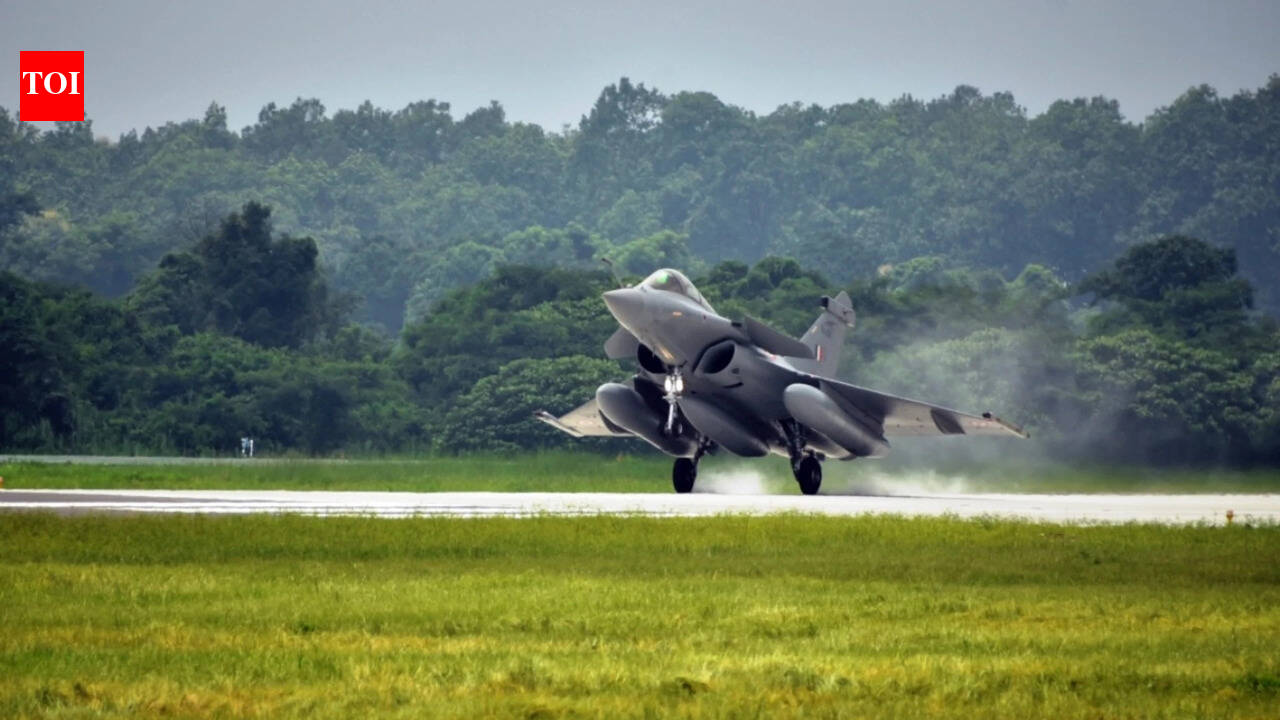
India and Pakistan today maintain nuclear arsenals of near parity, with India estimated to possess around 172 warheads and Pakistan about 170, according to the bulletin of the atomic scientists. Yet beneath this numerical similarity lie very different doctrines and delivery systems. India’s nuclear posture is built around a declared ‘No First Use’ policy and the pursuit of a credible minimum deterrent, while Pakistan has rejected the same policy. Islamabad has adopted a strategy of ‘Full Spectrum Deterrence’ designed to offset India’s conventional military superiority. These contrasting approaches shape how both nations develop and deploy their nuclear forces.India’s warheads are primarily plutonium-based, with fissile material reserves sufficient for a larger arsenal than currently deployed. Its modernization program emphasizes survivability and strategic reach, with a growing nuclear triad. Aircraft such as Mirage‑2000H and Jaguar IS squadrons are nuclear capable, and Rafale squadrons are likely to be adapted for similar roles.On land, India fields the Prithvi‑II short‑range missile and successive generations of Agni missiles, ranging from the 700‑kilometer Agni‑I to the 6,000‑kilometer Agni‑V, with the Agni‑VI under development. At sea, India has commissioned ballistic missile submarines such as INS Arihant and INS Arighat, armed with K‑15 and K‑4 submarine‑launched ballistic missiles. This sea‑based leg is intended to ensure a survivable second‑strike capability, particularly in relation to China, though Pakistan remains within range of all systems.Pakistan’s arsenal, while similar in size, is structured differently. Its fissile material reserves could support a larger stockpile, but deployment is shaped by doctrine. Aircraft such as Mirage fighters and Ra’ad missile equipped JF-17 are nuclear capable, supplemented by Ra’ad and Ra’ad‑II air‑launched cruise missiles with ranges of 350 to 600 kilometers.On land, Pakistan fields the Shaheen series of ballistic missiles, from the 750‑kilometer Shaheen‑I to the 2,750‑kilometer Shaheen‑III, alongside shorter‑range systems like the Abdali and the Nasr. The Nasr, with a range of 60 to 70 kilometers, is a tactical nuclear weapon designed to deter Indian conventional incursions under the Cold Start doctrine. Pakistan also deploys Babur cruise missiles, with ranges between 700 and 1,000 kilometers, and is experimenting with sea‑based variants, though its naval nuclear capability remains nascent compared to India’s.The strategic outlook reflects these differences. India is steadily expanding its triad and modernizing its missile force, increasingly oriented toward deterring China while retaining coverage of Pakistan. Pakistan, by contrast, emphasizes tactical nuclear weapons and flexible deterrence options and threatening to lower the threshold for nuclear use in a crisis. This divergence creates significant risks. India’s No First Use policy theoretically lowers the nuclear threshold, but Pakistan’s readiness for first use, particularly through tactical systems, increases the danger of escalation.
