



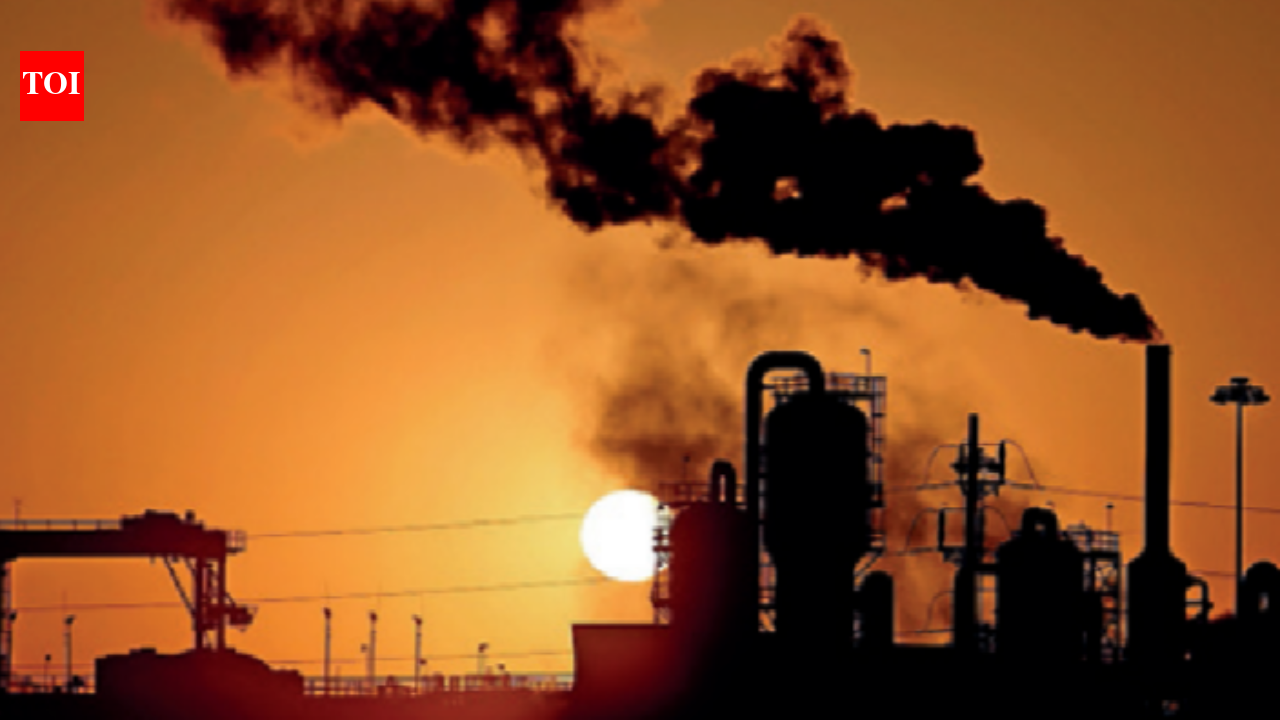
BENGALURU: India may have taken the term “filthy rich” literally. Indian cities’ growth remains tied to polluting fossil-fuel use and consequent pollution while China and several other countries have pulled ahead on cleaner urbanisation, according to a study in Nature Cities in which researchers analysed 5,435 cities worldwide between 2019 and 2024 using satellite-based nitrogen dioxide data and GDP estimates.Of the 390 cities globally classified as ‘dirtier and richer’, where economic growth coincided with rising pollution, 138, or nearly 35.4%, were in India. While metros such as Delhi, Mumbai and Kolkata showed cleaner growth trends, the study says many Indian urban centres continue to depend heavily on fossil fuel-intensive transport, industries and electricity generation.
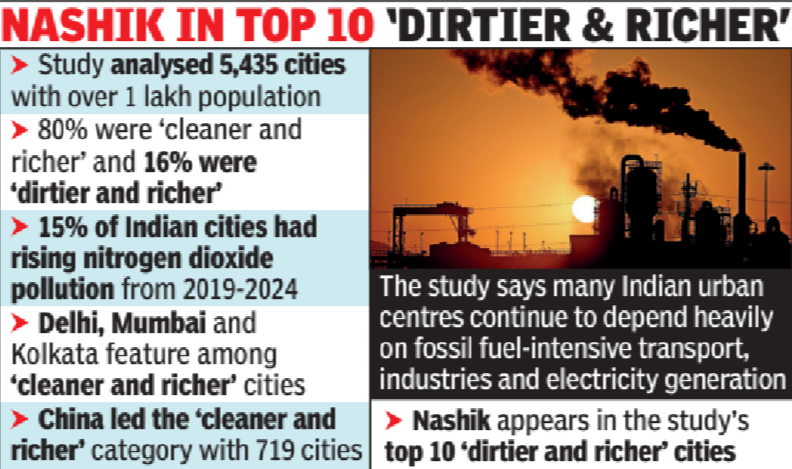
As part of the study, the researchers used satellite observations of nitrogen dioxide (NO2), a pollutant strongly associated with fossil fuel combustion from transport, industries and thermal power generation, and paired the data with city-level GDP estimates to classify urban centres into four categories: ‘cleaner and richer’, ‘dirtier and richer’, ‘cleaner and poorer’, and ‘dirtier and poorer’.Globally, around 80% of cities with significant trends fell into the “cleaner and richer” category, where economies expanded while NO2 pollution declined. Major metropolitan regions across East Asia, Western Europe and North America showed varying degrees of success in decoupling economic growth from fossil fuel-linked pollution.However, of the 902 Indian cities examined in the study, 15.3% showed a statistically significant increase in NO2 levels between 2019 and 2024. India also dominated the study’s “dirtier and richer” category, described by researchers as cities where GDP per capita rises alongside increasing pollution. Of the 390 cities worldwide in this category, 35.4% were in India, the highest share for any country. “These are not failing cities. They are growing cities,” the study noted, pointing to automobile-dependent transport, heavy industry, urban sprawl and fossil fuel-based electricity generation as key drivers behind the trend. Among the prominent Indian cities highlighted in the study’s top ten “dirtier and richer” group was Nashik. India also appeared in the study’s smallest but most worrying category – “dirtier and poorer” cities – where pollution rises even as local economies stagnate or weaken. China accounted for 719 “cleaner and richer” cities, the highest number globally. Major urban centres such as Beijing, Shanghai, Guangzhou and Chengdu recorded declining NO2 levels alongside rising incomes. Researchers linked this to large-scale air quality interventions, including stricter industrial emission controls, relocation of polluting industries and rapid electrification of public transport systems. The paper said governance quality, environmental regulation and technology adoption play a major role in determining whether cities become cleaner as they grow richer.

